



Why Industrial Asset Tracking Breaks Down—and How RFID Tags Help
Industrial assets are constantly moving. Equipment travels between production areas, tools are shared among workers, containers move through warehouses, and machinery may be transferred between different facilities. Keeping track of these assets becomes increasingly difficult as operations grow.
Many businesses still rely on spreadsheets, barcode scanning, paper records, or manual inspections to manage their equipment and inventory. While these methods may work for smaller operations, they can become unreliable when hundreds or thousands of assets need to be monitored across multiple locations.
Missing equipment, inaccurate records, delayed maintenance, and poor asset visibility can all affect productivity and increase operating costs.
This is where RFID tags can make a difference. By giving each asset a unique electronic identity, RFID technology helps businesses improve tracking accuracy, simplify identification, and maintain more consistent asset records.
But why does industrial asset tracking break down in the first place, and how can RFID tags help address these problems?
Manual Asset Records Become Difficult to Maintain
One of the most common problems in industrial asset management is dependence on manual recordkeeping.
Employees may record equipment movements in spreadsheets, update paper forms, or enter information into management systems after completing a task. These processes depend heavily on human accuracy and timely updates.
When workers are busy handling production, maintenance, or warehouse operations, asset movements may not always be recorded correctly.
Over time, this can lead to several problems:
Equipment records no longer reflect actual asset locations.
Employees spend unnecessary time checking inventory manually.
Duplicate or outdated records make asset management more complicated.
Missing updates make it difficult to understand equipment usage.
RFID tags help reduce dependence on manual identification. Each tagged asset carries a unique electronic identifier that can be read using an RFID reader.
Depending on the system configuration, identification data can be captured automatically as tagged assets pass through designated reading points. This helps businesses maintain more consistent asset movement records and reduces repetitive scanning tasks.
Assets Are Easily Misplaced Across Large Facilities
Industrial facilities often contain multiple departments, storage areas, production lines, and maintenance zones.
Equipment may be moved frequently between these locations without a centralised tracking process. Shared tools are particularly vulnerable because different employees may use or relocate them throughout the working day.
When an asset cannot be found, employees may need to contact colleagues, inspect storage areas, or search through maintenance records.
These delays can interrupt workflows and reduce operational efficiency.
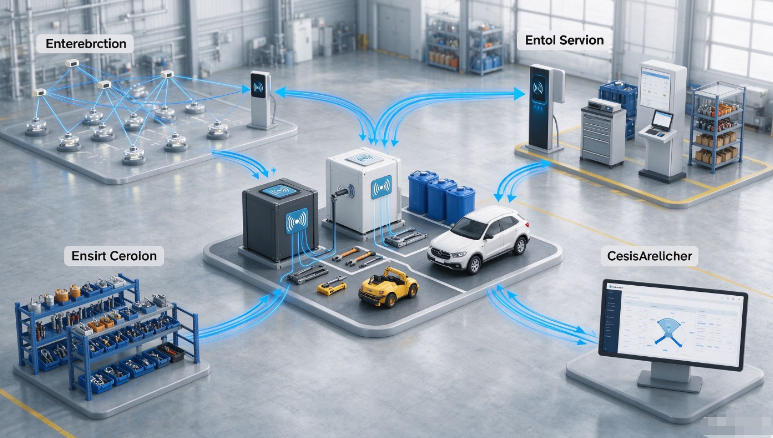
RFID-based asset tracking provides a way to improve asset visibility.
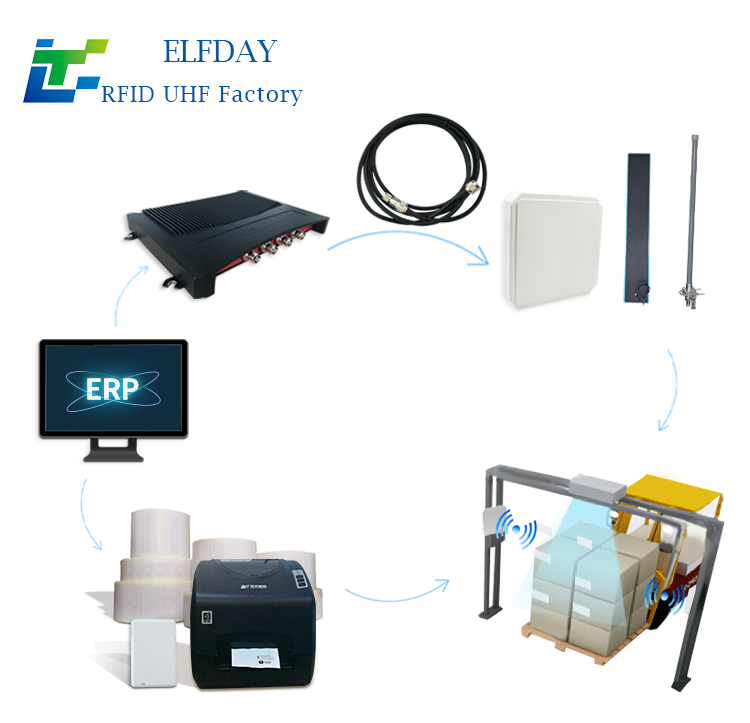
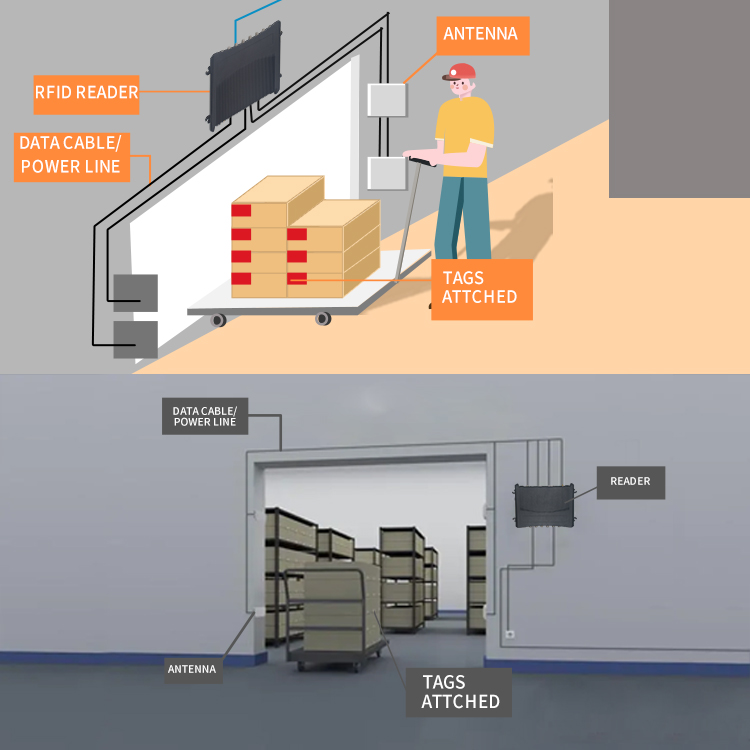
By installing RFID readers at selected entrances, exits, storage areas, or operational checkpoints, businesses can record asset identification events as tagged items move through those locations.
For example, a manufacturer can attach RFID tags to reusable tools and equipment. When these items pass through designated reading zones, the system can capture their identifiers and update associated tracking records.
RFID does not automatically provide continuous real-time positioning in every environment. However, a properly designed reader network can provide useful location information based on recorded reading events.
Barcode Tracking Creates Additional Work
Barcodes are widely used for inventory management and asset identification. They are affordable, easy to print, and compatible with many existing management systems.
However, traditional barcode tracking has certain limitations in busy industrial environments.
A barcode generally needs to be visible to a scanner, and individual items usually need to be scanned one at a time. Damaged, dirty, or obstructed labels can also make identification difficult.
For businesses managing large quantities of equipment, these requirements can increase labour and slow down inventory checks.
RFID offers a different approach.
Unlike traditional barcode scanning, RFID readers can identify compatible tags through radio frequency communication without requiring direct visual contact. Depending on the RFID system and operating conditions, multiple tags can also be read within a suitable reading zone.
This can be particularly useful for:
Warehouse inventory checks
Equipment identification
Tool management
Pallet and container tracking
Goods receiving and dispatch
RFID does not necessarily replace barcodes in every application. Instead, it provides an additional identification option for workflows where faster or less manual data capture is valuable.
Industrial Environments Can Damage Ordinary Identification Labels
Industrial assets are not always stored in clean, controlled environments.
Equipment may be exposed to dust, moisture, oil, chemicals, vibration, high temperatures, and repeated physical contact. Ordinary paper labels or standard adhesive tags may deteriorate under these conditions.
When identification labels become unreadable or detach from assets, tracking records can become disconnected from the physical equipment.
Choosing an RFID tag with suitable environmental protection is therefore essential.
Different industrial applications may require different tag constructions:
| Industrial Challenge | Suitable RFID Tag Consideration |
| Metal equipment and machinery | On-metal RFID tags |
| High-temperature environments | High-temperature-resistant RFID tags |
| Dust and water exposure | Industrial tags with appropriate IP ratings |
| Repeated impact and handling | Durable hard RFID tags |
| Limited installation space | Compact or flexible RFID tags |
| Outdoor equipment tracking | Weather-resistant RFID tags |
The correct choice depends on actual operating conditions, including exposure time, installation method, and expected service life.
A durable RFID tag can help maintain reliable identification throughout an asset's operational lifecycle.
Poor Asset Visibility Makes Maintenance Planning More Difficult
Industrial equipment requires regular inspection and maintenance to remain operational.
However, maintenance teams need accurate asset information to plan inspections, monitor service histories, and identify equipment that requires attention.
When asset records are incomplete or difficult to access, maintenance activities may become less efficient.
For example, technicians may spend time confirming equipment identities, checking paper records, or searching for previous maintenance information.
RFID tags can help connect physical equipment with digital maintenance records.
Each tagged asset can be associated with information such as:
Equipment identification numbers
Maintenance and inspection history
Service schedules
Equipment ownership or department
Usage and movement records
When a technician scans an RFID tag, the associated system can retrieve the relevant asset information.
This makes it easier to identify equipment and access its maintenance history without relying entirely on manual record searches.
It is important to note that RFID tags store or provide access to identification data; maintenance scheduling and record management are handled by the connected software system.
Different Industrial Assets Require Different RFID Tags
Not all industrial assets have the same physical characteristics or operating requirements.
A small hand tool, a large metal machine, a reusable plastic container, and an outdoor vehicle cannot necessarily use the same RFID tag design.
Selecting an unsuitable tag may result in poor reading performance, installation difficulties, or premature tag failure.
Here are some common industrial asset tracking applications and their corresponding considerations.
Equipment and Machinery Tracking
Industrial machinery often has metal surfaces that can interfere with conventional RFID tags.
On-metal RFID tags are designed for installation on metallic assets and are commonly considered for machinery, production equipment, and industrial tools.
Warehouse Asset Management
Warehouses handle pallets, containers, storage equipment, and reusable assets.
UHF RFID tags are often suitable for these applications because they support relatively long reading distances and multiple-tag identification under appropriate conditions.
Tool and Component Tracking
Tools and smaller components may require compact RFID tags that fit limited installation spaces.
Tag size, attachment method, and reading distance should be evaluated before deployment.
Outdoor Equipment Tracking
Construction equipment, transport containers, and other outdoor assets may face rain, dust, sunlight, and temperature changes.
Tags should be selected according to their environmental protection, material durability, and mounting requirements.
Returnable Asset Tracking
Reusable pallets, bins, and transport containers often circulate between different locations.
RFID identification can help businesses record asset movements, monitor circulation, and improve visibility across supply chain operations.
How to Build a More Reliable RFID Asset Tracking System
Choosing an RFID tag is only one part of a successful industrial tracking project. The complete system must work with the assets, environment, and operational processes.
Before deployment, businesses should consider several important factors.
Identify the Assets
Determine which items need to be tracked, including machinery, tools, containers, vehicles, and reusable equipment.
Evaluate the Operating Environment
Check whether assets are exposed to metal interference, moisture, dust, chemicals, high temperatures, or physical impact.
Select the Appropriate RFID Frequency
LF, HF, and UHF RFID technologies offer different operating characteristics. The choice should match the required reading distance, identification process, and reader infrastructure.
Choose the Right Tag Design
Consider tag dimensions, housing materials, mounting methods, and environmental protection ratings.
Plan Reader Placement
Reader antennas should be positioned according to asset movement routes and identification requirements. Poor placement can result in missed reads or unwanted reads from nearby assets.
Test Before Full Deployment
Conduct practical tests using actual assets and operating conditions. Evaluate reading consistency, tag orientation, installation stability, and system compatibility.
A carefully planned deployment helps businesses avoid common tracking problems and establish a more reliable asset management process.
Industrial asset tracking breaks down when manual records become outdated, equipment movements go unnoticed, identification labels deteriorate, and maintenance information becomes difficult to access.
These problems are not simply administrative inconveniences. They can affect productivity, equipment availability, inventory accuracy, and operating costs.
RFID tags provide a practical way to improve industrial asset identification and data collection. By selecting suitable tags for different materials, environments, and tracking requirements, businesses can establish more consistent asset records and improve visibility across their operations.
The key is not simply to introduce RFID technology, but to choose the right RFID tags, readers, and software for the specific challenges of each industrial application.
With the right combination, RFID-based asset tracking can help businesses move away from fragmented manual processes towards more efficient and reliable asset management.