



When Should You Choose a Specialized RFID Tag Over a Standard Label?
Standard RFID labels are often a practical choice for inventory tracking, product identification, and warehouse operations. They are typically lightweight, easy to apply, and suitable for many everyday applications. However, not every tracking environment is compatible with a conventional label.
When RFID tags must operate on metal equipment, withstand repeated handling, survive outdoor exposure, or fit into limited mounting spaces, a specialized RFID tag may offer a more suitable solution.
The challenge is knowing when the additional cost and design complexity are justified.
In this guide, we explain the differences between standard RFID labels and specialized RFID tags, identify situations where specialized designs are worth considering, and outline how businesses can make the right decision for their tracking requirements.
What Is the Difference Between a Specialized RFID Tag and a Standard Label?
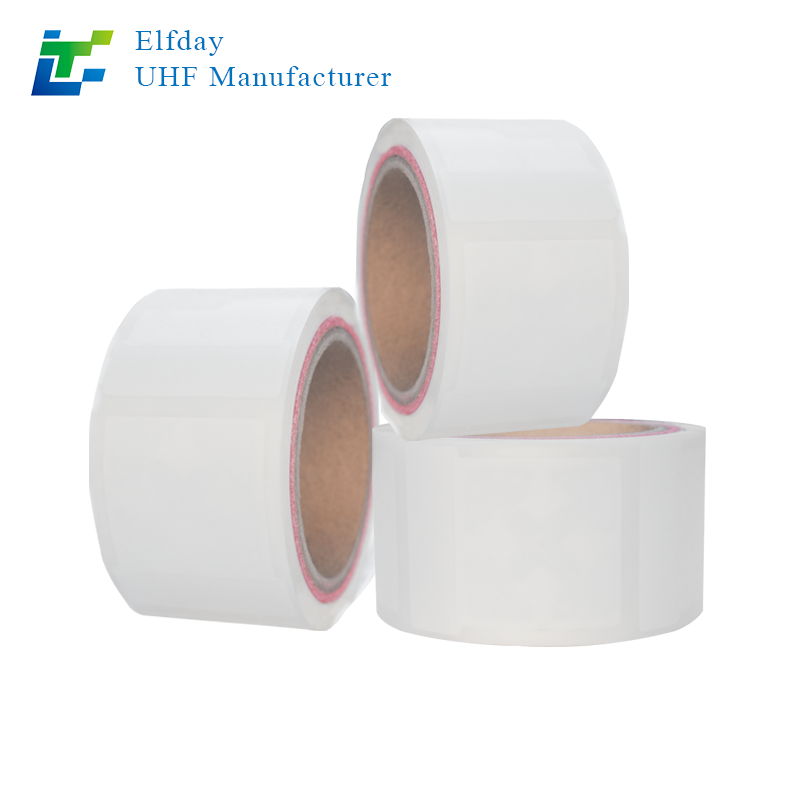
A standard RFID label typically combines an RFID chip and antenna with a thin, flexible substrate. Many designs include an adhesive backing and can be applied to packaging, cartons, documents, and other compatible surfaces.
A specialized RFID tag is designed for a more specific application or operating condition. It may use a different antenna structure, protective housing, mounting method, substrate, or encapsulation material to address requirements that a conventional label cannot reliably meet.
The distinction is not simply about size or price. It is about whether the tag's construction matches the conditions in which it will be installed and used.
| Feature | Standard RFID Label | Specialized RFID Tag |
| Typical construction | Thin inlay or label structure | Application-specific construction or protective housing |
| Common installation | Adhesive attachment to compatible surfaces | Adhesive, screws, ties, embedding, or other mounting methods |
| Typical applications | Packaging, cartons, retail items, and general inventory | Metal assets, industrial equipment, reusable containers, and demanding environments |
| Environmental protection | Depends on the label materials and construction | May be designed for specific temperature, moisture, chemical, or mechanical conditions |
| Installation space | Usually thin and lightweight | Can be compact, rigid, flexible, or purpose-built for a particular mounting area |
| Initial cost | Often lower | Often higher, depending on materials and design |
| Best selection criterion | Suitability for ordinary operating conditions | Verified suitability for a specific technical or environmental requirement |
These are general tendencies, not absolute rules. Some specialized tags are small and flexible, while some standard labels include protective features. Always compare actual product specifications rather than relying on category names alone.
1. Choose a Specialized RFID Tag When the Installation Surface Is Challenging
The material and geometry of the tagged object can significantly influence RFID performance.
A conventional label may work well on a cardboard box but perform poorly when attached directly to a metal machine housing. Metal can interfere with the tag antenna's electromagnetic behaviour, reducing read performance or making the tag unsuitable for the intended installation.
Specialized designs can address these challenges through antenna configurations and structures intended for particular mounting surfaces.
When to Consider an On-Metal RFID Tag
A purpose-designed on-metal RFID tag may be appropriate when tracking:
-
Metal tools and industrial equipment.
-
Steel storage racks and machinery.
-
Metal returnable transport items.
-
Vehicle components and metal containers.
-
IT equipment with metal enclosures.
Before selecting a tag, confirm the type of metal surface, mounting position, available space, and required reading distance. A tag designed for one mounting arrangement may not perform identically when installed on a different surface or with a different air gap.
When a Standard Label May Still Work
If the label can be placed on a compatible non-metallic surface, a specialized on-metal design may not be necessary. For example, a product with a suitable plastic housing may support a conventional label even if the product also contains metal components.
The important question is whether the tag can achieve the required performance at its actual installation location.
2. Choose a Specialized Tag for Harsh Operating Environments
Standard RFID labels are suitable for many controlled indoor applications, but their materials and adhesives may not withstand every environmental condition.
Consider a specialized tag when the application involves:
-
Frequent exposure to rain or moisture.
-
High or low operating temperatures.
-
Cleaning chemicals, oils, or solvents.
-
Strong vibration or repeated impact.
-
Abrasion caused by handling or movement.
-
Extended outdoor exposure to sunlight and weather.
-
Repeated industrial cleaning or washing.
A specialized tag may use a protective enclosure, more durable materials, a different adhesive, or a construction designed to reduce damage under specific conditions.
However, a rugged appearance does not automatically guarantee environmental resistance. A tag's actual performance depends on its materials, construction, installation, and exposure conditions.
Define the Exposure Before Choosing the Tag
Instead of requesting a tag that is simply described as "heavy-duty," document the conditions it must withstand.
For example, determine the normal operating temperature, maximum exposure temperature, duration of moisture contact, chemicals involved, and frequency of cleaning cycles.
Also distinguish between continuous exposure and occasional exposure. A tag that tolerates brief contact with water may not be suitable for repeated washing or prolonged immersion.
Request supporting test data when environmental resistance is a critical requirement.
3. Choose a Specialized RFID Tag for Reusable Assets
Reusable assets often experience more physical wear than disposable packaging.
Examples include returnable containers, reusable pallets, industrial bins, tools, rental equipment, and transport fixtures. These items may circulate between facilities, pass through different handling processes, and remain in service for months or years.
A standard RFID label may be sufficient for some reusable assets, particularly when the surface is compatible and the handling environment is controlled. However, it may be a poor choice when labels are frequently scraped, peeled off, exposed to moisture, or damaged during cleaning.
A specialized tag may offer advantages such as:
-
More durable mounting.
-
Better protection for the chip and antenna.
-
Resistance to repeated handling.
-
Compatibility with non-flat or restricted mounting areas.
-
Easier identification of long-life assets.
The decision should be based on expected service life and the consequences of tag failure.
For example, replacing an inexpensive label on a low-value carton may have little operational impact. Replacing a tag on a reusable industrial container may require locating the asset, removing the old tag, installing a replacement, and updating the tracking record.
If the tag must remain associated with the same asset throughout repeated use cycles, attachment security and long-term readability deserve particular attention.
4. Choose a Specialized Tag When Standard Labels Do Not Meet Read Requirements
A specialized RFID tag may be worth considering when testing shows that standard labels cannot consistently meet the required reading performance.
This can occur when tags are installed near metal or liquid, placed in compact spaces, exposed to changing orientations, or read in environments with many tagged objects.
Specialized antenna designs and tag constructions can improve suitability for particular configurations. Nevertheless, no specialized tag guarantees perfect reads in every environment.
Reading performance also depends on the reader, antenna placement, reader power settings, tag orientation, surrounding materials, and the design of the reading zone.
Look Beyond Maximum Read Range
A long maximum read range does not necessarily mean a tag is better for the application.
A warehouse may need reliable identification across a defined portal, while a production station may need to read only items located in a small area.
When evaluating a specialized tag, consider:
-
Whether the tag is detected consistently at the required distance.
-
Whether the intended reading zone can be controlled.
-
Whether multiple tags can be identified under normal operating conditions.
-
Whether performance changes after the tag is mounted.
-
Whether unwanted reads occur outside the target area.
Test the tag using the actual reader configuration and representative items. Compare results with the standard label under the same conditions before deciding that a specialized design is necessary.
5. Choose a Specialized Tag When Mounting Space or Attachment Is Unusual
Not every asset has a large, flat surface suitable for an adhesive label.
Some products have curved housings, narrow edges, recessed areas, moving parts, or surfaces that cannot be modified. Others require a tag to be integrated during manufacturing or attached without drilling or permanent alteration.
A specialized RFID tag may provide a more suitable form factor or mounting option.
Potential applications include:
-
Small tools with limited label space.
-
Curved plastic or metal components.
-
Equipment that requires screw-mounted identification.
-
Fabric items that need sewn-in or integrated tags.
-
Assets that need removable or replaceable tags.
-
Components where tag placement must avoid moving parts or operational hazards.
Attachment should be considered alongside radio performance. A tag may fit mechanically but fail to read reliably in that position. Conversely, a tag with excellent reading performance may be impractical if its housing interferes with the asset's normal use.
Evaluate physical fit, attachment security, installation time, maintenance access, and reading performance together.
6. Choose a Specialized Tag When Failure Has a High Operational Cost
The consequences of tag failure can be just as important as the physical conditions.
For low-value, short-lived inventory, replacing a damaged label may be inexpensive and straightforward. For critical equipment, regulated processes, or assets that move between locations, an unreadable or detached tag can create additional work and disrupt operations.
Consider a specialized tag when failure could lead to:
-
Lost visibility of high-value assets.
-
Delays in equipment inspections or maintenance.
-
Errors in inventory or asset records.
-
Repeated manual identification.
-
Disruption to automated handling processes.
-
Frequent tag replacement and reinstallation.
In these cases, the higher initial tag cost may be justified if it reduces the expected cost of failures over the service life.
This does not mean every business-critical application needs the most rugged tag available. It means the required reliability, validation evidence, and replacement strategy should reflect the consequences of failure.
7. When Is a Standard RFID Label the Better Choice?
Specialized tags are not automatically the better investment. Standard labels remain suitable for many applications where environmental conditions, mounting surfaces, and service-life expectations are straightforward.
A standard RFID label may be the preferred option when:
-
Items are tracked in a controlled indoor environment.
-
The installation surface is compatible with the label.
-
The tag is applied to packaging or short-life inventory.
-
Adhesive attachment is sufficient.
-
The required reading performance is achieved during testing.
-
Large quantities make per-unit cost important.
-
Damaged labels can be replaced easily and inexpensively.
For example, a distribution centre tracking cardboard cartons may have no need for rigid industrial tags if ordinary RFID labels provide the required read consistency and survive the handling process.
Using a specialized tag without a clear technical or operational reason can increase purchase costs, complicate installation, and reduce the number of suitable product options.
The goal is to choose the simplest tag design that reliably meets the application's requirements.
Standard RFID Label vs. Specialized RFID Tag: A Decision Guide
Use the following guide to identify which option deserves evaluation first.
| Application Requirement | Option to Evaluate First | Why |
| Tracking cardboard cartons indoors | Standard RFID label | Conventional labels often suit packaging workflows |
| Tracking products on compatible plastic surfaces | Standard RFID label | A specialized design may be unnecessary if testing confirms performance |
| Direct attachment to metal equipment | Specialized on-metal tag | Standard inlays may be affected by the metal surface |
| Reusable assets exposed to repeated abrasion | Specialized durable tag | Construction and attachment may need to withstand repeated handling |
| Outdoor equipment exposed to weather | Specialized outdoor-rated tag | Environmental suitability must be verified |
| Items requiring repeated washing | Specialized washable or protected tag | Materials and construction must tolerate the actual cleaning process |
| Assets with very limited mounting space | Application-specific tag | Physical dimensions and antenna design may need to match the installation |
| High-volume, short-life packaging | Standard RFID label | Lower unit cost may be beneficial when performance requirements are met |
| Critical assets with costly tag failures | Evaluate both options | Total lifecycle cost and verified reliability should guide the decision |
This table is a starting point, not a substitute for testing. Some standard labels can meet demanding requirements, while some specialized tags may not suit a particular application.
How to Decide Whether the Extra Cost Is Worth It
Before selecting a specialized RFID tag, compare the total expected cost of each option rather than focusing only on the purchase price.
A useful evaluation should include:
-
Initial tag cost: Compare prices at the expected order quantity.
-
Installation cost: Consider labour, tools, surface preparation, and mounting materials.
-
Expected replacement rate: Estimate how often tags may be damaged, detached, or rendered unreadable.
-
Maintenance effort: Include inspection, reattachment, troubleshooting, and data-record updates.
-
Operational impact: Estimate the cost of missed identification, manual checks, delays, or lost asset visibility.
-
Service life: Compare how long each option is expected to remain suitable for the application.
-
Supply continuity: Consider future replenishment and the consistency of the approved design.
An illustrative calculation can help make the trade-off clearer.
Suppose a standard label costs $0.50 per unit and a specialized tag costs $3.00. The specialized tag has a $2.50 higher initial cost. If the standard label requires repeated replacement and each replacement involves additional labour, the price difference may become less significant over time.
However, if both tags perform equally well and last equally long, the specialized tag may offer little additional value.
Use measured pilot results and realistic operating assumptions rather than assuming that a more expensive tag will automatically last longer.
How to Validate a Specialized RFID Tag Before Bulk Purchasing
When a specialized tag appears necessary, test it before placing a large order.
Step 1: Establish a Baseline
Select a standard RFID label that is suitable for comparison and document its performance on the intended item, where appropriate.
Step 2: Test the Actual Installation
Mount each candidate tag using the intended attachment method. Use representative materials, surfaces, and mounting positions.
Step 3: Measure Reading Performance
Test under the intended reader configuration, required distances, item orientations, and normal operating conditions. Record successful reads, missed reads, and unwanted reads.
Step 4: Apply Relevant Environmental Stress
If the application involves heat, moisture, chemicals, impact, or repeated cleaning, test the conditions that are most likely to affect the tag.
Step 5: Inspect Attachment and Physical Condition
Check for peeling, cracking, deformation, housing damage, and other changes that could affect long-term use.
Step 6: Compare Results Against Acceptance Criteria
Define the required performance and pass/fail thresholds before testing. Select the tag that meets the requirements with an appropriate level of confidence and acceptable lifecycle cost.
A controlled pilot provides stronger evidence than relying on product descriptions alone.
Common Mistakes When Choosing Specialized RFID Tags
Assuming More Rugged Always Means Better
Extra protection is useful only when it addresses a real requirement. Unnecessary features can increase cost and make installation more complicated.
Selecting a Tag Based on Its Name
Terms such as "industrial," "rugged," and "high-performance" are not sufficient evidence of suitability. Review the actual construction, supported conditions, and test results.
Ignoring the Surface After Installation
A tag that reads well in open air may perform differently when mounted on metal, near liquids, or inside a compact assembly.
Comparing Tags Under Different Test Conditions
Differences in reader settings, antenna placement, orientation, and distance can make test results misleading. Use the same conditions when comparing candidates.
Focusing Only on Unit Price
A low-cost tag may become expensive if it requires frequent replacement or manual intervention. Conversely, a specialized tag is not worth the premium if it provides no meaningful improvement.
Skipping Long-Term Requirements
Consider expected service life, replenishment availability, and the consequences of changes to tag construction. A successful pilot should support a repeatable purchasing and maintenance process.
Frequently Asked Questions
Are specialized RFID tags always more durable than standard labels?
No. Durability depends on the specific materials, construction, adhesive, and intended operating conditions. A standard label may be adequate for a controlled environment, while a specialized tag may be designed for a particular combination of temperature, moisture, chemicals, or mechanical stress. Check the product specifications and test results.
Can a standard RFID label be used on metal?
Some standard RFID labels can be used on metal if a compatible mounting arrangement or suitable non-metallic surface is available. Direct mounting on metal often requires a tag specifically designed for that condition. Test the complete installation before deployment.
Are specialized RFID tags worth the additional cost?
They can be when they solve a measurable problem, such as poor reading performance, frequent detachment, environmental damage, or costly replacement. The decision should be based on total lifecycle cost and verified application performance rather than initial price alone.
Do specialized RFID tags always have a longer read range?
No. Specialized tags are designed to address particular application requirements, not necessarily to maximise range. Read performance depends on the tag, reader, antenna configuration, installation surface, orientation, and surrounding environment.
Can specialized RFID tags be customised?
Many specialized RFID tags can be offered with different dimensions, mounting options, materials, or other application-specific features. The available options depend on the design and manufacturing process. Businesses should document their requirements and validate samples before approving a customised design.
How should businesses compare standard labels and specialized tags?
Use the same target item, mounting position, reader configuration, and test conditions. Compare reading performance, attachment security, environmental suitability, expected service life, installation effort, and total cost. This creates a more reliable basis for selection.
Choosing between a standard RFID label and a specialized RFID tag starts with understanding the actual tracking environment.
Standard labels are often a cost-effective solution for compatible surfaces and controlled applications. Specialized tags deserve consideration when metal mounting, harsh environmental exposure, repeated use, restricted installation space, or costly failures create requirements that a conventional label cannot reliably meet.
The most effective approach is to define the requirements first, compare suitable candidates, test them under representative conditions, and evaluate total lifecycle cost before purchasing in bulk.
A specialized RFID tag is worth the additional investment when its design solves a specific problem and delivers measurable value. If a standard label already meets the requirements, adding complexity may provide little benefit.