



What Is an RFID System? A Detailed Look at Its Working Principle, Components, and Application Scenarios
RFID (Radio Frequency Identification) is a wireless identification technology that uses radio waves to identify and exchange information with tagged objects. It is widely used in inventory management, warehouse operations, logistics, manufacturing, retail, healthcare, and asset tracking.
An RFID system allows businesses to identify multiple tagged items without requiring direct visual contact with each tag. Compared with traditional barcode identification, RFID can support automated data collection and more flexible identification processes.
But what exactly is an RFID system? How does it work, what components does it include, and where can it be used?
This guide explains the basic principles, main components, different RFID system types, and practical application scenarios to help businesses understand how RFID technology supports modern identification and tracking operations.
What Is an RFID System?
An RFID system is an identification and data collection system that uses radio frequency signals to identify objects equipped with RFID tags.
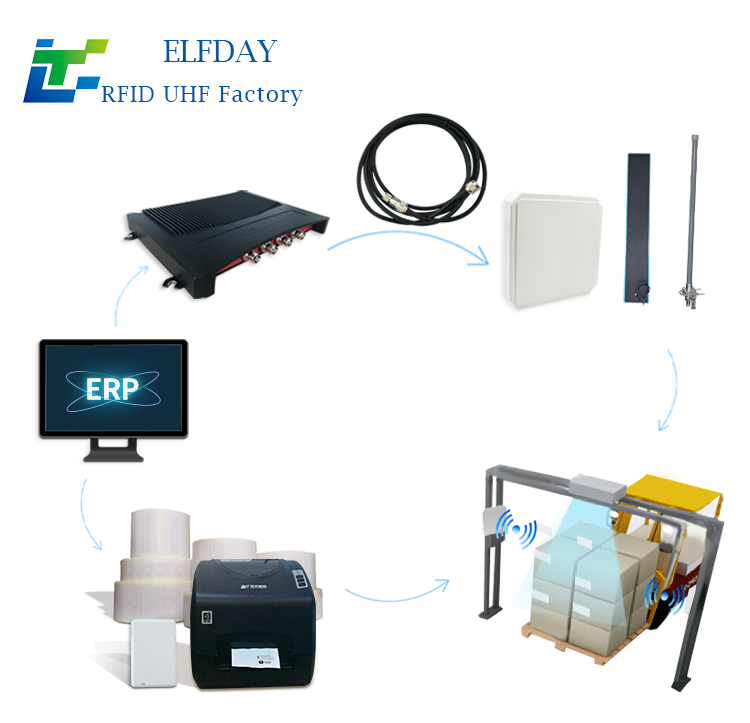
A typical RFID system consists of four main elements:
-
RFID tags: Attached to or integrated with objects to provide identification information.
-
RFID readers: Communicate with RFID tags and collect their identification data.
-
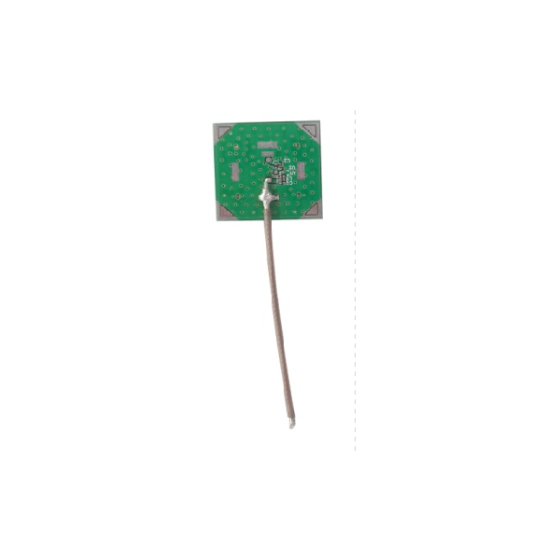
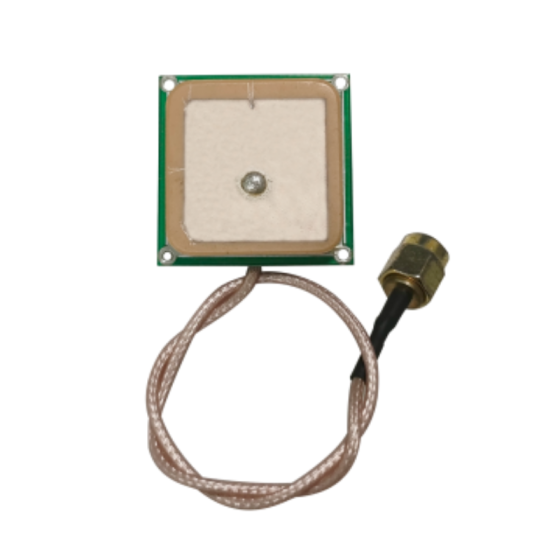
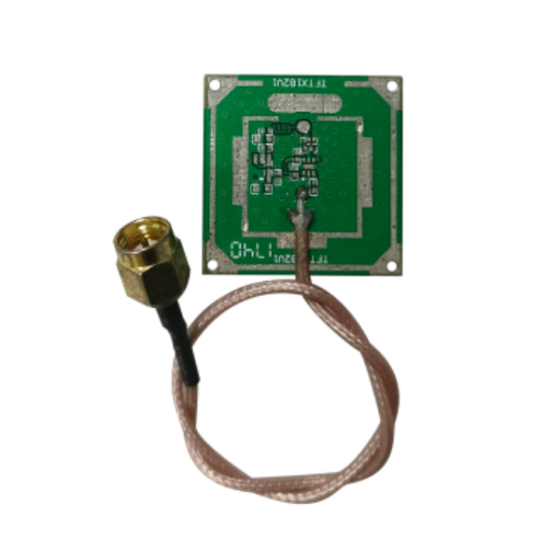
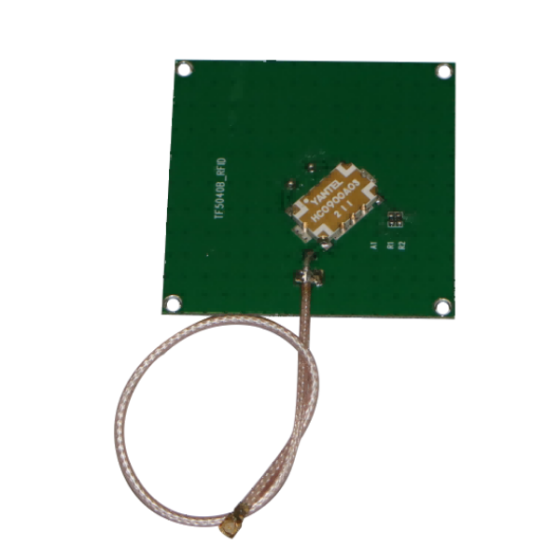
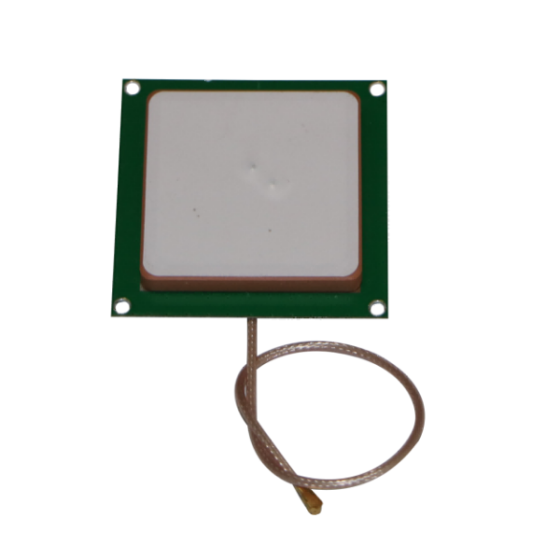
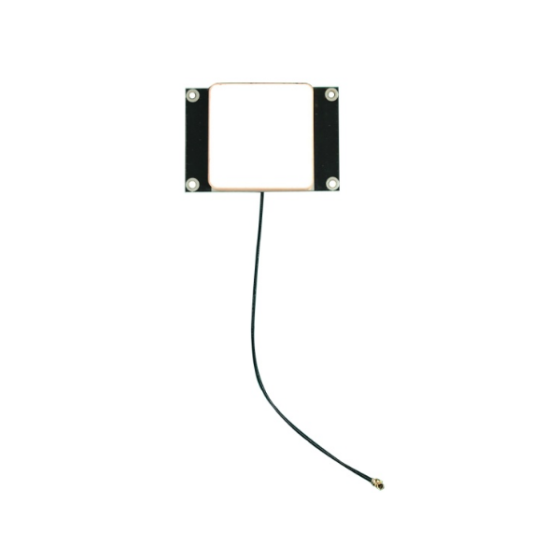
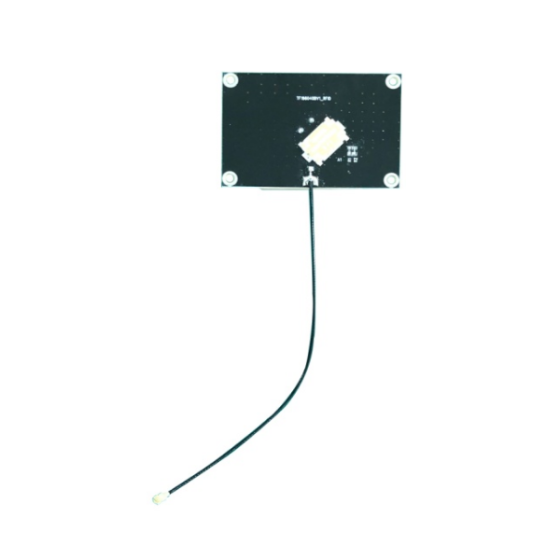
RFID antennas: Transmit and receive radio frequency signals between readers and tags.
-
Management software: Processes collected information and connects it with business databases or operational systems.
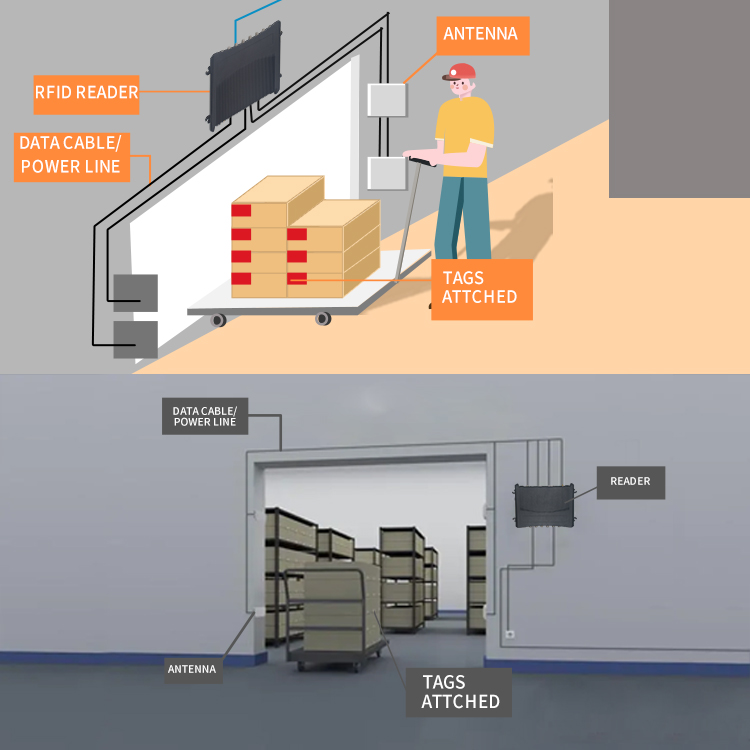
When an RFID-tagged object enters a reader's configured reading area, the reader communicates with the tag and retrieves its identification information.
The collected data can then be transferred to software for inventory management, asset tracking, product identification, or other business operations.
Unlike a barcode system, which generally requires optical visibility, RFID identification uses radio frequency communication. This allows suitable RFID systems to identify tagged objects without directly scanning a printed label.
However, RFID performance depends on tag type, operating frequency, antenna configuration, surrounding materials, and the application environment.
2. How Does an RFID System Work?
The working principle of an RFID system is based on radio frequency communication between an RFID reader and an RFID tag.
Although different RFID technologies use different communication methods, a typical passive RFID identification process follows several steps.
Step 1: The RFID Reader Generates a Radio Frequency Signal
The RFID reader is connected to one or more antennas.
When the system operates, the reader sends radio frequency signals through the antennas to establish a communication area.
The frequency and reader configuration depend on the RFID system being used.
Step 2: The RFID Tag Receives the Signal
When a compatible passive RFID tag enters the reader's effective communication area, its antenna receives energy from the reader's RF field.
The tag uses this energy to activate its chip and participate in communication.
Passive RFID tags generally do not require an internal battery for normal identification.
Step 3: The RFID Tag Responds With Identification Data
After activation, the RFID tag communicates its stored information back to the reader.
For many inventory and asset tracking applications, this includes a unique identification number or electronic product code.
The reader receives the tag response and processes the identification data.
Step 4: The Reader Sends Data to the Management System
The RFID reader transfers collected information to a connected computer, controller, or management platform.
Depending on the system architecture, data may be transmitted through Ethernet, Wi-Fi, serial communication, or other supported interfaces.
Step 5: The Software Processes the Information
The management software compares the collected RFID data with stored business records.
For example:
-
A warehouse system can identify tagged inventory.
-
A manufacturing system can associate components with production records.
-
An asset management system can retrieve equipment information.
-
A retail system can check product inventory.
Through this process, RFID technology connects physical objects with digital business information.
What Are the Main Components of an RFID System?
Each RFID component has a different function. Their compatibility and configuration determine how effectively the complete system operates.
3.1 RFID Tags
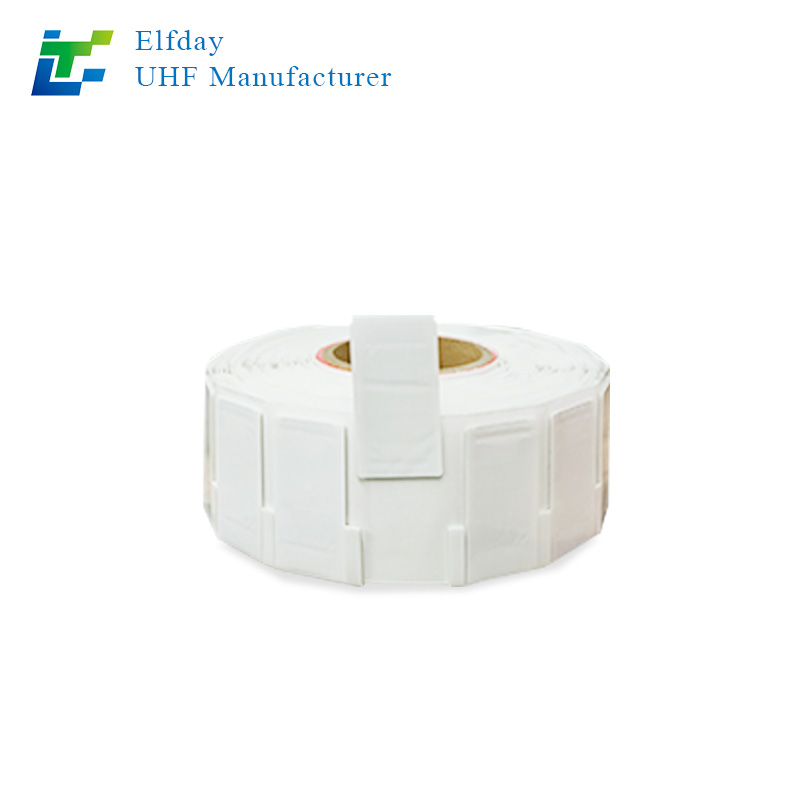
An RFID tag is a small electronic identification device that can be attached to or integrated with an object.
A typical RFID tag contains:
-
An RFID chip.
-
An antenna.
-
A substrate or protective structure.
The chip stores identification data, while the antenna supports radio frequency communication with the reader.
RFID tags are available in different shapes, sizes, materials, and performance configurations.
Common tag types include:
General-purpose RFID tags
Used for product identification, inventory management, and warehouse applications.
Anti-metal RFID tags
Designed for applications involving metal surfaces, where conventional RFID tags may experience significant RF interference.
Flexible RFID tags
Suitable for applications requiring flexible tag structures or installation on certain curved surfaces.
Industrial RFID tags
Designed for specific industrial environments and may include protective housings or specialized mounting structures.
The correct RFID tag should be selected according to the object material, installation space, operating environment, and reading requirements.
3.2 RFID Readers
An RFID reader communicates with RFID tags and collects their identification information.
Readers can be divided into several common categories.
Fixed RFID readers
Installed at designated locations such as warehouse entrances, production lines, storage areas, or conveyor systems.
They are often used for automated identification and continuous monitoring applications.
Handheld RFID readers
Portable devices that allow employees to identify tagged objects while moving around a warehouse, retail store, or industrial facility.
They are useful for inventory checks, asset inspections, and mobile identification tasks.
Integrated RFID readers
Compact reader devices that combine the reader electronics and antenna into one unit.
They can be useful where installation space is limited or where a simplified hardware configuration is preferred.
Reader selection depends on reading distance requirements, tag quantity, application environment, connectivity, and system integration needs.
3.3 RFID Antennas
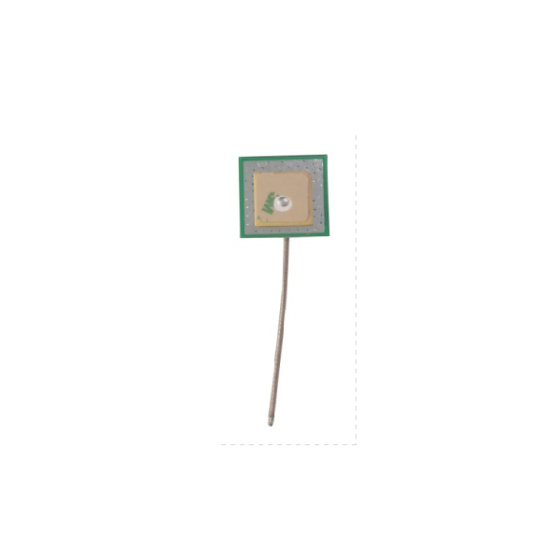
RFID antennas transmit and receive radio frequency signals.
They are important because their design and installation influence the communication area and the orientation of the RF field.
Common RFID antenna configurations include:
-
Circularly polarized antennas: Can support tag identification across different tag orientations within a suitable reading area.
-
Linearly polarized antennas: Provide directional polarization and may be suitable when tag orientation is relatively consistent.
-
Near-field antennas: Designed for applications requiring identification over a relatively localized area.
-
Specialized antennas: Developed for specific installation structures or application requirements.
Antenna selection should consider the reading zone, tag orientation, mounting position, surrounding materials, and reader output configuration.

3.4 RFID Management Software
RFID management software processes the identification data collected by readers.
It can connect physical RFID tags with digital business records and support different operational workflows.
Depending on the application, software functions may include:
-
Inventory management.
-
Asset identification.
-
Product information retrieval.
-
Item movement records.
-
Stock discrepancy reporting.
-
Production process tracking.
-
Data export and reporting.
-
Integration with ERP, WMS, or other business systems.
The software transforms raw RFID identification events into useful business information.
What Are the Different Types of RFID Systems?
RFID systems can be classified according to their power supply and operating frequency.
Understanding these categories helps businesses select a suitable solution for different applications.
4.1 Active RFID Systems
Active RFID tags contain an internal power source, usually a battery.
The battery powers the tag's communication functions, allowing it to transmit signals over distances that can be greater than those of many passive RFID systems.
Common applications include:
-
Vehicle and equipment tracking.
-
Large-scale asset monitoring.
-
Personnel or location tracking systems.
-
Applications requiring longer-range identification.
Active RFID systems generally have higher tag costs and require battery management.
4.2 Passive RFID Systems
Passive RFID tags do not contain an internal battery for normal operation.
Instead, they obtain the energy required for communication from the reader's RF field.
Passive RFID systems are widely used in retail, warehousing, logistics, manufacturing, and asset management because their tags can be compact and relatively economical for large-scale deployment.
Their communication performance depends on frequency, tag design, reader configuration, and the surrounding environment.
4.3 Low Frequency RFID (LF)
LF RFID commonly operates around 125 kHz or 134.2 kHz.
Its characteristics make it suitable for certain applications involving short-range identification.
Typical applications include:
-
Animal identification.
-
Access control.
-
Specialized industrial identification.
-
Certain asset identification systems.
LF systems are generally used where their specific identification characteristics are more important than high-speed bulk reading.
4.4 High Frequency RFID (HF)
HF RFID commonly operates at 13.56 MHz.
It is used in applications such as:
-
Contactless cards.
-
Library management.
-
Product authentication.
-
Ticketing.
-
NFC-related applications.
HF RFID supports a variety of standards and tag formats, depending on the application.
4.5 Ultra-High Frequency RFID (UHF)
UHF RFID commonly operates in the 860–960 MHz range, depending on regional regulations and the applicable standard.
In many commercial inventory applications, UHF RFID is associated with EPC Gen2 and ISO/IEC 18000-63 technology.
Common applications include:
-
Warehouse inventory management.
-
Logistics and supply chain tracking.
-
Retail product identification.
-
Industrial asset management.
-
Production line tracking.
UHF RFID can support multi-tag identification and relatively long read ranges under suitable conditions.
Actual operating frequencies, permitted transmission power, and system performance vary by region and installation environment.
What Are the Main Applications of RFID Systems?
RFID technology can be used in many industries because it supports automated identification and data collection.
5.1 Warehouse and Inventory Management
<text>RFID systems can help warehouses identify tagged products, cartons, pallets, and storage containers.</text>
When items pass through designated reading areas, fixed RFID readers can collect tag information and transfer it to warehouse management software.
Typical benefits include:
-
More convenient inventory checking.
-
Improved visibility of tagged goods.
-
Support for receiving and dispatch operations.
-
Reduced dependence on manual barcode scanning.
Relevant application: RFID warehouse inventory management.
5.2 Logistics and Supply Chain Management
In logistics operations, RFID can help identify goods as they move through distribution centers, transportation facilities, and supply chain checkpoints.
Businesses can associate tag identification events with shipment records and logistics information.
This helps improve item identification and supports the management of goods moving between different locations.
5.3 Manufacturing and Production Line Management
RFID systems can identify components, work-in-progress products, tools, and production fixtures.
By connecting tag IDs with production records, manufacturers can support:
-
Component identification.
-
Work-in-progress tracking.
-
Production process monitoring.
-
Tool and fixture management.
-
Product assembly verification.
RFID can be integrated with manufacturing execution systems to support more automated production workflows.
5.4 Retail and Product Management
Retail businesses can use RFID tags to identify products and support store inventory management.
Applications may include:
-
Product inventory checking.
-
Stockroom management.
-
Store replenishment.
-
Product identification.
-
Item-level tracking.
RFID can help retailers obtain inventory information without manually scanning every individual product label.
5.5 Asset Tracking and Equipment Management
RFID tags can be attached to tools, machinery, equipment, and other valuable assets.
A connected management system can associate each tag with information such as asset ID, location records, maintenance history, and usage status.
This can help businesses organize equipment inventories and support routine asset inspections.
5.6 Healthcare and Medical Equipment Management
Hospitals and healthcare facilities can use RFID to identify tagged equipment, supplies, and other managed items.
Potential applications include:
-
Medical equipment identification.
-
Inventory management.
-
Supply tracking.
-
Asset location workflows.
-
Laundry and textile management.
Implementation should account for healthcare operational requirements, equipment materials, cleaning processes, and data security.
5.7 Jewelry and Diamond Management
RFID can also support the identification and management of valuable jewelry products and their packaging.
For example, RFID tags can be associated with jewelry boxes, trays, or designated product carriers.
The system can connect each RFID ID with product information, certificate references, inventory records, and display assignments.
This helps jewelry businesses organize product documentation and inventory verification.
What Are the Advantages of Using an RFID System?
Compared with identification methods that require individual visual scanning, RFID offers several potential operational advantages.
Non-contact identification
RFID tags can be identified through radio frequency communication without requiring direct optical scanning.
Multi-tag identification
Suitable RFID systems can identify multiple tags within their communication areas, making them useful for inventory and bulk identification workflows.
Automated data collection
Fixed readers can collect tag information at designated locations, reducing the need for repeated manual scanning.
Flexible tag formats
RFID tags are available in different sizes, materials, and designs to support various products and environments.
Integration with business software
RFID data can be connected with inventory, warehouse, manufacturing, and asset management systems.
Improved operational visibility
When integrated with suitable software and processes, RFID can help businesses maintain more consistent information about tagged items and their movement.
However, RFID is not automatically more effective than every alternative. System design, tag compatibility, infrastructure cost, and operational requirements should all be considered.
What Factors Should Be Considered When Choosing an RFID System?
Selecting an RFID system requires evaluating the application as a whole rather than choosing tags and readers independently.
Important considerations include:
Application Requirements
Determine what needs to be identified and what business problem the system should solve.
For example, warehouse inventory management may require a different configuration from tool tracking or production line identification.
Operating Frequency
Choose the frequency according to the application, reading requirements, regional regulations, and compatibility with existing equipment.
Tag Material and Installation Surface
Consider whether the tag will be installed on plastic, cardboard, metal, glass, fabric, or other materials.
Metal surfaces may require specialized anti-metal RFID tags.
Reader and Antenna Configuration
Evaluate the reading area, tag orientation, item movement, expected tag population, and possible interference.
Software Integration
Confirm whether the RFID system needs to connect with existing ERP, WMS, MES, or asset management software.
Environmental Conditions
Consider temperature, humidity, dust, vibration, impact, and exposure to chemicals or cleaning processes.
Total Project Cost
Evaluate not only tag and reader prices but also antennas, installation, software development, integration, testing, and ongoing maintenance.
A pilot project is often a practical way to validate the system before full-scale deployment.
How to Build an RFID System for Your Business
A successful RFID project should begin with clearly defined operational requirements.
The following process provides a practical starting point.
Step 1: Define the identification objective
Determine whether the system is intended for inventory counting, asset tracking, logistics, production management, or another application.
Step 2: Identify the objects and materials
Understand the size, shape, material, and operating environment of the objects that will carry RFID tags.
Step 3: Select suitable RFID tags
Choose tags according to frequency, dimensions, mounting method, environmental requirements, and identification needs.
Step 4: Choose RFID readers and antennas
Determine whether fixed readers, handheld readers, or integrated readers are more suitable.
Select antennas according to the required reading zones and tag orientation.
Step 5: Develop the software and data connection
Define how RFID identification data will connect with product records, inventory systems, and business workflows.
Step 6: Conduct pilot testing
Test representative tagged items under actual operating conditions.
Evaluate identification consistency, reading coverage, installation practicality, and system integration.
Step 7: Deploy and optimize
After validating the pilot, expand the system and adjust tag positions, antenna settings, and operational procedures as necessary.
An RFID system is a wireless identification solution that connects physical objects with digital information through RFID tags, readers, antennas, and management software.
Its working principle is based on radio frequency communication, allowing compatible readers to identify tagged objects without requiring direct visual scanning.
From warehouse inventory and logistics to manufacturing, retail, asset tracking, healthcare, and jewelry management, RFID technology supports a wide range of automated identification applications.
Choosing the right system requires careful consideration of operating frequency, tag design, reader configuration, installation environment, and software integration.
For businesses planning to introduce RFID technology, starting with a clearly defined application and conducting practical pilot testing can help create a more suitable and cost-effective solution.
Looking for RFID tags, readers, or antennas for your project? EFLDAY offers RFID product options for different identification and tracking applications. Contact our team to discuss your requirements and explore a suitable RFID system configuration.