



What Is an On-Metal RFID Tag? How It Works and Applications
What is an on-metal RFID tag? An on-metal RFID tag is an RFID tag specifically designed to operate when attached directly to metal or other conductive surfaces.
Standard RFID tags can experience reduced performance when mounted directly on metal. Metal can interfere with the tag antenna and change the way radio frequency signals interact with the tag.
On-metal RFID tags are designed to address this challenge.
They are commonly used to identify and track industrial equipment, machinery, tools, metal containers, automotive components, IT equipment, and other metal assets.
This guide explains what on-metal RFID tags are, how they work, why standard RFID tags can have difficulty on metal, where on-metal tags are used, and how to choose the right tag for a specific application.
What Is an On-Metal RFID Tag?
An on-metal RFID tag is an RFID tag engineered to work effectively when installed on or near a metal surface.
A typical RFID tag contains:
- RFID chip
- RFID antenna
- Substrate or inlay
- Adhesive, housing, or protective layer
The antenna is responsible for receiving signals from the RFID reader and communicating information back to the reader.
When a standard RFID tag is placed directly on metal, the metal can interfere with the antenna's normal operation.
An on-metal RFID tag uses a specialized construction that allows the antenna to operate more effectively in the presence of metal.
For this reason, on-metal RFID tags are also sometimes called anti-metal RFID tags.
Why Does Metal Affect RFID Tags?
Metal is conductive, and it can interact strongly with electromagnetic fields.
When a standard UHF RFID tag is placed directly on a metal surface, the metal can alter the electrical characteristics of the tag antenna.
This can lead to:
- Reduced read range
- Unstable communication
- Lower read reliability
- Difficulty detecting the tag
For example, a standard UHF RFID label may work well when attached to a cardboard carton but perform poorly when attached directly to a steel machine.
The difference is caused by the interaction between the RFID antenna and the conductive metal surface.
How Does an On-Metal RFID Tag Work?
An on-metal RFID tag uses a specially designed antenna structure and tag construction to operate near metal.
Depending on the tag design, this may involve:
- Specialized antenna geometry
- Dielectric materials
- Spacer layers
- Foam substrates
- Rigid housings
- Tuned antenna structures
These design elements help control the interaction between the antenna and the metal surface.
The communication process is otherwise similar to a conventional passive RFID system.
RFID Reader → RF Signal → On-Metal RFID Tag → RFID Chip → Backscatter Response → RFID Reader
For passive UHF RFID tags, the reader provides the energy needed to activate the chip, and the tag communicates through backscatter.
What Is the Difference Between an On-Metal RFID Tag and a Standard RFID Tag?
The main difference is the intended mounting environment.
| Feature | On-Metal RFID Tag | Standard RFID Tag |
|---|---|---|
| Designed for metal surfaces | Yes | Usually no |
| Direct metal mounting | Suitable | May reduce performance |
| Antenna design | Optimized for metal | General purpose |
| Industrial asset tracking | Well suited | Application dependent |
| Rugged versions | Common | Depends on design |
| Typical cost | Higher | Lower |
A standard RFID tag can work well on materials such as cardboard, plastic, or some types of packaging.
An on-metal RFID tag is specifically engineered for applications where metal is part of the installation environment.
What Are On-Metal RFID Tags Used For?
On-metal RFID tags are particularly useful for tracking assets made from metal or assets that contain substantial amounts of metal.
Industrial Machinery
Factories often contain expensive machines and production equipment.
An on-metal RFID tag can provide each machine with a unique identification number.
The RFID system can associate that ID with information such as:
- Equipment number
- Location
- Maintenance records
- Inspection status
- Service history
This can improve equipment visibility and asset management.
Tools and Equipment
Industrial tools are frequently made from steel or other conductive materials.
On-metal RFID tags can be attached to:
- Hand tools
- Power tools
- Maintenance tools
- Calibration equipment
- Production tools
Workers can use RFID readers to identify tools without relying entirely on manual inventory checks.
Metal Containers
Reusable metal containers can be tracked using on-metal RFID tags.
Potential applications include:
- Container identification
- Return tracking
- Location monitoring
- Inventory management
- Supply chain tracking
Automotive Components
Automotive manufacturing involves large amounts of metal and many reusable production assets.
On-metal RFID tags can be used for:
- Automotive parts
- Production tools
- Returnable containers
- Manufacturing equipment
- Work-in-progress assets
The tag must be selected according to the component, temperature, environment, and mounting conditions.
IT Equipment
Servers, networking equipment, and other IT assets often include metal surfaces.
On-metal RFID tags can be used for asset identification in:
- Data centers
- Server rooms
- IT departments
- Equipment storage areas
Warehouse Equipment
Warehouses contain many metal assets that can benefit from automated identification.
Examples include:
- Carts
- Trolleys
- Racks
- Metal bins
- Containers
- Handling equipment
RFID can help organizations identify and manage these assets more efficiently.
Construction Equipment
Construction equipment is often expensive and frequently moved between locations.
On-metal RFID tags can be used on:
- Machinery
- Tools
- Generators
- Equipment
- Reusable components
For outdoor applications, the tag should also be designed to withstand weather, moisture, impact, and temperature changes.
What Are the Benefits of On-Metal RFID Tags?
Designed for Direct Metal Mounting
The primary advantage is simple: on-metal RFID tags are designed specifically for metal surfaces.
This makes them more appropriate than standard RFID labels for many metal asset applications.
Better RFID Performance on Metal
Specialized antenna designs can help maintain communication performance when the tag is mounted on metal.
Actual performance still depends on the tag, reader, antenna, metal surface, orientation, and environment.
Suitable for Asset Tracking
On-metal RFID tags can give individual assets a unique digital identity.
This makes them useful for tracking:
- Tools
- Machinery
- Equipment
- Containers
- Vehicles
- Industrial assets
Rugged Construction Options
Many on-metal RFID tags are available in durable housings.
Depending on the design, they can be engineered for exposure to:
- Water
- Dust
- Chemicals
- Impact
- Heat
- Cold
- Outdoor conditions
Multiple Mounting Options
Depending on the product, on-metal RFID tags may be installed using:
- Industrial adhesive
- Screws
- Rivets
- Bolts
- Mechanical fasteners
The appropriate mounting method depends on the asset and operating environment.
What Is a UHF On-Metal RFID Tag?
A UHF on-metal RFID tag combines UHF RFID technology with an antenna design optimized for metal surfaces.
UHF RFID is commonly used for inventory and asset tracking because it can support:
- Longer read distances
- Fast tag identification
- Multi-tag reading
- Fixed reader systems
- Handheld RFID readers
This makes UHF on-metal tags suitable for applications involving large numbers of metal assets.
For example, a warehouse may attach UHF on-metal RFID tags to metal containers and use handheld readers to perform inventory checks.
How Far Can an On-Metal RFID Tag Be Read?
There is no universal read range for every on-metal RFID tag.
The actual distance depends on:
- RFID frequency
- RFID chip
- Antenna design
- Tag size
- Reader power
- Reader antenna
- Tag orientation
- Metal surface
- Installation position
- Environmental conditions
A large industrial UHF on-metal tag may perform differently from a small tag attached to a compact metal tool.
Therefore, read-range specifications should be evaluated under the actual application conditions.
Does the Type of Metal Matter?
Yes.
Different metals can create different RF conditions.
Common surfaces include:
- Steel
- Stainless steel
- Aluminum
- Metal alloys
The size and shape of the metal object can also affect RFID performance.
For example, a tag mounted on a large flat steel plate may behave differently from one mounted on a curved metal pipe.
This is why testing on the actual asset is important.
Can On-Metal RFID Tags Be Used on Curved Surfaces?
Yes, depending on the tag design.
Some on-metal RFID tags are flexible and can be installed on curved surfaces.
Other tags use rigid housings and are better suited for flat surfaces.
When selecting a tag for a curved metal object, consider:
- Tag flexibility
- Surface curvature
- Tag dimensions
- Antenna orientation
- Required read distance
- Mounting method
Are On-Metal RFID Tags Waterproof?
Some on-metal RFID tags are designed to be waterproof or highly water-resistant.
However, not every on-metal RFID tag has the same level of environmental protection.
For outdoor or industrial applications, check specifications such as:
- IP rating
- Operating temperature
- Chemical resistance
- Impact resistance
- UV resistance
The housing should match the actual operating environment.
Can On-Metal RFID Tags Work Outdoors?
Yes.
Rugged on-metal RFID tags can be designed for outdoor asset tracking.
Outdoor applications may expose tags to:
- Rain
- Snow
- Humidity
- UV radiation
- Dust
- Temperature changes
- Physical impact
The RFID antenna is only one part of the solution. The physical housing and mounting method are equally important for long-term outdoor use.
How Do You Choose an On-Metal RFID Tag?
Choosing the right on-metal RFID tag starts with understanding the actual application.
1. Identify the Metal Surface
Determine whether the tag will be attached to:
- Steel
- Stainless steel
- Aluminum
- Metal machinery
- Metal containers
- Automotive components
2. Measure the Available Space
Determine how much space is available for the RFID tag.
Tag dimensions can influence antenna design and installation.
3. Define the Required Read Range
Determine how far the reader needs to identify the asset.
For example:
- Close-range handheld reading
- Several-meter inventory reading
- Fixed portal reading
- Conveyor tracking
4. Determine the Environment
Consider whether the tag will be exposed to:
- Water
- Oil
- Chemicals
- Heat
- Cold
- Dust
- Impact
- UV exposure
5. Select the Mounting Method
Decide whether the tag should use:
- Adhesive
- Screws
- Rivets
- Bolts
- Other mechanical mounting methods
6. Select the RFID Frequency
For many industrial tracking applications, UHF RFID is a common choice because of its read range and multi-tag capabilities.
However, the correct frequency depends on the application.
7. Choose the RFID Chip
Consider:
- Memory capacity
- Read/write capability
- Compatibility
- Security features
- System requirements
8. Test the Tag on the Actual Asset
This is one of the most important steps.
A tag should be tested on the actual metal surface, in the actual mounting position, using the intended RFID reader and antenna.
This helps identify real-world performance before large-scale deployment.
On-Metal RFID Tags for Asset Tracking
Asset tracking is one of the strongest use cases for on-metal RFID tags.
A typical workflow may look like this:
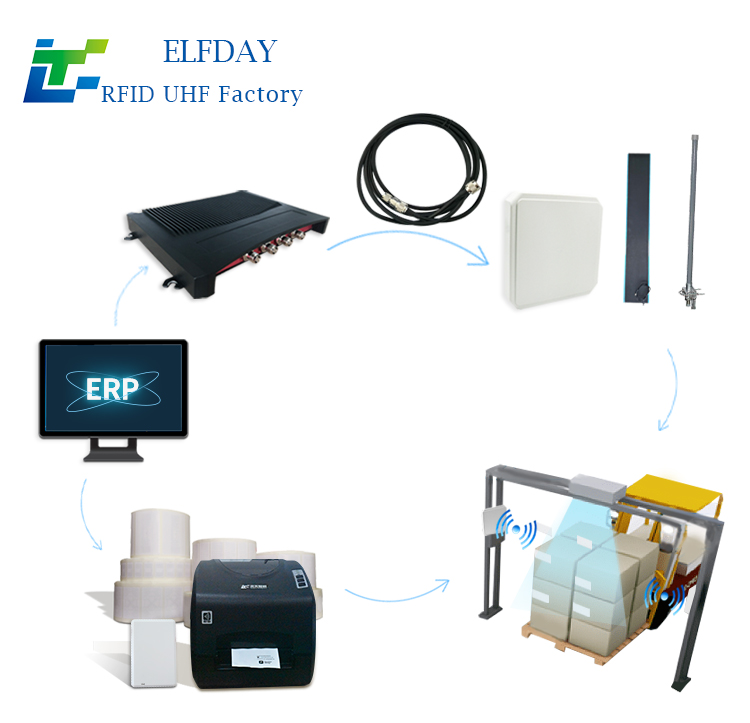
Physical Asset → RFID Tag → RFID Reader → RFID Software → Asset Database
For example, a manufacturing company can attach an RFID tag to a metal tool.
The tag ID is associated with the tool's digital record.
When employees use a handheld RFID reader, the system can identify the tool and retrieve its associated information.
This can support:
- Asset inventory
- Location management
- Tool control
- Maintenance management
- Inspection tracking
On-Metal RFID Tags for Inventory Management
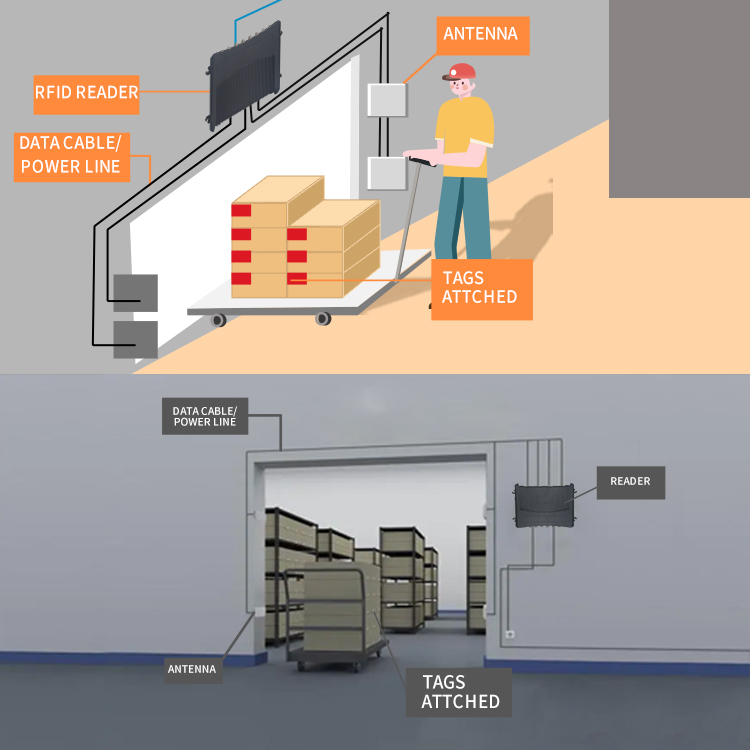
On-metal RFID tags can also support inventory management for metal products and assets.
A warehouse can tag:
- Metal containers
- Equipment
- Tools
- Machinery
- Reusable assets
RFID readers can then capture tag information during inventory checks.
This can reduce the need for employees to manually locate and scan each asset.
Frequently Asked Questions About On-Metal RFID Tags
What is an on-metal RFID tag?
An on-metal RFID tag is an RFID tag specifically designed to operate when mounted directly on or near a metal surface.
Why can't I use a standard RFID tag on metal?
Metal can interfere with the RFID antenna and change its electrical characteristics, potentially reducing read range and reliability. On-metal RFID tags are designed to operate in this environment.
Is an on-metal RFID tag the same as an anti-metal RFID tag?
The terms are often used interchangeably. Both generally refer to RFID tags designed for use on metal or conductive surfaces.
Can UHF RFID tags work on metal?
Standard UHF RFID tags may experience reduced performance when directly attached to metal. UHF on-metal RFID tags are specifically designed for this application.
How far can an on-metal RFID tag be read?
Read range depends on the tag, reader, antenna, tag orientation, metal surface, tag size, and environment. There is no universal read distance.
Can on-metal RFID tags be used for asset tracking?
Yes. They are commonly used for industrial machinery, tools, equipment, containers, IT assets, and other metal objects.
Can on-metal RFID tags be used outdoors?
Yes, if the tag has an appropriate rugged construction and environmental protection for the application.
Are on-metal RFID tags waterproof?
Some are waterproof or highly water-resistant, but the protection level varies by tag construction. Check the manufacturer's environmental specifications.
Can on-metal RFID tags be attached with adhesive?
Yes. Some models use industrial adhesive, while others are designed for screws, rivets, bolts, or other mechanical mounting methods.
What is the best RFID tag for metal?
There is no single best tag for every metal application. The correct choice depends on the metal surface, required read range, tag size, environment, mounting method, RFID frequency, and reader configuration.
An on-metal RFID tag is an RFID tag designed specifically to operate on metal or conductive surfaces.
Metal can interfere with standard RFID antennas, which may reduce reading distance and communication reliability. On-metal RFID tags use specialized antenna structures and construction methods to address this challenge.
They are widely used for industrial machinery, tools, equipment, metal containers, automotive components, IT assets, warehouse equipment, and construction assets.
When choosing an on-metal RFID tag, consider the metal surface, available mounting area, required read range, RFID frequency, operating environment, mounting method, and RFID reader configuration.
Most importantly, test the tag on the actual asset before deployment. Real-world testing can help determine whether the selected tag provides reliable performance under the intended operating conditions.