



What Information Can an RFID Tag Store? A Complete Guide
What information can an RFID tag store? The answer depends on the type of RFID chip, available memory, and how the RFID system is designed.
Some RFID tags store only a unique identification number, while others have additional memory that can hold product, asset, manufacturing, or application-specific information.
An RFID tag does not necessarily need to store all information about an item. In many systems, the tag stores a unique ID that connects the physical item to detailed information in a database.
For example:
RFID Tag ID → Database → Product or Asset Information
This approach allows RFID tags to provide a digital identity for physical objects without requiring large amounts of data to be stored directly on the tag.
What Information Can an RFID Tag Store?
Depending on the RFID chip and application, an RFID tag may store:
-
Unique identification numbers
-
Electronic Product Codes
-
Product information
-
Asset identification
-
Serial numbers
-
Manufacturing information
-
Batch or lot information
-
Location-related information
-
Maintenance information
-
Tracking information
-
Application-specific data
The exact amount of information depends on the tag's memory capacity.
What Is RFID Tag Memory?
RFID tag memory is the electronic storage area inside the RFID chip.
Different RFID chips provide different memory structures and capacities.
Some tags may be designed primarily for identification, while others provide additional memory for application data.
The memory can generally be divided into different areas depending on the RFID technology and chip.
For many UHF RFID systems, memory may include areas such as:
-
EPC
-
TID
-
User memory
-
Reserved memory
The exact structure and available capacity vary by RFID chip.
What Is an RFID Tag ID?
An RFID tag ID is an identifier associated with the tag.
It allows an RFID system to distinguish one tagged object from another.
For example:
Tag A → ID 10001
Tag B → ID 10002
Tag C → ID 10003
The RFID reader can capture these identifiers and send them to inventory or asset management software.
This makes it possible to associate each physical item with a digital record.
What Is EPC in RFID?
EPC stands for Electronic Product Code.
In many UHF RFID applications, the EPC is used to identify an individual item.
An EPC can be structured to represent information such as:
-
Product or item category
-
Manufacturer or organization
-
Product reference
-
Individual serial number
The exact encoding depends on the EPC scheme and system implementation.
The EPC is often more useful as a unique digital identifier than as a place to store a large product description.
What Is TID Memory in an RFID Tag?
TID stands for Tag Identifier.
TID memory is associated with the RFID chip itself and can contain information related to the chip and its manufacturer.
Unlike application data stored in user memory, TID information is generally associated with the identity and characteristics of the RFID integrated circuit.
This can be useful for certain identification and authentication-related applications.
The exact information available depends on the RFID chip.
Can RFID Tags Store Product Information?
Yes.
Depending on the chip's memory and system design, an RFID tag can store product-related information.
Examples can include:
-
Product number
-
SKU
-
Item reference
-
Batch number
-
Lot number
-
Serial number
However, businesses do not always store all product information directly on the tag.
A common approach is to store an identifier on the RFID tag and keep the detailed product information in a database.
Can RFID Tags Store Serial Numbers?
Yes.
A serial number can be associated with an RFID tag and the physical item.
For example:
Product: Industrial Pump
Serial Number: P-2026-00125
RFID Tag ID: 30184725
The RFID system can use the tag ID to retrieve the corresponding product record.
This can be useful for individual asset identification and product traceability.
Can RFID Tags Store Asset Information?
Yes.
RFID tags can be used to identify physical assets such as:
-
Machinery
-
Tools
-
Equipment
-
Containers
-
IT hardware
-
Vehicles
-
Industrial assets
A tag may contain an identifier associated with the asset.
The database can then contain additional information such as:
-
Asset name
-
Asset number
-
Location
-
Maintenance schedule
-
Inspection history
-
Ownership
-
Service records
This creates a connection between the physical asset and its digital record.
Can RFID Tags Store Manufacturing Information?
Depending on available memory, RFID tags can store manufacturing-related information.
Potential data includes:
-
Production batch
-
Manufacturing date
-
Lot number
-
Production line
-
Work order
-
Serial number
-
Product reference
This can support manufacturing traceability.
For example, a tagged component can carry an identifier throughout different stages of production.
Can RFID Tags Store Location Information?
An RFID tag can contain location-related information if the application is designed to write that information to the tag.
However, RFID tags do not automatically know their physical location.
The RFID reader determines where the tag is being detected.
For example:
RFID Tag → Reader at Warehouse Door → System Records Location
The system may then update the item's location in a database.
In many tracking systems, location information is therefore stored in the software rather than permanently stored on the RFID tag.
Can RFID Tags Store Maintenance Information?
Yes, if the RFID chip provides sufficient writable memory.
For example, an RFID tag attached to industrial equipment could potentially be associated with:
-
Maintenance date
-
Inspection status
-
Service information
-
Maintenance reference
-
Equipment ID
However, storing detailed maintenance records directly on the RFID tag is not always necessary.
A more common approach is:
RFID Tag ID → Maintenance Database → Complete Service History
This allows the system to maintain much more information than the RFID chip itself could store.
Can RFID Tags Store Expiration Dates?
Yes, depending on the application.
An RFID system can associate an expiration date with a tagged product.
For example:
Product ID: 123456
Expiration Date: 2027-05-30
The information can be stored directly on the tag if sufficient memory is available, or maintained in the connected database.
This can be useful for certain inventory and product tracking applications.
Can RFID Tags Store Temperature Data?
A standard passive RFID tag does not automatically measure temperature.
However, specialized RFID products can incorporate sensing capabilities.
Some RFID-based sensor tags can monitor parameters such as:
-
Temperature
-
Humidity
-
Pressure
-
Other environmental conditions
The exact capabilities depend on the tag design.
A basic passive RFID tag should not be confused with a sensor-enabled RFID device.
Can RFID Tags Store Large Amounts of Data?
Usually, RFID tags are not designed to function as large-capacity data storage devices.
Their primary purpose is identification and communication.
A tag may store a relatively small amount of information depending on the RFID chip.
For applications requiring large amounts of data, it is generally more efficient to store a unique identifier on the RFID tag and keep detailed information in an external database.
For example:
RFID Tag
→ Unique ID
Database
→ Product description
→ Images
→ Manufacturing records
→ Maintenance history
→ Location history
→ Transaction records
This architecture provides much greater flexibility.
How Much Data Can an RFID Tag Store?
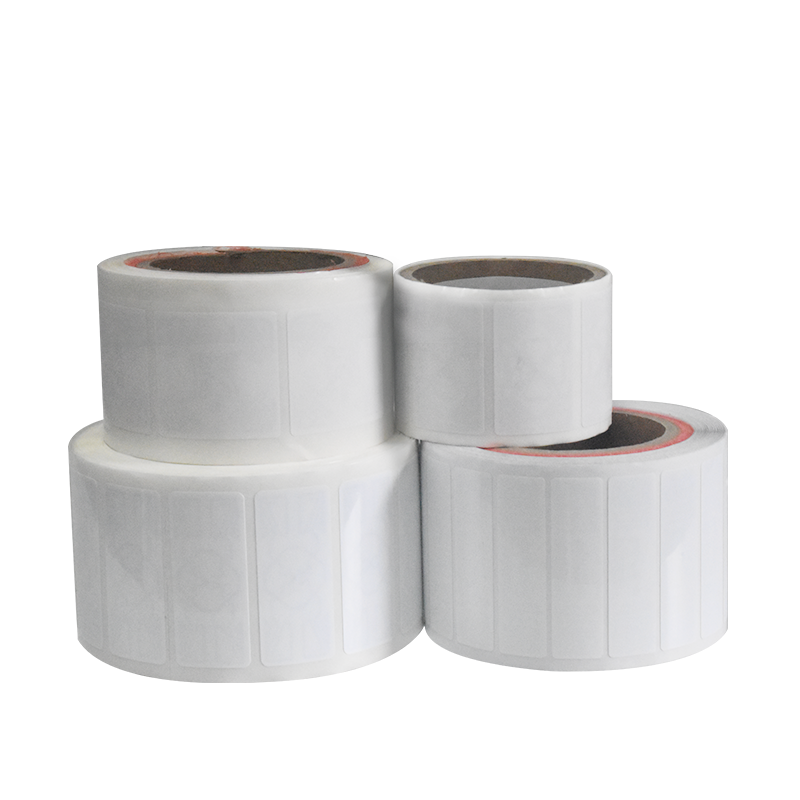
There is no single answer because RFID chips have different memory capacities.
Some tags are designed primarily for identification and may have limited user memory.
Other chips provide additional writable memory.
The actual storage capacity depends on:
-
RFID technology
-
RFID chip
-
Memory architecture
-
EPC requirements
-
User memory
-
Application design
For this reason, businesses should check the specific RFID chip's memory specifications rather than assuming every RFID tag has the same capacity.
Can RFID Tag Data Be Changed?
Some RFID tags support writable memory.
This means information can potentially be updated after the tag has been manufactured.
For example, a manufacturing process could write information to a tag during production.
A logistics system could then update application-specific data during later stages.
However, not all memory areas are freely writable.
Some information may be:
-
Read-only
-
Write-protected
-
Permanently locked
-
Controlled through access permissions
The available functions depend on the RFID chip and system configuration.
Can RFID Tags Be Rewritten Multiple Times?
Some RFID memory can be written and rewritten.
The number of supported write operations depends on the RFID chip's specifications and the memory area being used.
For applications involving frequent updates, the tag should be selected specifically for that requirement.
If the application only needs a permanent identification number, writable memory may not be important.
Can RFID Tags Store Customer Information?
Technically, an RFID system can associate a tag with customer-related information.
However, businesses should carefully consider privacy and security when handling personal information.
A safer architecture is often to store a non-sensitive identifier on the RFID tag and keep customer information in a protected backend system.
For example:
RFID Tag → Anonymous ID → Secure Database
The RFID tag itself does not need to contain a customer's name, address, phone number, or other unnecessary personal information.
Can RFID Tags Store Security Information?
Some RFID chips support security-related functions.
Depending on the technology and chip, these may include:
-
Access passwords
-
Memory protection
-
Lock functions
-
Authentication-related features
-
Data protection mechanisms
The exact capabilities vary significantly between RFID technologies and chips.
For applications involving sensitive information, the RFID system should be designed with appropriate security controls rather than relying only on the tag.
RFID Tag Data vs Database Data
One of the most important concepts in RFID system design is understanding the difference between data stored on the tag and data stored in the database.
| RFID Tag | Database |
|---|---|
| Unique ID | Product description |
| EPC | Product specifications |
| Serial number | Purchase history |
| Limited application data | Maintenance history |
| Selected tracking data | Location history |
| Limited memory | Large amounts of information |
In many systems, the RFID tag acts primarily as a digital identity.
The database provides the detailed information behind that identity.
Why Not Store Everything on the RFID Tag?
There are several reasons.
Limited Memory
RFID chips generally have much less storage capacity than computers or databases.
Data Management
Updating a central database is often easier than updating thousands of individual tags.
Security
Sensitive information can be kept in a controlled backend system rather than directly on a physical tag.
Flexibility
A database can store much more information and support complex relationships.
Performance
RFID systems are often designed to identify items quickly rather than transfer large amounts of data from every tag.
What Information Can RFID Tags Store in Retail?
Retail applications may use RFID tags to identify:
-
Product
-
SKU
-
Item
-
Size
-
Color
-
Serial number
-
Product category
For example, a clothing item might have an RFID tag containing an item identifier.
The retail system can use that identifier to retrieve:
-
Product description
-
Size
-
Color
-
Price
-
Stock status
-
Store location
This can support inventory management and stock visibility.
What Information Can RFID Tags Store in Warehouses?
Warehouse RFID tags may be associated with:
-
Item ID
-
SKU
-
Carton ID
-
Pallet ID
-
Serial number
-
Batch number
-
Shipment reference
The RFID system can use these identifiers to connect physical goods with warehouse records.
This can support:
-
Receiving
-
Inventory counting
-
Picking
-
Shipping
-
Stock tracking
What Information Can RFID Tags Store for Asset Tracking?
For asset tracking, the RFID tag may contain or represent:
-
Asset ID
-
Serial number
-
Equipment reference
-
Ownership reference
-
Asset category
The connected software can then provide additional information such as:
-
Current location
-
Maintenance status
-
Inspection history
-
Service schedule
-
Asset value
What Information Can RFID Tags Store in Manufacturing?
Manufacturing RFID applications can associate tags with:
-
Work order
-
Product ID
-
Serial number
-
Batch number
-
Production stage
-
Manufacturing reference
This can help connect physical components with digital production records.
For work-in-progress tracking, an RFID tag can travel with the product as it moves through different production stages.
What Information Can RFID Tags Store in Logistics?
Logistics applications can use RFID tags to identify:
-
Cartons
-
Pallets
-
Containers
-
Shipments
-
Returnable transport items
The tag can provide an identifier that connects to shipment information in the logistics system.
This can help automate item identification at receiving and shipping points.
Do RFID Tags Automatically Track Information?
No.
An RFID tag does not automatically create a complete tracking history.
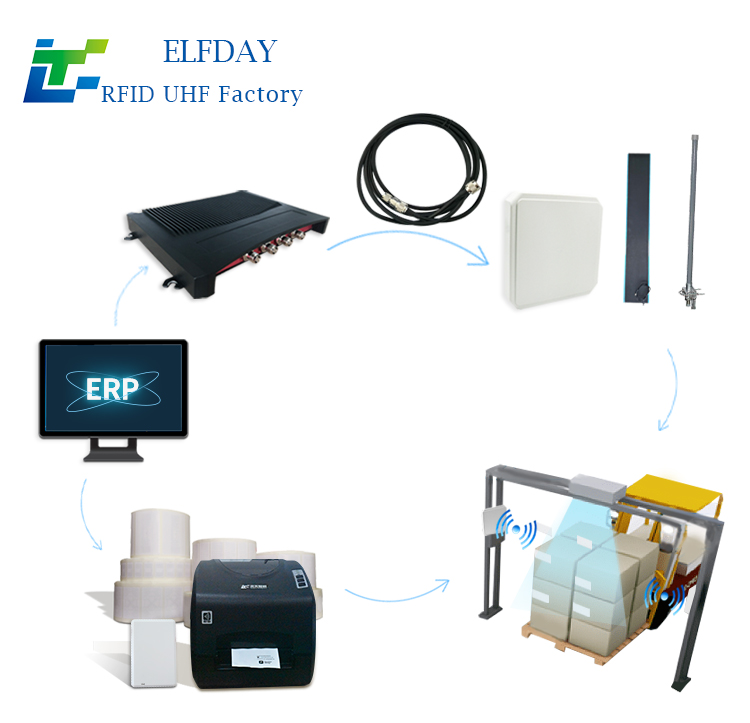
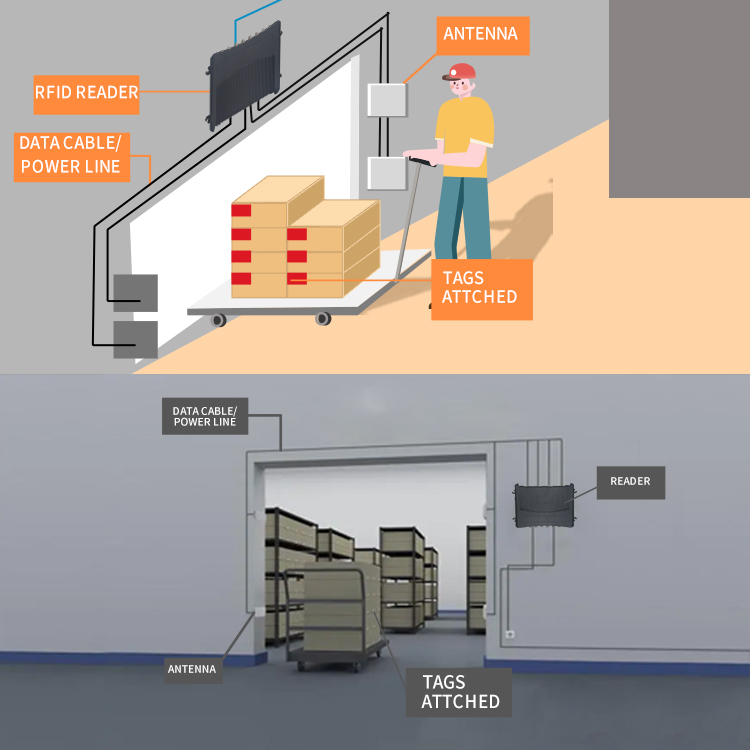
The RFID reader captures the tag's information.
The software then determines what to do with that information.
For example:
RFID Tag Detected
↓
Reader Captures Tag ID
↓
Software Identifies Item
↓
System Records Event
↓
Database Updates Item Status or Location
This distinction is important when explaining what an RFID tag can actually do.
RFID Tag Information and Privacy
Because RFID tags can identify physical items wirelessly, privacy and security should be considered when designing an RFID system.
For many applications, it is better to use a unique identifier rather than store sensitive information directly on the tag.
Businesses should consider:
-
What information is stored
-
Who can read it
-
Whether the tag can be rewritten
-
Whether memory should be locked
-
How backend data is protected
The RFID tag should contain only the information necessary for the intended application.
Frequently Asked Questions About RFID Tag Information
What information can an RFID tag store?
An RFID tag can store information such as a unique ID, EPC, serial number, product information, asset information, manufacturing data, or application-specific data, depending on the RFID chip's memory.
Can RFID tags store product names?
Yes, if the tag has sufficient writable memory. However, many RFID systems store a unique identifier on the tag and keep the full product name in a database.
Can RFID tags store serial numbers?
Yes. Serial numbers are commonly associated with RFID tags for individual product and asset identification.
Can RFID tags store prices?
Technically, some RFID tags can store price information if they have sufficient writable memory. However, price information is often maintained in the connected retail or inventory database instead.
Can RFID tags store expiration dates?
Yes. An expiration date can be stored on a tag with suitable writable memory or associated with the tag ID in a database.
How much data can an RFID tag hold?
The amount varies by RFID chip. Some tags provide limited memory, while others offer additional user memory. The chip specification should be checked for exact capacity.
Can RFID tag information be changed?
Some RFID tags have writable memory that can be updated. Other memory areas may be read-only or locked.
Can an RFID tag store a lot of information?
RFID tags generally have limited memory compared with databases. They are primarily designed for identification rather than large-scale data storage.
Does an RFID tag know where it is?
No. The tag itself generally does not determine its location. RFID readers detect the tag, and the software can use the reader's location and detection event to determine where the item was observed.
Can RFID tags store temperature information?
Standard RFID tags do not normally measure temperature. Specialized RFID sensor tags can monitor temperature and other environmental conditions.
Is information stored on an RFID tag secure?
Security depends on the RFID technology, chip, memory configuration, access controls, and overall system design. Sensitive information should generally be protected in the backend system rather than unnecessarily stored directly on the tag.
An RFID tag can store different types of information depending on its RFID chip, memory capacity, and application.
Common information includes unique identification numbers, EPCs, serial numbers, product references, asset IDs, manufacturing data, and application-specific information.
However, an RFID tag does not need to store all the information associated with an item.
In many RFID systems, the tag works primarily as a digital identity:
RFID Tag ID → Database → Detailed Product or Asset Information
This approach allows businesses to connect physical products and assets with large amounts of digital information while keeping the RFID tag itself relatively simple.
When choosing an RFID tag, consider not only the information you need to identify, but also memory capacity, read/write requirements, RFID frequency, read range, mounting surface, environmental conditions, and system architecture.
The best RFID data strategy is usually to store the information the tag actually needs while keeping larger or sensitive datasets in the connected software system.