




What Hardware Components Are Needed for an RFID System? A Complete Configuration List
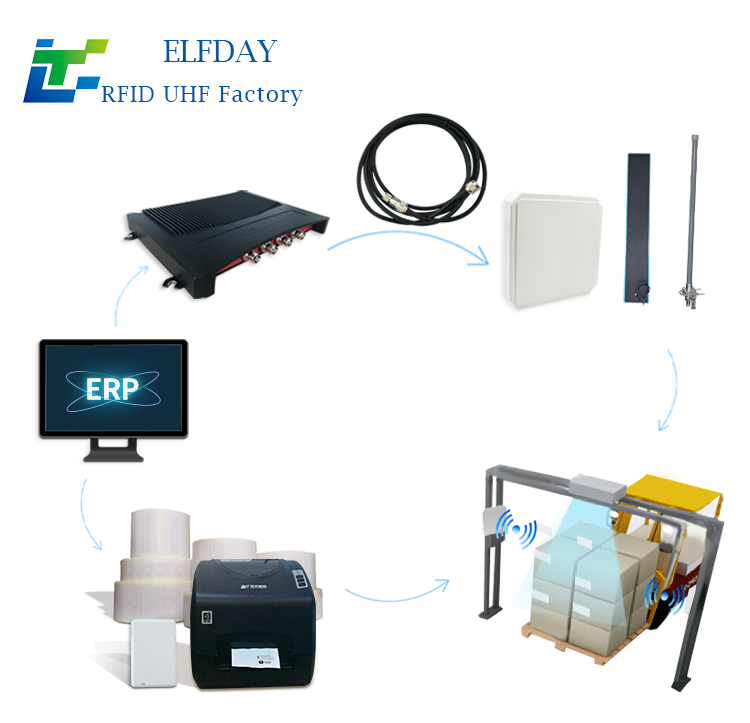
Building an effective RFID system requires more than purchasing an RFID reader and a batch of tags. A complete setup may include RFID tags, readers, antennas, cables, communication interfaces, mounting accessories, power supplies, and other supporting hardware.
Each component plays a different role in identifying tagged objects and transferring information to a management system. Choosing the right combination is important for achieving reliable identification, suitable coverage, and stable operation in the intended environment.
So, what hardware components are needed for an RFID system?
This guide introduces the essential RFID hardware components, explains their functions, and provides practical configuration examples for warehouses, manufacturing facilities, logistics operations, and asset management applications.
RFID Tags: The Identification Components Attached to Objects
RFID tags are attached to products, cartons, pallets, tools, equipment, or other assets. Each tag contains a chip and an antenna that enable it to communicate with an RFID reader.
The tag stores identification information, such as a unique identifier or EPC. The connected software can use this identifier to retrieve additional product or asset information.
RFID tags are available in different designs to accommodate different applications.
Common RFID Tag Types
RFID Label Tags
RFID label tags typically combine an RFID chip and antenna with a printable label structure. They are commonly used for cartons, packages, retail products, and general inventory identification.
Hard RFID Tags
Hard tags use a more rigid housing to protect the internal components. Depending on their design, they can be suitable for reusable containers, equipment, tools, and industrial assets.
Anti-Metal RFID Tags
Standard RFID tags may experience performance changes when installed directly on metal surfaces. Anti-metal RFID tags are specially designed for applications involving metal equipment, machinery, metal containers, and industrial assets.
Flexible Anti-Metal RFID Tags
Flexible anti-metal tags are designed for applications where a tag needs to accommodate a curved or uneven mounting surface. Their suitability depends on the specific tag construction and installation requirements.
RFID Cable Tie Tags
Cable tie RFID tags combine identification functionality with a fastening structure. They can be used for identifying cables, pipes, bundles, and other objects that are difficult to label with conventional adhesive tags.
How to Choose RFID Tags
When selecting tags, consider:
-
Operating frequency, such as LF, HF, or UHF
-
Required memory and identifier format
-
Object material and surface shape
-
Mounting method
-
Environmental conditions
-
Expected identification distance and reader compatibility
-
Tag size and available installation space
The tag should be tested on the actual object because materials, mounting position, and orientation can influence communication performance.
RFID Readers: Devices That Communicate With Tags
An RFID reader is responsible for communicating with RFID tags and collecting their identification information.
The reader generates radio frequency signals, receives tag responses, and transfers collected data to a connected computer or software platform.
Different applications require different reader types.
Fixed RFID Readers
Fixed RFID readers are installed at designated locations, such as warehouse entrances, conveyor lines, production stations, and access points.
They are suitable for applications that require automatic identification within a defined reading area.
Common features may include:
-
Multiple antenna ports
-
Ethernet or other network interfaces
-
External antenna support
-
Configurable read parameters
-
Integration interfaces for business software
The required number of reader ports and supported interfaces should be determined by the system design.

Handheld RFID Readers
Handheld RFID readers are portable devices used by staff to identify tagged items during inventory checks, asset inspections, warehouse operations, and field work.
Some handheld devices integrate RFID functionality with a display, operating system, barcode scanner, camera, and wireless connectivity.
They are particularly useful when employees need to move around and identify items at different locations.
Integrated RFID Readers
Integrated RFID readers combine the reader electronics and antenna in one device.
This design can simplify installation in applications with relatively straightforward coverage requirements, such as access control points, workstations, and selected inventory locations.
Reader Selection Checklist
Before purchasing an RFID reader, evaluate:
-
Supported RFID frequency and protocols
-
Compatibility with the selected tags
-
Antenna port quantity
-
Read and write capabilities
-
Communication interfaces
-
Operating environment
-
Power requirements
-
Software development and integration support
A reader should be selected according to the number of identification points, required coverage, and expected operating conditions rather than output power alone.
RFID Antennas: Components That Transmit and Receive RF Signals
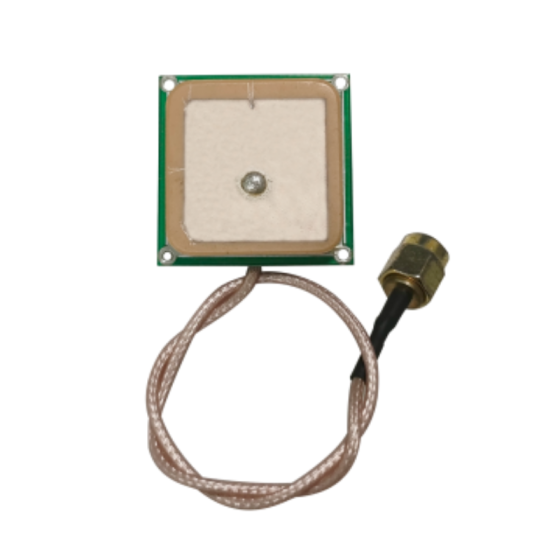
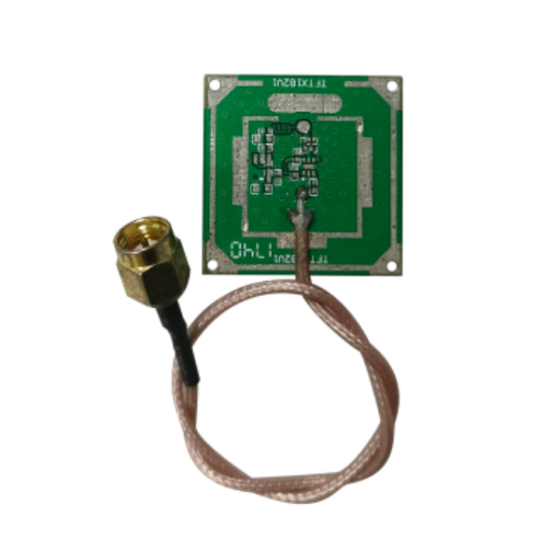
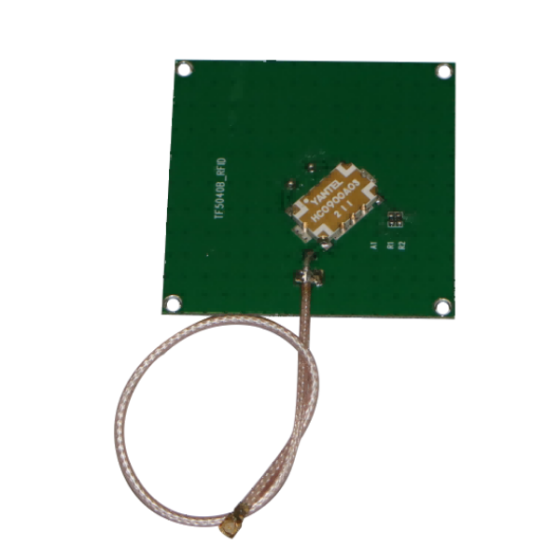
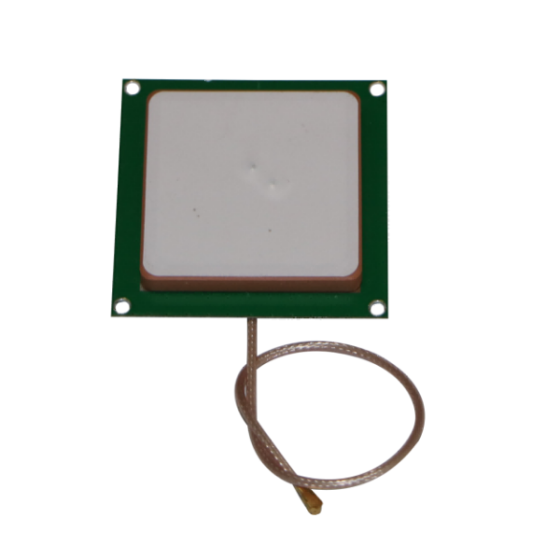
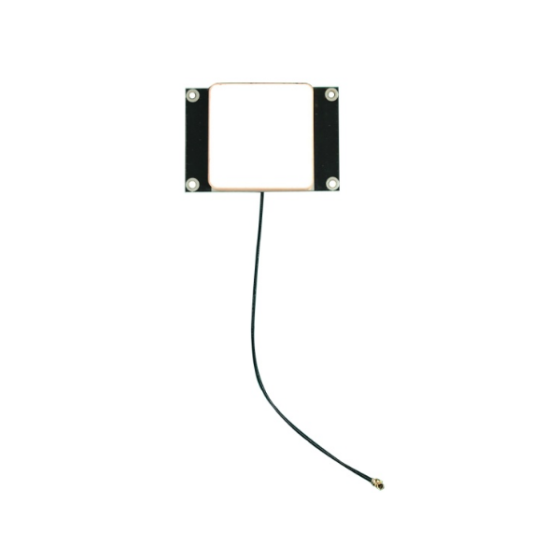
RFID antennas are essential components in systems where the reader uses external antennas.
They transmit radio frequency signals from the reader into the reading area and receive responses from RFID tags.
Antenna selection and installation directly influence the shape and coverage of the reading area.
Common RFID Antenna Types
Circular Polarized Antennas
Circular polarized antennas are often used when tag orientation may vary. They can be helpful in applications involving moving cartons, pallets, and mixed item orientations.
Linear Polarized Antennas
Linear polarized antennas produce a linearly polarized electromagnetic field. They can be suitable when tag orientation can be controlled or standardized.
Near-Field RFID Antennas
Near-field antennas are designed for applications involving relatively close-range identification. They may be used at workstations, counters, or specific identification points.
Long-Range RFID Antennas
Antennas designed for wider-area coverage may be used at warehouse entrances, loading areas, or other locations where a larger reading zone is required.
The actual coverage depends on the antenna, reader configuration, tag characteristics, installation conditions, and surrounding environment.
Antenna Selection Considerations
Important parameters include:
-
Operating frequency
-
Antenna gain
-
Polarization
-
Beamwidth
-
Impedance
-
Connector type
-
Environmental protection rating
-
Mounting method and installation space
The antenna should be positioned to provide suitable coverage while limiting unwanted reads from nearby areas.
RFID Cables and Connectors: Connecting Readers and Antennas
In systems using external antennas, RF cables connect the reader to the antennas.
These cables carry radio frequency signals between the reader and antenna. Their specifications and installation quality can affect the overall RF link.
Common considerations include:
-
Operating frequency range
-
Cable length
-
Characteristic impedance
-
Connector compatibility
-
Cable attenuation
-
Shielding and construction
-
Environmental suitability
Many UHF RFID systems use 50-ohm RF components, but the connector type and cable specification must match the reader and antenna.
Common connector types may include SMA, N-type, and TNC, depending on the equipment design.
Why Cable Selection Matters
An unsuitable cable or connector can introduce additional signal loss or connection problems.
For installations with long cable runs, engineers should consider cable attenuation and the total RF path rather than selecting cables based only on physical length or price.
Outdoor installations may also require weather-resistant connectors, protective conduits, and appropriate cable routing.
RFID Controllers and Communication Interfaces
An RFID reader must communicate with a computer, industrial controller, server, or other system component to transfer identification data.
Depending on the reader architecture, this communication may use different interfaces.
Common communication options include:
-
Ethernet
-
Wi-Fi
-
USB
-
RS232 or RS485 serial interfaces
-
Industrial communication interfaces
-
Cellular connectivity
Ethernet Communication
Ethernet is commonly used for fixed RFID readers in warehouses, manufacturing facilities, and logistics systems.
It provides a wired connection between the reader and the network infrastructure.
Wi-Fi Communication
Wi-Fi can be useful when wired network connections are difficult to install or when equipment needs greater placement flexibility.
Serial Communication
RS232 and RS485 interfaces may be used in industrial environments where readers need to communicate with controllers or other equipment.
PLC and Industrial Controller Integration
In some applications, RFID readers exchange information with programmable logic controllers (PLCs) or industrial automation systems.
For example, a production line may use an RFID reader to identify a workpiece and send the identification result to a PLC. The PLC can then use that information within the machine's control sequence.
Not every RFID installation requires a separate controller. Some readers can communicate directly with a computer or software platform.
Power Supplies and Supporting Electrical Components
RFID hardware requires a suitable power source.
Depending on the device, power may be supplied through an external adapter, a dedicated DC power supply, or Power over Ethernet (PoE).
Before installation, check:
-
Required input voltage
-
Current or power consumption
-
Connector type and polarity
-
Power supply compatibility
-
Electrical protection requirements
-
Backup power requirements, if applicable
For industrial installations, the power supply should be selected according to the reader's specifications and the electrical conditions at the site.
Additional electrical components may include:
-
Power distribution units
-
Surge protection devices
-
Uninterruptible power supplies (UPS)
-
Grounding and bonding accessories
-
Protective enclosures
These components are selected according to the installation environment and system reliability requirements.
Mounting Brackets and Installation Accessories
Mounting accessories help secure RFID readers and antennas in the correct positions.
Although these items may seem less important than readers and tags, they can influence installation quality and long-term system stability.
Common accessories include:
-
Reader mounting brackets
-
Antenna mounting brackets
-
Adjustable antenna holders
-
Poles and support frames
-
Wall-mounting hardware
-
Protective enclosures
-
Cable ties and cable management accessories
-
Conduits and protective sleeves
For example, antennas installed around a conveyor should be mounted securely and positioned according to the planned reading area.
In environments with vibration, dust, moisture, or mechanical impact, mounting structures and protective enclosures should be selected accordingly.
RFID Printers and Encoders for Label-Based Applications
When a project uses RFID labels, an RFID printer or encoder may be needed to encode tag information and print readable text, barcodes, or other label content.
An RFID printer can support processes such as:
-
Encoding RFID identifiers
-
Printing product information
-
Printing barcodes alongside RFID data
-
Producing labels for cartons and packages
-
Creating identification labels for warehouse operations
Not every RFID system needs an RFID printer. If tags are supplied pre-encoded or the project uses hard tags, a printer may not be necessary.
For projects that require frequent label production, selecting a printer compatible with the tag inlay and label format is important.
Optional Hardware for Specialized RFID Applications
Some RFID projects require additional hardware beyond the standard tag-reader-antenna configuration.
RFID Gates and Portal Structures
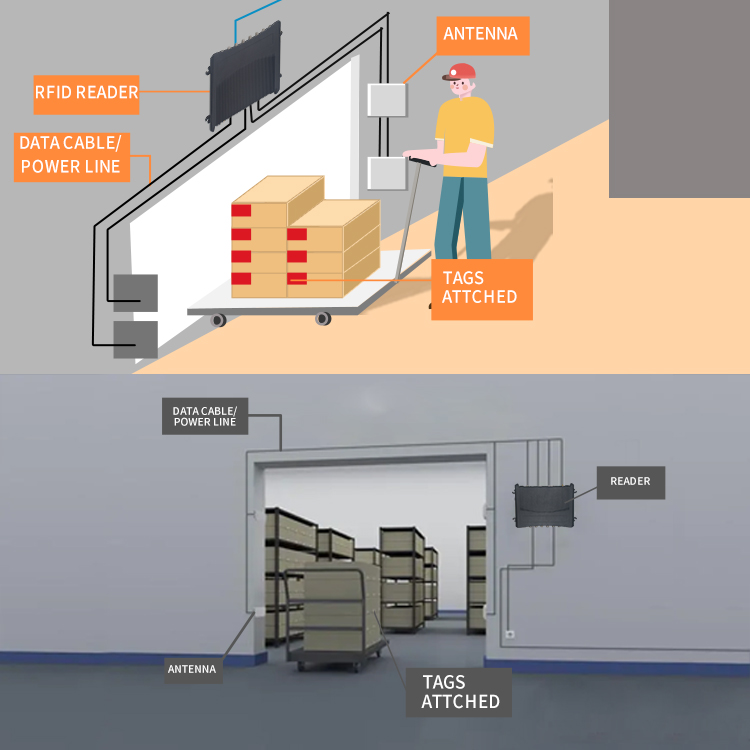
RFID portals are physical structures used to position readers and antennas around a passageway or identification zone.
They may be installed at warehouse entrances, loading areas, or production checkpoints.
A portal is not necessarily a single electronic device. It may consist of a frame, antennas, readers, cables, and protective accessories.
Photoelectric Sensors
Photoelectric sensors can detect the presence or movement of objects near an RFID reading point.
They can provide additional process information, such as when an item enters a conveyor identification zone.
When integrated with RFID equipment, sensors can help associate tag observations with specific object movement events.
Barcode Scanners
Some applications combine RFID and barcode identification.
Barcode scanners provide an alternative or supplementary identification method when an RFID tag is unavailable, damaged, or unsuitable for a particular item.
Industrial Computers and Edge Devices
Industrial computers or edge devices may be used to collect RFID data, execute local processing rules, and communicate with factory systems.
They are especially useful when an application requires local data processing or integration with industrial equipment.
Complete RFID Hardware Configuration Lists for Different Applications
The hardware required depends on the identification process and operating environment.
The following examples illustrate typical configurations. They are starting points for system planning rather than universal equipment requirements.
Configuration A: Warehouse Inventory Management
| Hardware Component | Function | Requirement |
| UHF RFID tags | Identify cartons, pallets, or products | Essential |
| Handheld RFID reader | Conduct mobile inventory checks | Application-dependent |
| Fixed RFID reader | Automatically identify items at checkpoints | Application-dependent |
| RFID antennas | Create reading areas | Required for external-antenna readers |
| RF cables and connectors | Connect readers and antennas | Required for external-antenna systems |
| Network equipment | Transfer identification data | Required |
| Mounting accessories | Secure equipment | Installation-dependent |
A warehouse may use handheld readers for periodic inventory checks and fixed readers at receiving or shipping points.
Configuration B: Conveyor and Production Line Tracking
| Hardware Component | Function | Requirement |
| Industrial RFID tags | Identify workpieces or carriers | Essential |
| Fixed RFID reader | Identify tags at production stations | Essential |
| RFID antennas | Establish reading zones | Depends on reader design |
| Photoelectric sensor | Detect item arrival or movement | Application-dependent |
| PLC or industrial controller | Coordinate identification with equipment | Application-dependent |
| Industrial network cables | Connect system components | Required as designed |
| Mounting brackets | Position readers and antennas | Required |
For production lines, tag placement and antenna positioning should be tested with actual moving workpieces.
Configuration C: Asset Tracking and Equipment Management
| Hardware Component | Function | Requirement |
| RFID asset tags | Identify equipment and tools | Essential |
| Anti-metal RFID tags | Identify metal equipment | Required when direct metal mounting needs them |
| Handheld RFID reader | Perform asset inspections | Common |
| Fixed RFID reader | Monitor designated checkpoints | Optional |
| RFID antennas | Support fixed identification points | Depends on reader design |
| Network connection | Transfer records | Required for connected systems |
For metal equipment, tag selection should account for the mounting surface and installation method.
Configuration D: RFID Label Printing and Encoding
| Hardware Component | Function | Requirement |
| RFID label tags | Provide identification | Essential |
| RFID printer and encoder | Encode and print labels | Required for in-house encoding and printing |
| Computer or workstation | Prepare label data | Required |
| Label software | Manage print and encoding tasks | Required |
| Network or USB connection | Connect printer and computer | Required |
The printer should support the RFID frequency, tag inlay, and label format used by the project.
How to Choose the Right RFID Hardware Configuration
Before purchasing equipment, businesses should define the actual identification requirements.
The following questions can help guide the selection process.
1. What Objects Need to Be Identified?
Determine whether the system will identify cartons, pallets, tools, machinery, products, or people.
Different objects require different tag designs and mounting methods.
2. What Is the Operating Environment?
Consider whether the RFID system will operate indoors or outdoors, on metal surfaces, near liquids, or in environments with dust, vibration, and temperature changes.
Environmental conditions influence the selection of tags, readers, antennas, and protective accessories.
3. Is Identification Mobile or Fixed?
Handheld readers are suitable for mobile identification tasks, while fixed readers are commonly used for automatic identification at designated locations.
Some projects require both.
4. How Many Identification Points Are Needed?
The number of reading zones affects the quantity of readers, antennas, cables, network connections, and mounting accessories.
A project with several entrances or production stations may require multiple fixed reading points.
5. How Will RFID Data Be Used?
Determine whether identification data needs to be sent to a WMS, ERP, MES, or another management platform.
The required communication interfaces and supporting equipment should be compatible with the target software architecture.
6. What Are the Installation and Maintenance Requirements?
Consider mounting space, cable routing, power access, equipment protection, and future maintenance.
A configuration that is easy to install and maintain can reduce operational complexity over the system's lifecycle.
An RFID system may include several hardware components, but the main configuration usually consists of RFID tags, readers, antennas, cables, communication interfaces, power supplies, and installation accessories.
Additional equipment, such as RFID printers, PLCs, photoelectric sensors, industrial computers, and portal structures, can be added according to the application.
The right configuration depends on the objects being identified, the operating environment, the required reading areas, and the way RFID data will be used.
Rather than purchasing every available component, businesses should begin with their identification requirements and select compatible hardware for the intended workflow.
EFLDAY provides RFID-related products, including RFID tags, RFID readers, RFID antennas, and RFID printers, helping businesses explore suitable hardware options for inventory management, logistics, manufacturing, and asset identification projects.
Frequently Asked Questions
1. What are the essential components of an RFID system?
The main components are RFID tags, RFID readers, and antennas. A complete installation may also require cables, communication interfaces, power supplies, mounting accessories, and software infrastructure.
2. Does every RFID reader need an external antenna?
No. Some RFID readers have built-in antennas, while others support external antennas. The choice depends on the reader design and the required reading coverage.
3. How many antennas does an RFID system need?
There is no fixed number. A simple application may use an integrated reader with a built-in antenna, while a fixed installation may use multiple external antennas to cover different directions or identification zones.
4. Does an RFID system need an RFID printer?
Not always. An RFID printer is useful when businesses need to encode and print RFID labels internally. Projects using pre-encoded tags or hard tags may not require one.
5. Can different RFID hardware brands work together?
They may work together when their frequencies, communication protocols, interfaces, connectors, and software requirements are compatible. Compatibility should be confirmed before purchasing and tested during system integration.
6. What hardware is needed for an RFID warehouse system?
A typical warehouse setup may include UHF RFID tags, handheld or fixed RFID readers, antennas, RF cables, network equipment, and mounting accessories. The exact configuration depends on whether the application involves mobile inventory checks, receiving, shipping, or automated portal identification.

