



What Are Passive RFID Tags? How They Work and Where They Are Used
Passive RFID tags are electronic identification devices that do not contain their own battery. Instead, they receive energy from an RFID reader's radio frequency signal and use that energy to communicate identification information back to the reader.
Because passive RFID tags can be relatively small, lightweight, and cost-effective, they are widely used for inventory management, retail, warehousing, logistics, manufacturing, asset tracking, libraries, and supply chain applications.
Unlike active RFID tags, passive RFID tags remain inactive until they are within the operating field of a compatible RFID reader.
This article explains how passive RFID tags work, their main components, advantages and limitations, common applications, and the factors to consider when selecting one.
What Is a Passive RFID Tag?
A passive RFID tag is an RFID tag that operates without an internal battery.
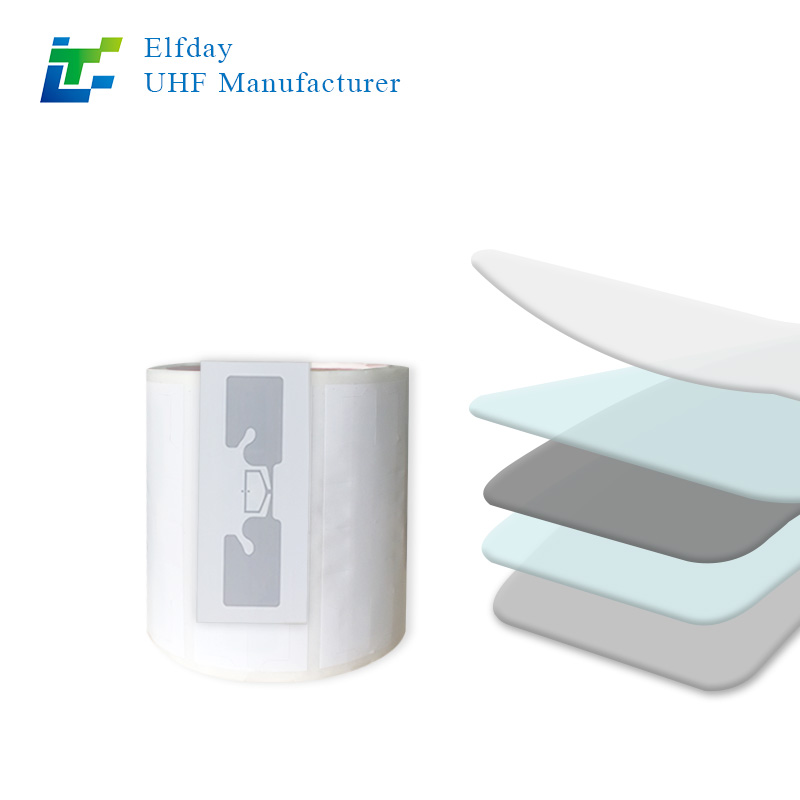
A typical passive RFID tag contains:
-
An RFID chip
-
An RFID antenna
-
A substrate or inlay
-
A protective layer, label, or housing depending on the design
The RFID reader generates a radio frequency field. When the passive tag enters this field, its antenna captures energy from the signal.
The captured energy powers the RFID chip temporarily, allowing the tag to process the reader's request and send its stored information back.
In simple terms:
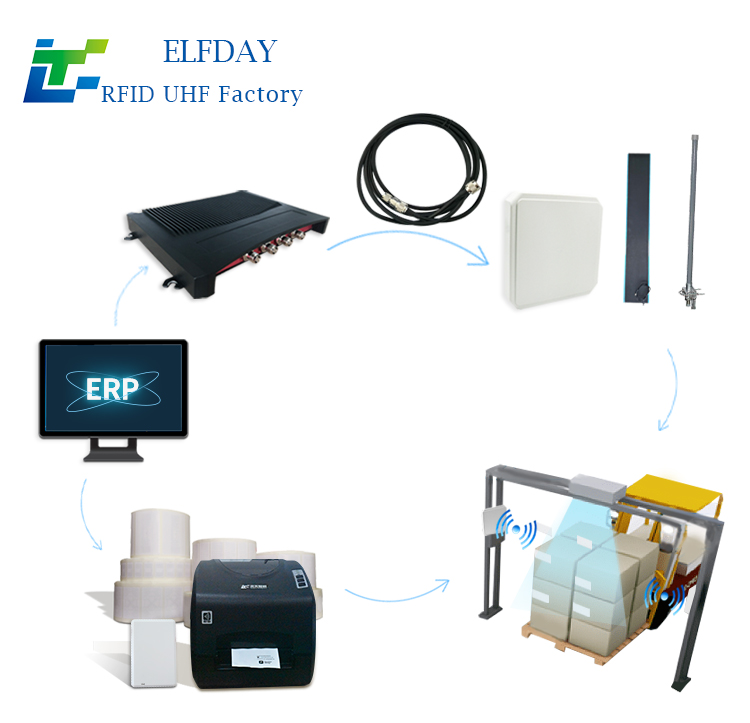
RFID reader → RF energy → passive RFID tag → RFID chip → data response → RFID reader
This makes passive RFID technology particularly useful when large numbers of inexpensive tags are required.
How Do Passive RFID Tags Work?
The operation of a passive RFID tag can be divided into several steps.
1. The RFID Reader Sends a Signal
An RFID reader uses an antenna to transmit a radio frequency signal.
The signal creates an electromagnetic field around the reader antenna.
The strength and coverage of this field depend on factors such as reader power, antenna design, frequency, installation, and the surrounding environment.
2. The Passive RFID Tag Enters the Read Zone
When a passive RFID tag enters the reader's operating area, the tag antenna detects the incoming RF signal.
The amount of energy available to the tag depends on the distance between the tag and reader, antenna characteristics, tag orientation, and surrounding materials.
3. The Tag Captures Energy
The antenna in the passive RFID tag converts part of the incoming RF energy into electrical energy.
This energy is used to activate the RFID chip.
Because there is no internal battery, a passive RFID tag generally requires sufficient RF energy from the reader before it can operate.
4. The RFID Chip Processes the Request
Once activated, the RFID chip processes the signal from the reader.
The reader may request the tag's identification number or other information stored in the chip's memory.
5. The Tag Sends Information Back
The passive RFID tag responds to the reader using the communication method supported by its RFID technology.
For passive UHF RFID systems, the tag commonly communicates using backscatter.
The tag modifies the way it reflects the reader's RF signal, allowing the reader to detect the response and decode the information.
6. The RFID Reader Receives the Data
The reader receives the tag response and processes the information.
The captured RFID data can then be transferred to software, a database, warehouse management system, inventory platform, or other business application.
This allows businesses to associate a physical item with digital information.
What Are the Main Components of a Passive RFID Tag?
Although passive RFID tags can have many different physical designs, the core components are similar.
RFID Chip
The RFID chip stores identification information and controls communication with the reader.
Depending on the chip, the available memory and functions can vary.
Some RFID chips primarily provide a unique identifier, while others offer additional user memory and security-related functions.
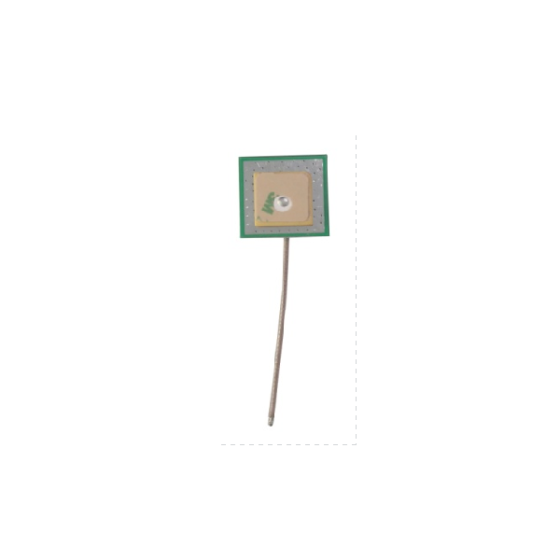
RFID Antenna
The antenna is responsible for receiving RF energy and enabling communication with the reader.
Antenna design has a major influence on tag performance.
The antenna must be designed for the intended frequency and application.
Substrate
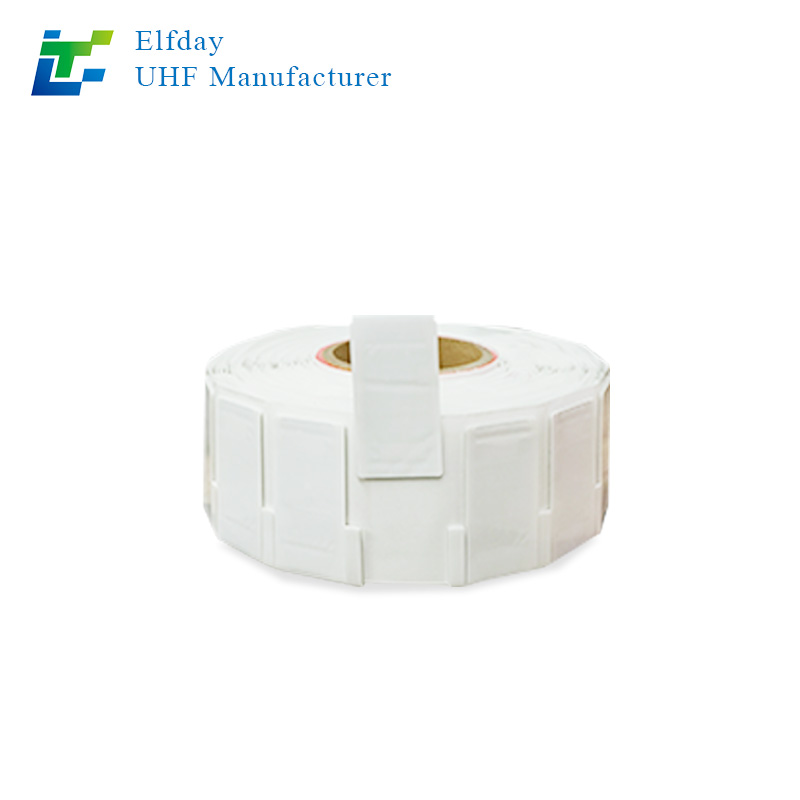
The RFID chip and antenna are often mounted on a substrate to form an RFID inlay.
The inlay can then be integrated into a paper label, plastic tag, industrial housing, textile tag, or other form factor.
Protective Housing
Not every passive RFID tag requires a protective housing.
Simple RFID labels may use paper or synthetic materials, while industrial applications may require plastic, epoxy, silicone, or other protective constructions.
The housing should match the expected environmental conditions.
Passive RFID Tags vs Active RFID Tags
The main difference between passive and active RFID tags is the power source.
| Feature | Passive RFID Tags | Active RFID Tags |
|---|---|---|
| Internal battery | No | Yes |
| Power source | RFID reader | Internal battery |
| Typical size | Smaller | Usually larger |
| Unit cost | Generally lower | Generally higher |
| Maintenance | Low | Battery maintenance may be required |
| Read range | Application-dependent | Can support longer ranges |
| Typical use | Inventory and identification | Monitoring and specialized tracking |
Passive RFID tags are often preferred when thousands or millions of objects need to be identified economically.
Active RFID tags may be more appropriate when battery-powered functionality or longer-range monitoring is required.
Passive UHF RFID Tags
Passive UHF RFID tags are one of the most widely used forms of passive RFID technology.
They are commonly used in applications where businesses need to identify large numbers of objects quickly.
Typical applications include:
-
Warehouse inventory
-
Retail inventory
-
Logistics
-
Supply chain management
-
Pallet tracking
-
Carton tracking
-
Manufacturing
-
Asset management
A major advantage of passive UHF RFID is its ability to support relatively long read distances and rapid identification.
UHF RFID systems can also be designed to identify multiple tags within a reader's operating area.
However, actual performance depends on the tag, reader, antenna, mounting surface, tag orientation, and operating environment.
Passive HF RFID Tags
Passive HF RFID tags typically operate at 13.56 MHz.
They are commonly used for shorter-range applications where close-range identification or data exchange is appropriate.
Common applications include:
-
Library management
-
Access control
-
Ticketing
-
Healthcare
-
Product identification
-
NFC-related applications
HF and UHF passive RFID tags operate differently and are generally selected according to different application requirements.
Passive LF RFID Tags
Passive LF RFID tags operate at low frequencies, generally around 125–134 kHz.
They are commonly associated with specialized identification applications such as:
-
Animal identification
-
Livestock tracking
-
Access control
-
Specialized identification systems
LF RFID can be useful where short-range identification is appropriate.
What Are the Advantages of Passive RFID Tags?
Passive RFID tags offer several important advantages.
No Battery Required
Because passive tags obtain energy from the RFID reader, they do not require an internal battery.
This eliminates battery replacement for the tag itself and can simplify large-scale deployments.
Long Potential Service Life
A passive RFID tag can potentially remain functional for a long time if its physical construction is suitable for the application.
The electronic components do not depend on an internal battery.
However, the actual service life depends heavily on materials, environmental exposure, adhesive performance, and mechanical conditions.
Suitable for High-Volume Applications
Passive RFID tags can be manufactured in large quantities and are available in cost-effective formats.
This makes them suitable for applications involving large numbers of products, cartons, assets, or containers.
Small and Flexible Form Factors
Passive RFID technology can be integrated into many different tag designs.
Examples include:
-
Thin labels
-
Cards
-
Stickers
-
Hard tags
-
Flexible tags
-
Textile tags
-
On-metal tags
-
Embedded tags
Low Maintenance
Because passive RFID tags do not require batteries, they generally require less maintenance than battery-powered RFID devices.
This can be particularly useful for products and assets that remain in service for years.
What Are the Limitations of Passive RFID Tags?
Passive RFID tags also have limitations that should be considered.
They Depend on the Reader
Passive tags require energy from the reader's RF field.
If the tag is too far away or the RF conditions are unsuitable, the reader may not be able to activate and communicate with the tag.
Read Range Can Vary
A tag's actual read range depends on many factors.
These include:
-
Frequency
-
Antenna design
-
Reader power
-
Reader antenna
-
Tag orientation
-
Mounting material
-
Environmental conditions
-
Installation
A longer advertised read range does not necessarily mean better performance for every application.
Metal Can Affect Performance
Standard passive RFID tags may not perform properly when attached directly to metal.
For metal surfaces, an on-metal RFID tag designed for the application may be required.
Liquids Can Affect UHF Performance
Liquids can absorb or interact with RF energy, potentially affecting UHF RFID communication.
For products containing liquids, tag selection and application testing are particularly important.
Where Are Passive RFID Tags Used?
Passive RFID technology is used across many industries.
Warehouse Inventory
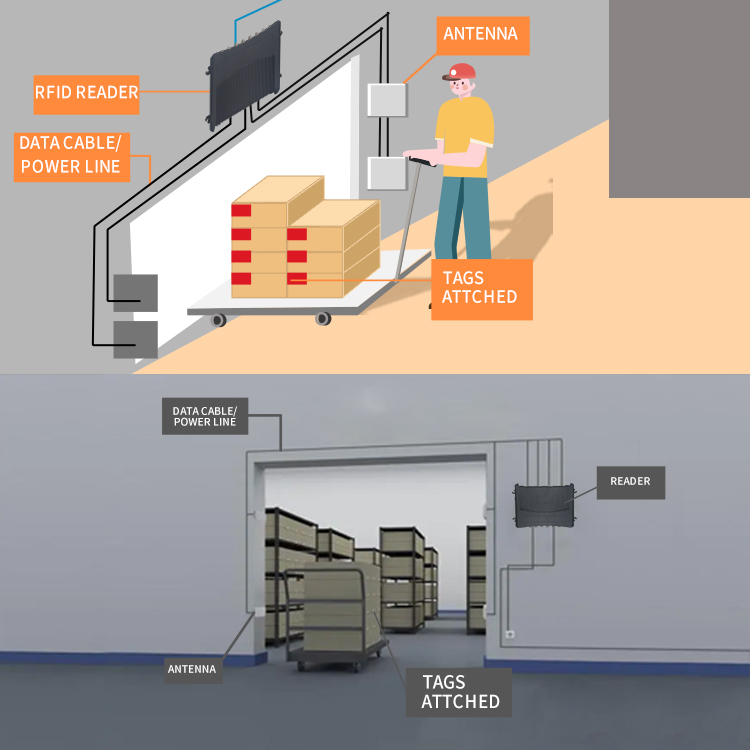
Warehouses can use passive RFID tags to identify products, cartons, pallets, and reusable containers.
Readers can capture tag information during receiving, storage, picking, and shipping.
This can reduce the need for manual item-by-item scanning.
Retail
Retailers can attach passive RFID tags to products to improve inventory visibility.
Employees can use RFID readers to identify products during stock checks and locate items more efficiently.
Logistics
Passive UHF RFID tags can be attached to pallets, cartons, containers, and shipments.
RFID readers can capture identification information as items move through receiving areas, warehouses, and distribution facilities.
Manufacturing
Manufacturers can use passive RFID tags to identify:
-
Raw materials
-
Components
-
Work-in-progress products
-
Finished goods
-
Tools
-
Containers
RFID data can help connect physical products with production records.
Asset Tracking
Passive RFID tags can provide unique identities for equipment and other assets.
They can be used to monitor the movement of tools, equipment, containers, carts, and other reusable assets.
Libraries
Passive HF RFID tags are widely used for library books and media.
They can support automated check-in, check-out, sorting, inventory, and item identification.
Healthcare
Passive RFID tags can be used to identify medical equipment, supplies, pharmaceutical products, and other items where automated identification is useful.
The specific tag design depends on the application and environmental requirements.
Can Passive RFID Tags Be Read Through Packaging?
In many applications, yes.
One advantage of RFID is that direct visual line of sight is generally not required.
A passive RFID tag may be read when attached to or contained within suitable packaging.
For example, an RFID reader may identify tagged cartons without employees having to visually locate and scan each barcode.
However, packaging materials can affect RFID performance.
Metalized packaging, liquids, dense materials, and other RF-sensitive materials may reduce read performance.
Testing should therefore be performed with the actual product and packaging.
How Far Can a Passive RFID Tag Be Read?
There is no universal read range for passive RFID tags.
The achievable distance depends on:
-
RFID frequency
-
RFID chip
-
Antenna design
-
Reader output
-
Reader antenna
-
Tag orientation
-
Tagged material
-
Installation
-
Environmental conditions
Passive UHF RFID tags can generally support longer read ranges than many passive HF or LF RFID applications.
However, the actual distance should always be verified under real operating conditions.
Can Passive RFID Tags Be Rewritten?
Some passive RFID tags have writable memory.
Depending on the RFID chip, a system may be able to write or update information on the tag.
However, the exact memory capacity and write functionality vary by chip.
Before selecting a passive RFID tag, verify:
-
Memory capacity
-
Read/write capability
-
Data retention
-
Security features
-
Encoding requirements
-
Reader compatibility
How to Choose a Passive RFID Tag
Selecting a passive RFID tag should begin with the application.
1. Determine the RFID Frequency
Choose between LF, HF, and UHF based on the system requirements.
For example, passive UHF RFID is commonly considered for inventory and supply chain applications.
2. Identify the Tagging Material
Determine what surface the tag will be attached to.
For example:
-
Cardboard
-
Plastic
-
Glass
-
Wood
-
Fabric
-
Metal
If the tag will be attached to metal, a specialized on-metal design may be required.
3. Define the Required Read Distance
Determine how far away the reader needs to identify the tag.
Avoid selecting a tag based solely on its maximum theoretical read range.
4. Consider the Environment
Evaluate exposure to:
-
Water
-
Heat
-
Cold
-
Chemicals
-
Dust
-
Impact
-
UV exposure
-
Washing
For demanding environments, select a passive RFID tag with appropriate protective construction.
5. Determine the Required Tag Size
The available mounting space may limit the tag dimensions.
A larger antenna can sometimes provide different performance characteristics from a compact antenna, so size and performance should be considered together.
6. Check RFID Reader Compatibility
The passive RFID tag must be compatible with the reader and frequency used by the RFID system.
7. Test the Tag in the Real Application
This is one of the most important steps.
Test the tag on the actual product, material, mounting location, and reader configuration.
Laboratory or open-air testing alone may not accurately represent real-world performance.
Frequently Asked Questions About Passive RFID Tags
What is a passive RFID tag?
A passive RFID tag is an RFID tag without an internal battery. It receives energy from an RFID reader's radio frequency signal and uses that energy to communicate its stored information.
Do passive RFID tags need batteries?
No. Standard passive RFID tags do not require internal batteries. They obtain energy from the RFID reader.
How does a passive RFID tag get power?
The tag antenna captures energy from the RF field generated by the RFID reader. This energy activates the RFID chip and allows the tag to communicate.
How does a passive RFID tag communicate?
The communication method depends on the RFID frequency. Passive UHF RFID tags commonly use backscatter to send information back to the reader.
What is the difference between passive and active RFID?
Passive RFID tags receive energy from the reader, while active RFID tags contain their own battery. Passive tags are generally smaller and more economical, while active tags can support battery-powered functions and longer-range applications.
What is the best passive RFID tag?
There is no single best passive RFID tag. The right choice depends on frequency, read range, tagged material, tag size, environmental conditions, reader compatibility, and application requirements.
Can passive RFID tags be used on metal?
Yes, but standard passive RFID tags may not perform reliably on metal. On-metal RFID tags are specifically designed for mounting on metal surfaces.
Are passive RFID tags waterproof?
Some passive RFID tags are designed to be waterproof or water-resistant. The appropriate design depends on the required level of protection and operating environment.
Can passive RFID tags be reused?
Some passive RFID tags are designed for reusable assets and long-term applications. Others are designed as disposable labels. The tag construction should match the expected service life.
How long do passive RFID tags last?
The electronic portion of a passive RFID tag can potentially remain functional for many years, but actual service life depends on the tag construction and environmental conditions.
Passive RFID tags are battery-free electronic identification devices that obtain energy from an RFID reader's radio frequency signal. Once activated, the RFID chip processes the reader's request and communicates identification information back to the reader.
Because they can be small, cost-effective, and available in many different designs, passive RFID tags are widely used in inventory management, warehousing, retail, logistics, manufacturing, asset tracking, libraries, and supply chain applications.
Passive UHF RFID tags are particularly useful for applications requiring fast identification of products, cartons, pallets, and assets. HF and LF passive RFID tags are better suited to different types of short-range and specialized identification applications.
The right passive RFID tag should be selected according to the RFID frequency, read range, tagged material, environmental conditions, tag size, reader compatibility, and application requirements.
For reliable RFID deployment, the tag should always be tested with the actual product, mounting surface, reader, antenna, and operating environment before large-scale implementation.