



RFID vs QR Codes: Which Is Better for Tracking?
RFID and QR codes can both be used for tracking, but they are suited to different workflows. QR codes are generally simple, inexpensive, and easy to scan with a smartphone or camera-based reader. RFID tags can be read wirelessly and, depending on the RFID system, multiple tags can be identified without direct line of sight.
For basic item identification, a QR code may be enough. For automated inventory tracking, high-volume scanning, or applications where items do not need to be individually presented to a scanner, RFID can provide additional capabilities.
The right choice depends on factors such as cost, read range, scanning speed, line of sight, automation, durability, environment, and tracking volume.
RFID vs QR Codes: Quick Comparison
| Feature | RFID | QR Code |
| Wireless identification | Yes | No |
| Requires line of sight | Usually no | Yes |
| Multiple items at once | Possible | Usually one at a time |
| Typical read range | From very short to several meters, depending on system | Usually short-range |
| Smartphone scanning | Not normally | Yes |
| Automation | High | Moderate |
| Printing cost | Higher | Very low |
| Reader infrastructure | Required | Camera or scanner |
| Works when code is not visible | Often | No |
| Physical readability | Can work without visual access | Requires visible code |
| High-volume inventory | Well suited to many workflows | More manual |
| Simple item identification | Suitable | Often very practical |
The actual performance of either technology depends on the hardware, software, tag or code design, environment, and workflow.
How Does RFID Tracking Work?
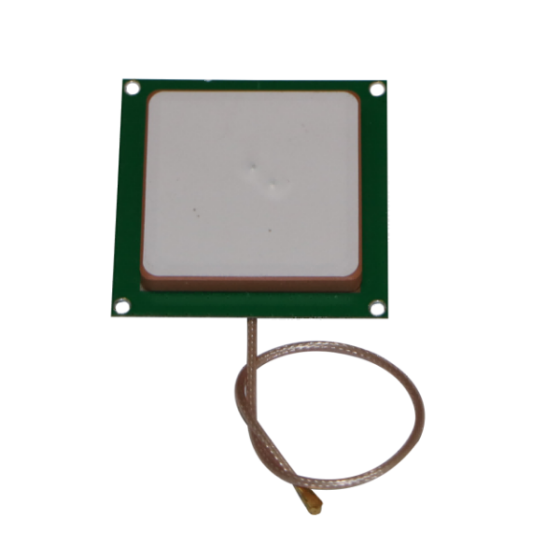
RFID uses radio-frequency communication to identify tagged objects.
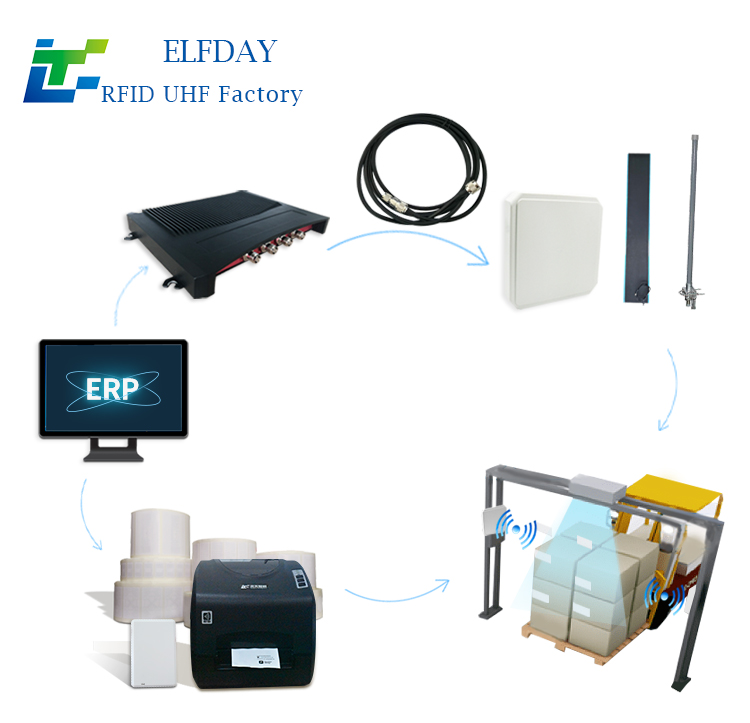
A typical RFID tracking system includes:
-
RFID tag
-
RFID reader
-
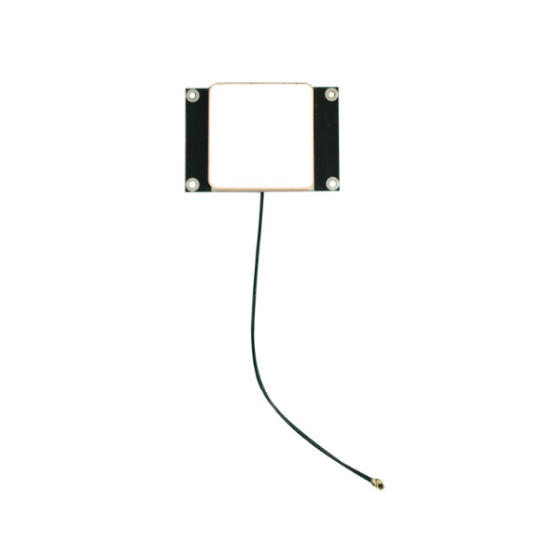
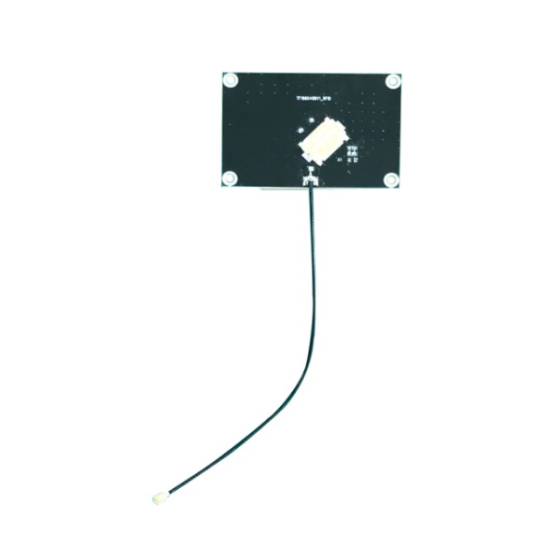
Antenna
-
Software or database
The RFID tag contains an electronic identifier. When the tag enters the reader's operating range, the reader communicates with it and receives its identification information.
In many passive UHF RFID systems, the tag does not require its own battery. The reader supplies energy through the RF field, allowing the tag to respond.
This makes RFID useful for applications where large numbers of items need to be identified quickly.
How Does QR Code Tracking Work?
A QR code stores information in a two-dimensional visual pattern.
To track an item using a QR code, a user typically:
Locate the code → Position a camera or scanner → Capture the code → Decode the information → Record the tracking event
The code must generally be visible to the camera or scanner.
A smartphone can often scan a QR code directly, which makes QR-based tracking relatively accessible.
However, scanning usually requires the user or system to position the camera appropriately and capture the code.
RFID vs QR Codes: Line of Sight
One of the biggest differences is line-of-sight requirements.
RFID
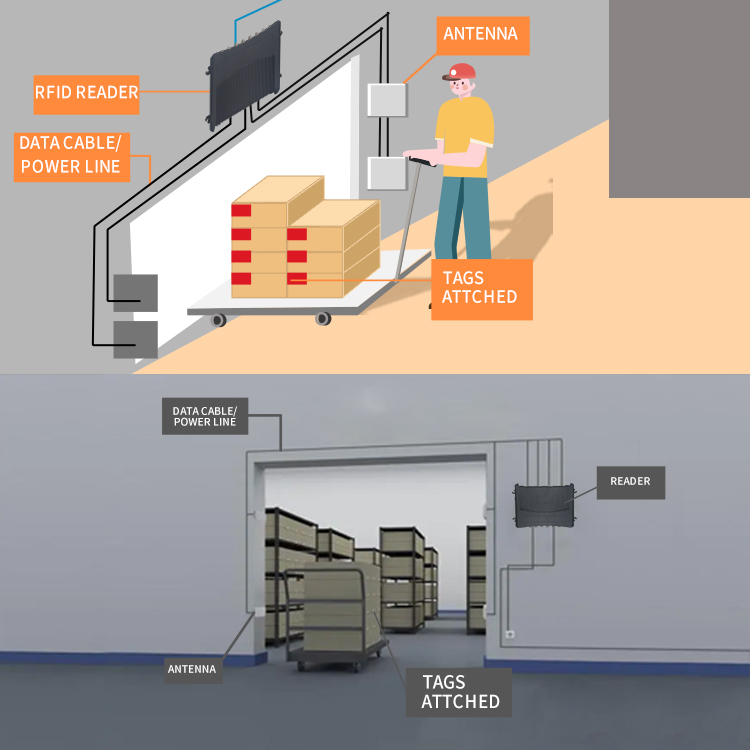
RFID tags can often be read without the reader having a direct visual view of the tag.
For example, an RFID reader may identify tags:
-
Inside boxes
-
On stacked products
-
In containers
-
On pallets
-
In storage areas
The exact capability depends on RFID frequency, tag design, reader configuration, packaging, and surrounding materials.
QR Codes
A QR code normally needs to be visible to the camera.
If a QR code is:
-
Covered
-
Facing away from the camera
-
Inside a box
-
Dirty
-
Damaged
-
Obstructed
the scanner may not be able to read it.
This difference can become important in warehouse and inventory applications.
Can RFID Read Multiple Items at Once?
Yes. One of RFID's important characteristics is its ability to identify multiple tags during a single reading process.
For example, a warehouse worker could potentially read multiple tagged products or cases without scanning every item individually.
This can reduce the amount of manual handling required for certain inventory workflows.
QR codes generally require each code to be captured by a camera or scanner. Some camera-based systems can process multiple visible codes, but the workflow is still based on visual recognition rather than wireless RFID communication.
Which Is Faster: RFID or QR Codes?
The answer depends on the application.
For a single item, scanning a QR code can be very quick.
For a large number of items, RFID can provide an advantage because multiple tags can be identified during the same reading operation.
Consider a warehouse receiving process.
QR Code Workflow
Open carton → Locate code → Aim scanner → Scan → Record → Repeat
RFID Workflow
Move tagged items into reading area → Reader identifies tags → System records IDs
The difference becomes more significant as the number of items increases.
However, RFID systems require appropriate reader infrastructure and configuration, while QR code systems can often be deployed with existing smartphones or cameras.
RFID vs QR Codes: Cost
Cost is one of the most important differences.
QR Codes
QR codes are inexpensive to generate and print. They can often be added to existing labels or packaging with minimal additional hardware.
A basic QR tracking system may require:
-
Printed labels
-
Smartphone or camera
-
Scanning application
-
Tracking software
RFID
RFID generally involves more hardware and specialized tags.
A system may require:
-
RFID tags
-
RFID readers
-
Antennas
-
Software
-
Installation
-
System integration
For this reason, QR codes can be attractive when the main requirement is inexpensive item identification.
RFID can become more valuable when automation and high-volume tracking justify the additional infrastructure.
RFID vs QR Codes for Inventory Tracking
Both technologies can support inventory tracking, but the workflow is different.
QR-Based Inventory Tracking
A typical process is:
Find item → Scan code → Update inventory
This can work well for smaller inventories or environments where employees already handle each item individually.
RFID Inventory Tracking
A typical process may be:
Enter reading area → Detect tags → Capture multiple IDs → Update inventory
This can reduce the need to locate and visually scan individual codes.
RFID can therefore be useful when inventory volumes are high or when faster automated identification is important.
RFID vs QR Codes for Asset Tracking
Both RFID and QR codes can identify assets such as:
-
Tools
-
Equipment
-
Containers
-
IT assets
-
Machinery
-
Returnable transport items
-
Storage bins
QR codes are useful when workers need to visually identify an asset and manually access its information.
RFID can be useful when assets need to be automatically detected as they move through designated locations.
For example:
QR: Worker scans a tool to check it in or out.
RFID: Reader automatically detects tagged tools entering or leaving an area.
The better workflow depends on how much manual interaction is acceptable.
Which Is Better for Warehouse Tracking?
Warehouse requirements can vary significantly.
QR codes can work well when:
-
Inventory volumes are relatively manageable
-
Workers already scan products individually
-
Low implementation cost is important
-
Smartphones are available
-
Visual confirmation is useful
RFID may be useful when:
-
Large numbers of items must be identified
-
Faster receiving is required
-
Automated inventory checks are desirable
-
Items move through fixed reading points
-
Direct visual scanning is inconvenient
-
Multiple items need to be identified together
For a high-volume warehouse, the ability to identify multiple RFID tags without individually positioning a scanner can be an important operational difference.
RFID vs QR Codes for Retail
Retail businesses can use both technologies.
QR codes can be used for:
-
Product information
-
Consumer interaction
-
Digital product pages
-
Promotions
-
Basic item identification
RFID can support:
-
Inventory visibility
-
Stock checks
-
Product identification
-
Automated inventory processes
-
Item-level tracking
One important distinction is that QR codes are highly accessible to consumers because most smartphones can scan them, while RFID generally requires dedicated RFID readers.
RFID vs QR Codes for Manufacturing
Manufacturing environments may use identification systems to track:
-
Components
-
Work-in-process products
-
Tools
-
Production containers
-
Equipment
-
Finished goods
QR codes can provide a simple visual identifier.
RFID can be useful when products need to be identified automatically as they move between production stages.
For example:
Component tagged → Production station → RFID reader detects item → Manufacturing system records movement
This can reduce reliance on manual scanning in selected workflows.
Which Is More Durable?
Durability depends on how the identifier is constructed.
A printed QR code can be affected by:
-
Scratches
-
Dirt
-
Fading
-
Moisture
-
Poor printing
-
Surface damage
RFID tags can also be damaged, but rugged RFID designs can use:
-
Plastic housings
-
Encapsulation
-
Protective coatings
-
Durable substrates
-
Specialized adhesives
This makes rugged RFID tags suitable for some environments where a conventional printed label may deteriorate.
However, a QR code can also be printed on durable materials, so durability should be evaluated based on the actual label or tag construction rather than the technology alone.
Can RFID Work When the Label Is Not Visible?
Yes, this is one of the main differences between RFID and QR codes.
RFID does not depend on visual recognition in the same way as a QR code.
A tag may be readable even when it is:
-
Inside packaging
-
Facing away from the reader
-
Covered by another item
-
Difficult for a worker to see
There are still limitations. Metal, liquids, tag orientation, reader configuration, and other environmental factors can affect RFID performance.
QR codes generally need to remain visually accessible to the scanner.
RFID vs QR Codes for Outdoor Tracking
Outdoor applications may include:
-
Construction equipment
-
Vehicles
-
Containers
-
Agricultural equipment
-
Tools
-
Outdoor inventory
QR codes can work when workers can easily access and visually scan the label.
RFID can be useful when assets need to be detected automatically or when direct scanning is inconvenient.
For harsh outdoor conditions, both technologies require suitable physical protection. RFID tags can be manufactured with weather-resistant or rugged construction, while QR codes can be printed on durable labels, plates, or other materials.
RFID vs QR Codes: Data and Identification
Both technologies can link a physical item to digital information.
A QR code can contain or point to information such as:
-
Product ID
-
URL
-
Serial number
-
Instructions
-
Product information
RFID tags can store an electronic identifier and, depending on the tag type and system, additional data.
In many tracking applications, the identifier does not need to contain all the product information.
Instead:
Identifier → Database → Product information
This approach allows the physical identifier to connect to a larger digital record.
RFID vs QR Codes for Automation
Automation is another important difference.
QR code tracking usually requires a camera or scanner to capture the code.
RFID can be integrated with fixed readers that automatically detect tags as they move through specific areas.
For example:
Tagged pallet → RFID reading zone → Reader detects pallet → Software records movement
This can support automated workflows such as receiving, shipping, location tracking, and inventory updates.
QR codes can also be integrated into automated vision systems, but the system still depends on visually detecting the code.
When Should You Choose QR Codes?
QR codes may be a practical choice when you need:
-
Low-cost identification
-
Simple implementation
-
Smartphone scanning
-
Visual product information
-
Individual item scanning
-
Consumer interaction
-
Easy label printing
They can be particularly useful when workers need to deliberately scan an item rather than automatically detect large groups of items.
When Should You Choose RFID?
RFID may be more suitable when you need:
-
Non-line-of-sight identification
-
Multiple-item reading
-
Faster inventory processes
-
Automated detection
-
Fixed reading points
-
Asset movement tracking
-
Reduced manual scanning
-
Rugged identification in demanding environments
RFID is particularly useful when the operational value of automation justifies the additional hardware and tag cost.
Can RFID and QR Codes Be Used Together?
Yes. RFID and QR codes do not have to be competing technologies.
They can be used together on the same product or asset.
For example:
RFID → Automated inventory and logistics tracking
QR code → Human-accessible product information
A warehouse may use RFID to automatically track an item while keeping a QR code available for workers who need to access instructions or product information using a smartphone.
This hybrid approach can combine automated machine identification with simple visual access.
RFID vs QR Codes: Which One Should You Choose?
Instead of asking which technology is universally better, start with the tracking requirements.
| Requirement | RFID | QR Code |
| Low-cost labeling | △ | ✓ |
| Smartphone scanning | △ | ✓ |
| No line of sight | ✓ | ✗ |
| Multiple-item identification | ✓ | △ |
| Automated tracking | ✓ | △ |
| Simple manual scanning | ✓ | ✓ |
| High-volume inventory | ✓ | △ |
| Consumer interaction | △ | ✓ |
| Rugged industrial tracking | ✓ | ✓ |
| Fixed reading points | ✓ | △ |
| Very simple deployment | △ | ✓ |
✓ = generally well suited
△ = possible depending on the application
✗ = generally not suited
The right choice depends on the combination of requirements rather than any single feature.
A Simple Decision Guide
Use this process when evaluating RFID and QR codes:
Need simple, low-cost visual identification?
→ Consider QR codes.
Need workers to scan individual items with smartphones?
→ Consider QR codes.
Need to identify multiple items quickly?
→ Consider RFID.
Need identification without direct line of sight?
→ Consider RFID.
Need automatic detection at doors, conveyors, or reading zones?
→ Consider RFID.
Need both automated tracking and consumer-facing information?
→ Consider using RFID and QR codes together.
Frequently Asked Questions
Is RFID better than QR codes for tracking?
Neither technology is universally better. RFID provides advantages for non-line-of-sight reading, multiple-item identification, and automation, while QR codes are generally simpler and less expensive for visual scanning.
Is RFID more expensive than QR codes?
RFID typically requires more specialized tags and reader infrastructure, while QR codes can often be printed inexpensively and scanned with smartphones or standard cameras.
Can RFID replace QR codes?
RFID can replace QR codes in some tracking applications, particularly when automated or non-line-of-sight identification is required. However, QR codes may remain useful for low-cost scanning and consumer-facing information.
Can RFID and QR codes be used on the same product?
Yes. Using both can provide automated RFID tracking while allowing people to scan a QR code for additional information.
Which is better for warehouse inventory?
The choice depends on the warehouse workflow. RFID can support faster, automated identification of multiple items, while QR codes can be practical for lower-volume workflows where employees scan items individually.
Which is better for asset tracking?
Both can work. QR codes are suitable for manually scanning identifiable assets, while RFID can provide automatic detection and non-line-of-sight identification when the appropriate reader infrastructure is installed.
Do RFID tags need to be visible?
No. RFID tags can often be read without being visually visible to the operator. However, tag placement, orientation, surrounding materials, and reader configuration can affect performance.
Do QR codes need internet access?
A QR code itself does not inherently require internet access. Whether an internet connection is needed depends on what information or application the QR code connects to.
RFID and QR codes are both useful tracking technologies, but they solve different operational problems.
QR codes are generally attractive for low-cost identification, smartphone scanning, visual access, and simple manual workflows. RFID is useful for non-line-of-sight reading, multiple-item identification, automation, and high-volume tracking processes.
The most important factors to compare are cost, read range, line of sight, scanning speed, automation, durability, environment, and workflow.
For some applications, RFID is the better technical fit. For others, a QR code provides everything needed with a simpler implementation. In some cases, using RFID and QR codes together can provide both automated machine tracking and convenient human access to product information.