



RFID Stickers for Faster Inventory Checks in Busy Warehouses
In a busy warehouse, inventory checks can quickly become one of the most time-consuming parts of daily operations. Employees may need to count cartons, locate packages, verify bins, and confirm stock levels across multiple storage areas. When these tasks depend heavily on manual counting or individual barcode scans, even a well-organized warehouse can experience delays and inventory discrepancies.
RFID stickers offer a practical way to make item identification faster and improve inventory visibility. By giving cartons, packages, bins, and other inventory items a unique digital identity, RFID technology allows warehouse staff to identify multiple items with less manual scanning. This can make routine inventory checks more efficient while supporting smoother storage and distribution processes.
What Are RFID Stickers Used for in Warehouses?
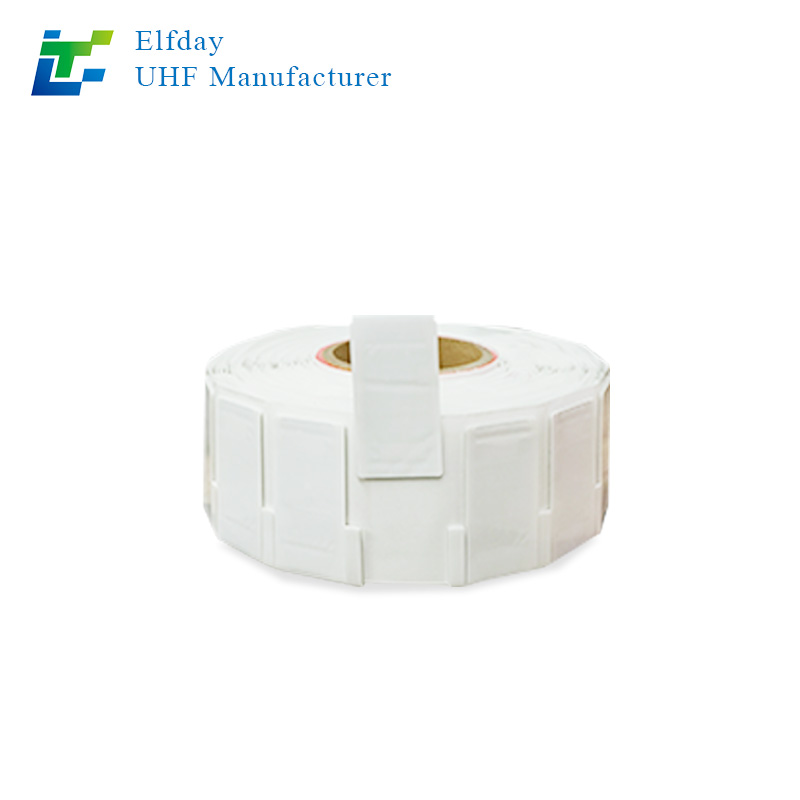
RFID stickers are adhesive labels that contain an RFID inlay, typically consisting of a small antenna and RFID chip. Once attached to an item, the sticker can store or associate a unique identification number with that product, package, carton, or container.
Unlike a traditional barcode, an RFID sticker does not necessarily need to be directly visible to the reader. Depending on the RFID system, tags can be read without requiring employees to position each item individually in front of a scanner.
In warehouse environments, RFID stickers can be applied to:
- Cartons and boxes
- Packages and shipments
- Storage bins
- Plastic totes
- Individual inventory items
- Returnable containers
- Pallets and cases
- Work-in-progress materials
This flexibility makes RFID stickers suitable for warehouses handling a wide variety of products and packaging formats.
Faster Inventory Checks With RFID Stickers
One of the biggest advantages of RFID technology is the ability to identify multiple tagged items in a short period.
With conventional barcode-based inventory checks, an employee may need to locate a barcode and scan products one at a time. This can become inefficient when hundreds or thousands of items need to be checked.
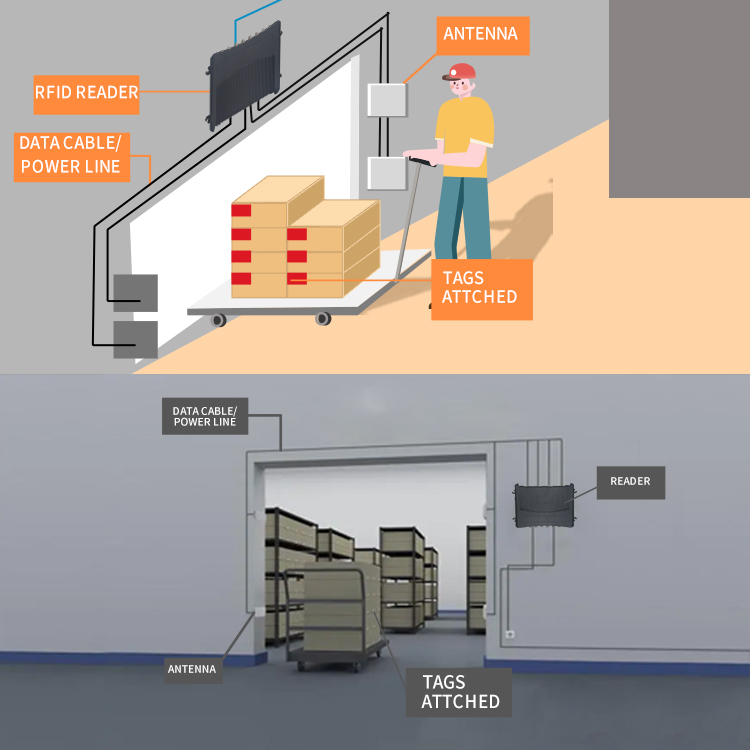
RFID stickers can simplify this process. A compatible RFID reader can capture information from multiple tags within its reading range, allowing warehouse employees to perform inventory checks more efficiently.
For example, instead of manually scanning every carton on a storage rack, an employee can use an RFID reader to identify multiple tagged cartons as they move through the warehouse. The resulting data can then be compared with inventory records to determine whether the expected items are present.
This can reduce repetitive scanning work and allow employees to spend more time on higher-value warehouse activities.
Improving Warehouse Inventory Accuracy
Inventory accuracy is essential for efficient warehouse operations. Incorrect stock information can lead to picking problems, delayed shipments, unnecessary replenishment, or difficulty locating products.
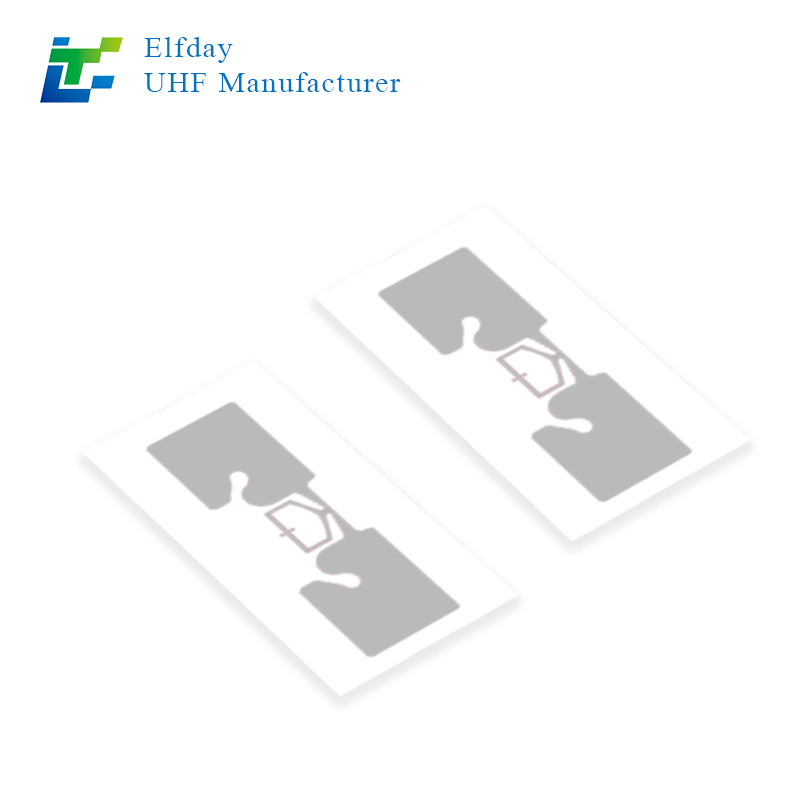
RFID stickers can help create a more consistent identification process by assigning individual items or containers unique digital identities.
When RFID data is connected with warehouse inventory records, businesses can gain better visibility into:
- What items are currently in stock
- Where tagged items were last identified
- Which products have moved between storage areas
- Whether expected inventory is present
- Which items may require replenishment
- Which containers or packages have entered or left an area
The technology does not eliminate the need for inventory controls, but it can provide an additional layer of automated identification that reduces dependence on manual processes.
Tracking Items Throughout the Warehouse
Warehouses are dynamic environments. Inventory constantly moves between receiving areas, storage locations, picking zones, packing stations, and shipping docks.
Keeping track of these movements can become difficult when employees rely entirely on manual records.
RFID stickers can help connect physical inventory with digital tracking information. When tagged items pass through RFID-enabled areas, readers can capture their identification data and update the corresponding records.
For instance, a carton may first be identified when it arrives at the receiving area. Later, it can be detected when moved into storage and again when transferred to a picking or shipping area.
This creates a clearer picture of inventory movement without requiring employees to manually record every transition.
Making Receiving More Efficient
Receiving is another warehouse process where RFID stickers can provide value.
When a shipment arrives, employees often need to verify the quantity and identity of incoming cartons or packages. Manual barcode scanning can take considerable time, especially when a delivery contains a large number of items.
RFID-based identification can allow multiple tagged items to be captured more efficiently. Warehouse staff can compare the collected information with expected shipment records and identify discrepancies earlier in the process.
Faster receiving can help reduce congestion around loading areas and allow inventory to move into storage more quickly.
Supporting Picking and Shipping Operations
RFID stickers can also support downstream warehouse activities.
During order picking, employees need to identify the correct products and quantities. Accurate product identification can reduce the risk of selecting the wrong item, particularly in warehouses with large inventories or similar-looking products.
At the packing and shipping stage, RFID readers can help verify tagged cartons or packages before they leave the facility.
This can create additional checkpoints throughout the fulfillment process and improve visibility from receiving through shipment.
RFID Stickers vs. Traditional Barcode Labels
Barcodes remain widely used because they are affordable and straightforward. However, they generally require line-of-sight scanning and often involve scanning items individually.
RFID stickers offer a different approach.
| Feature | RFID Stickers | Traditional Barcode Labels |
|---|---|---|
| Line of sight | Usually not required | Generally required |
| Multiple-item reading | Possible | Usually one at a time |
| Automated identification | Yes | Limited |
| Individual digital identity | Yes | Yes |
| Fast inventory checks | Strong advantage | More manual |
| Data capacity | Depends on RFID chip | Usually limited |
| Reusable applications | Possible | Depends on label |
The right choice depends on the warehouse environment, product type, reading distance, system design, and operating requirements. In many facilities, RFID and barcodes can also be used together rather than treating them as competing technologies.
Choosing the Right RFID Stickers for Warehouse Applications
Not every RFID sticker is suitable for every warehouse.
Before selecting a tag, businesses should consider the materials and surfaces where the stickers will be attached. Products containing metal or liquids, for example, can affect RFID performance. In these situations, specialized tag designs may be required.
Other factors worth considering include:
- Required reading distance
- RFID frequency and protocol
- Sticker size
- Adhesive strength
- Printing requirements
- Surface material
- Storage conditions
- Exposure to heat, moisture, or chemicals
- Required durability
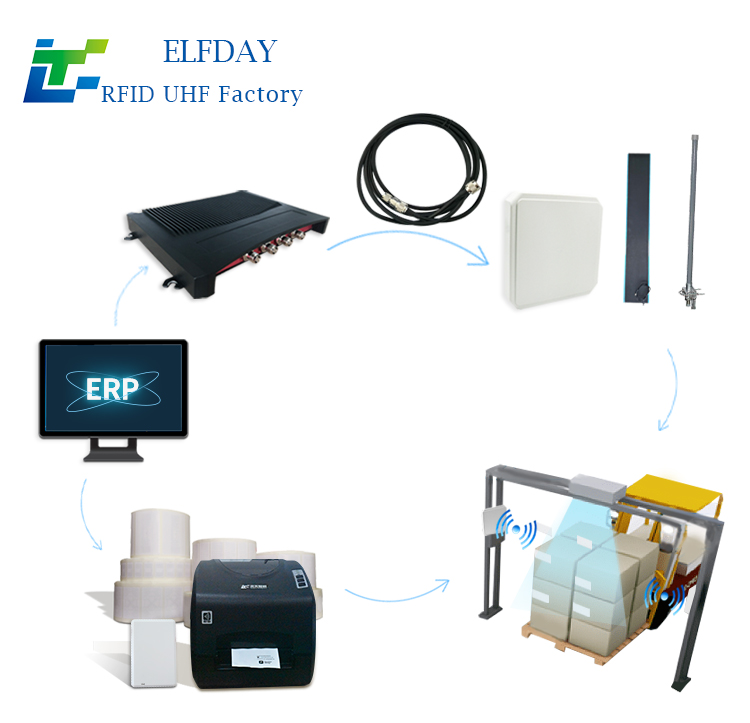
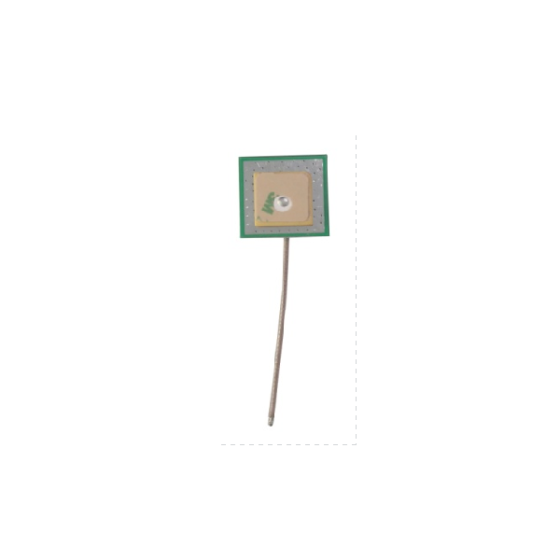
- Reader and antenna configuration
For standard cardboard cartons and packaging, conventional adhesive RFID stickers may be sufficient. More demanding environments may require specially designed RFID tags with stronger construction or improved performance on challenging materials.
Creating a More Efficient Warehouse Workflow
The real value of RFID stickers comes from combining automated identification with an appropriate warehouse management process.
A typical workflow could look like this:
Receiving → Identification → Storage → Inventory Check → Picking → Packing → Shipping
At different points in this process, RFID readers can capture tag information and provide inventory data to the warehouse system.
This can reduce repetitive manual tasks and create more opportunities for automated inventory verification.
However, RFID should not simply be added to an existing process without considering how the data will be used. The best results usually come from identifying specific warehouse bottlenecks first and then designing the RFID workflow around those challenges.
For busy warehouses, faster and more reliable inventory identification can make a significant difference to daily operations. RFID stickers provide a flexible way to give cartons, packages, bins, containers, and inventory items unique digital identities.
By enabling faster identification, supporting automated inventory checks, and improving visibility as items move through storage and distribution processes, RFID stickers can help warehouses reduce manual work and maintain more accurate inventory information.
For warehouses looking to improve inventory efficiency, RFID stickers can be a practical starting point for building a more connected and automated tracking process.