




How to Maintain Consistent RFID Tag Performance After Deployment
Deploying RFID tags is only the first step toward building a reliable RFID tracking system. Once tags are put into operation, maintaining consistent read performance becomes essential for accurate identification, efficient data collection, and uninterrupted business operations.
Over time, environmental changes, physical damage, improper installation, and interference from surrounding materials can affect RFID tag performance. Without regular monitoring and maintenance, these issues may lead to missed reads, inconsistent identification, and gaps in tracking data.
So, how can businesses maintain reliable RFID tag performance after deployment? Here are seven practical strategies.
Monitor RFID Read Performance Regularly
Regular monitoring helps identify performance issues before they affect daily operations.
Businesses should periodically evaluate how accurately RFID readers identify tagged items in their actual working environments.
Important performance indicators include:
Read rate: The percentage of RFID tags successfully detected.
Read range: The effective distance between RFID tags and readers.
Read consistency: Whether tags are identified reliably across repeated reading operations.
Missed reads: The frequency of tags that fail to register.
Duplicate reads: Repeated identification events that may affect data accuracy.
Monitoring these indicators helps maintenance teams identify unusual changes and determine whether problems originate from RFID tags, readers, antennas, or environmental conditions.
Check RFID Tag Installation and Placement
Incorrect tag placement is a common reason for inconsistent RFID performance.
Different materials can influence radio frequency signals. For example, metal surfaces may reflect or interfere with RFID signals, while liquids can absorb RF energy and reduce reading efficiency.
To maintain consistent performance:
Position RFID tags according to the recommended installation guidelines.
Avoid placing standard RFID tags directly on metal surfaces.
Use on-metal RFID tags for metal equipment, containers, and assets.
Maintain appropriate spacing between tags and RFID antennas.
Check whether tags have shifted, detached, or become incorrectly positioned.
For applications involving metal, liquids, or other challenging materials, selecting an RFID tag designed for the specific environment is particularly important.
Inspect RFID Tags for Physical Damage
RFID tags may experience physical wear during transportation, manufacturing, warehousing, and daily handling.
Damaged antennas, broken connections, cracked housings, and worn adhesive layers can reduce reading reliability or cause complete tag failure.
A regular inspection programme should include:
Checking tag housings for cracks or deformation.
Inspecting antenna areas for visible damage.
Confirming that adhesive tags remain securely attached.
Looking for signs of moisture penetration or corrosion.
Replacing tags that show obvious physical damage.
For harsh industrial environments, waterproof, rugged, or high-temperature RFID tags can help maintain reliable performance over longer periods.
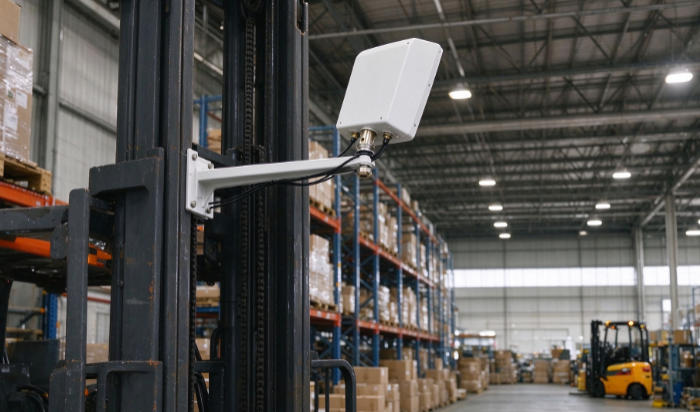
Maintain RFID Readers and Antennas
Consistent RFID tag performance also depends on the condition of the reading equipment.
Even high-quality RFID tags may experience missed reads if readers or antennas are improperly configured or poorly maintained.
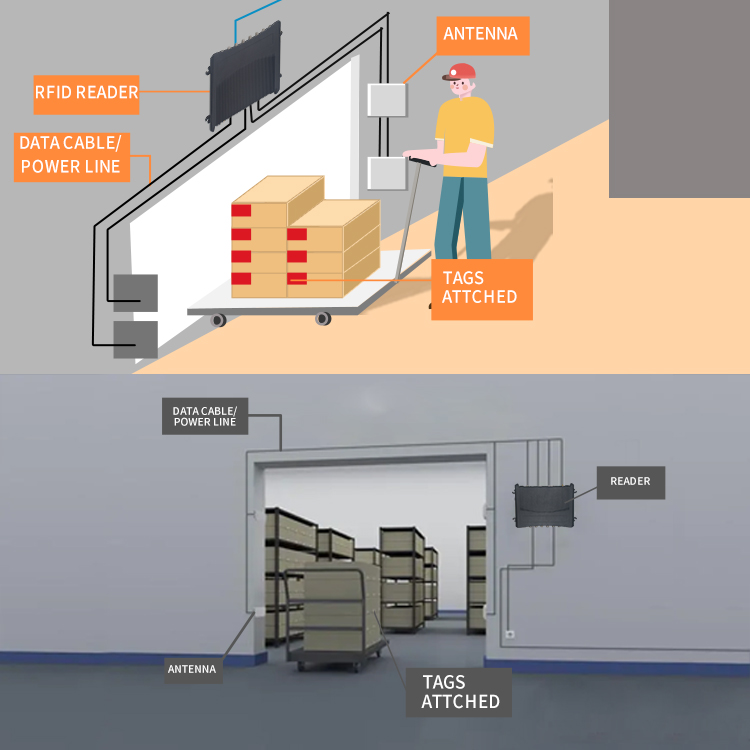
Maintenance teams should regularly:
-
Inspect reader connections, cables, and antenna ports.
-
Check antenna alignment and positioning.
-
Verify reader output power and frequency settings.
-
Remove dust and other contaminants from equipment surfaces.
-
Check network connections and data transmission.
-
Investigate unexpected changes in read coverage.
It is also important to ensure that RFID readers operate within the frequency regulations and power limits applicable to the deployment region.
Reduce Environmental Interference
The RFID operating environment can change after deployment. New equipment, metal shelving, machinery, inventory, and nearby wireless devices may affect signal propagation.
These changes can create dead zones, inconsistent reading distances, or unwanted reads from nearby RFID tags.
To minimise interference:
Conduct periodic RFID coverage tests.
Check for newly introduced metal structures or equipment.
Adjust antenna positions when the surrounding layout changes.
Optimise reader power to balance coverage and unwanted reads.
Use appropriate antenna polarisation and orientation.
Review nearby radio frequency sources when performance changes unexpectedly.
For applications in warehouses, factories, and logistics facilities, environmental assessments should be repeated whenever significant layout or operational changes occur.
Keep RFID Software and System Configurations Updated
RFID performance is not determined by hardware alone. Software configurations also influence how accurately identification data is collected and processed.
An RFID management system should be maintained to ensure that readers, antennas, and backend applications work together correctly.
Key maintenance tasks include:
Updating reader firmware when recommended by the manufacturer.
Reviewing RFID reader configuration settings.
Checking tag identification and data encoding rules.
Monitoring communication between readers and management software.
Maintaining accurate tag-to-product database records.
Backing up important RFID system data.
Businesses should also review software updates before deployment to avoid compatibility problems with existing RFID hardware.
Establish a Regular RFID Maintenance and Testing Schedule
A structured maintenance plan helps businesses maintain stable RFID performance throughout the system lifecycle.
Instead of waiting until reading problems occur, maintenance teams should perform routine inspections and performance tests.
The following schedule provides a practical starting point:
|
Maintenance frequency |
Recommended activities |
|
Daily |
Monitor read errors and system alerts |
|
Weekly |
Check reader connections and antenna conditions |
|
Monthly |
Test read rates and inspect tag attachment |
|
Quarterly |
Evaluate coverage and investigate interference |
|
Annually |
Review overall system performance and maintenance requirements |
The exact schedule should be adjusted according to the application environment, tag specifications, operating intensity, and manufacturer recommendations.
Common Factors That Affect RFID Tag Performance
Understanding the causes of performance degradation makes troubleshooting more effective.
|
Potential issue |
Impact on performance |
Recommended solution |
|
Metal interference |
Reduced read range or missed reads |
Use on-metal RFID tags |
|
Liquid absorption |
Weaker RF signals |
Select suitable tag designs and positions |
|
Physical damage |
Unstable identification or tag failure |
Inspect and replace damaged tags |
|
Incorrect placement |
Inconsistent reading results |
Optimise tag positioning |
|
Antenna misalignment |
Poor reading coverage |
Adjust antenna orientation |
|
Reader configuration issues |
Unreliable read performance |
Review power and frequency settings |
|
Software communication errors |
Missing or inaccurate records |
Check system integration and connectivity |
Maintaining consistent RFID tag performance after deployment requires more than choosing high-quality tags. It involves continuous monitoring, correct installation, physical inspections, reader maintenance, interference management, and regular system testing.
Businesses should develop a preventive maintenance strategy that considers both RFID hardware and software. By identifying potential problems early and addressing changes in the operating environment, they can reduce missed reads, extend RFID system service life, and maintain reliable identification throughout daily operations.
Ultimately, consistent RFID performance depends on the right combination of tag selection, installation quality, environmental compatibility, and ongoing maintenance.