



How to Identify the Right RFID Tag for Your Tracking Project
Choosing the right RFID tag for your tracking project starts with understanding what you need to track, where the tag will be used, and how the system will collect data. A tag that performs well on a cardboard package may not work reliably on a metal tool, a liquid-filled container, or equipment exposed to outdoor conditions.
The most effective approach is to evaluate the physical item, operating environment, reading requirements, attachment method, and system compatibility before selecting a tag. By matching these factors to your tracking objectives, you can reduce read problems, avoid unnecessary costs, and build a more dependable RFID tracking system.
1. Define What You Need to Track
Before comparing RFID tags, identify the objects your project needs to track. Different assets create different technical requirements, so the first step is to understand the items being tagged.
Common tracking targets include:
-
Products and packages: Retail goods, cartons, and individual product units.
-
Warehouse inventory: Stock items, storage containers, and pallets.
-
Industrial equipment: Tools, machinery, components, and maintenance assets.
-
Returnable assets: Reusable containers, transport bins, and pallets.
-
Outdoor assets: Construction equipment, storage units, and mobile machinery.
Consider the item's size, weight, surface material, value, and expected service life. A small retail product may require a compact label, while a reusable industrial container may need a more durable tag that can withstand repeated handling.
You should also decide whether each item needs an individual identity or whether tracking at the carton, pallet, or container level is sufficient. This decision affects the tag format, data structure, and total number of tags required.
2. Match the RFID Tag to the Item's Material
The material surrounding an RFID tag can influence its radio-frequency performance. Selecting a tag without considering the mounting surface is a common reason for disappointing results during deployment.
RFID Tags for Plastic, Cardboard, and Wood
Standard RFID labels often work well on materials such as cardboard, paper, wood, and many plastics. They are commonly considered for product identification, carton tracking, and general warehouse inventory.
However, the shape of the item, the contents inside it, and the tag's mounting position can still affect performance. Test the tag on the actual product rather than relying only on its performance in an open environment.
RFID Tags for Metal Surfaces
Metal can interfere with the antenna of a conventional RFID tag, potentially reducing its read range or preventing reliable identification.
For metal tools, machinery, equipment, and metal storage containers, consider an on-metal RFID tag specifically designed for mounting on conductive surfaces. These tags use designs that help manage the effects of the metal beneath them.
Before choosing one, check its required mounting clearance, dimensions, attachment method, and performance on the actual metal asset.
RFID Tags for Liquid-Containing Products
Liquids can absorb or alter radio-frequency energy, particularly for UHF RFID applications. This can make tag performance less predictable on bottles, liquid containers, and products containing water-based materials.
For these applications, evaluate the tag's placement, distance from the liquid, and performance when the container is full. A tag that works on an empty bottle may behave differently after filling.
Practical tip: Test RFID tags on representative samples of the actual products, including their normal contents and packaging.
3. Choose the Right RFID Frequency
RFID systems commonly use low-frequency (LF), high-frequency (HF), and ultra-high-frequency (UHF) technology. Each frequency range has different characteristics, so the right choice depends on how the tracking system will operate.
| RFID frequency | Typical characteristics | Potential applications |
| LF | Generally short-range identification and relatively low data-transfer rates | Certain animal identification and specialised access applications |
| HF | Short-range communication; NFC operates within this frequency family | Smart cards, near-field identification, and selected product interactions |
| UHF | Often supports longer-range reading and efficient identification of multiple tags | Warehouse inventory, logistics, retail stock, and asset tracking |
These are general characteristics rather than guaranteed performance levels. Actual read range depends on the regional frequency regulations, tag and reader design, antenna configuration, surrounding materials, and installation conditions.
For warehouse or logistics projects that require multiple tagged items to be identified quickly, UHF RFID may be a suitable starting point. For applications requiring deliberate, close-range interaction, HF or NFC may be more appropriate.
Do not select a frequency based on read range alone. Make sure the tag and reader operate in compatible frequency bands and support the communication standards required by your system.
4. Determine the Required Read Range
Read range is one of the most important factors when choosing an RFID tag, but the longest available range is not always the best option.
Ask how the tag will be read during normal operations:
-
Will staff scan individual items at close range?
-
Will a handheld reader be used to locate assets?
-
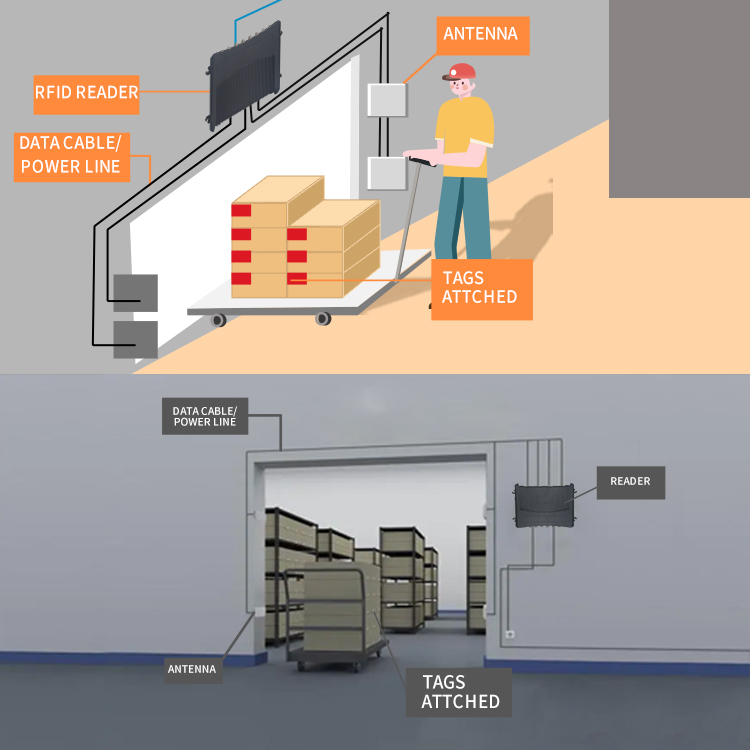
Will fixed readers identify items passing through a doorway?
-
Will multiple tags need to be read from a pallet or storage area?
-
Must the system distinguish items in adjacent zones?
A warehouse may benefit from a tag that can be read from several feet away under the intended conditions. A controlled workstation may need a shorter, more precise reading zone to avoid identifying nearby items accidentally.
Actual read range depends on several interacting factors, including reader output, antenna gain, tag sensitivity, tag orientation, mounting surface, and environmental interference.
Instead of relying solely on a manufacturer's maximum-range figure, define a realistic target for your application. Test the tag at the intended reading distance, speed, angle, and item density.
5. Evaluate the Operating Environment
An RFID tag must continue to perform under the conditions it encounters throughout its service life.
Indoor and Outdoor Use
Indoor inventory tags may only need to withstand ordinary handling and storage conditions. Outdoor tags can face rain, sunlight, temperature changes, dust, vibration, and impact.
For outdoor tracking, check the tag's environmental protection rating, UV resistance where relevant, operating temperature range, and housing durability.
High and Low Temperatures
Cold storage, freezer operations, manufacturing processes, and equipment exposed to heat can require specialised tag materials and adhesives.
Check both the tag's operating temperature and any temperature limits associated with installation or adhesive curing. For freezer applications, also confirm that the adhesive remains suitable for the actual surface and temperature conditions.
Chemicals, Moisture, and Repeated Handling
Industrial assets may encounter oils, cleaning agents, solvents, moisture, abrasion, or repeated mechanical contact.
In these situations, consider tags with protective housings, durable substrates, and suitable attachment methods. Verify resistance against the specific chemicals and cleaning procedures used in your operation rather than assuming that a tag described as industrial-grade will withstand every substance.
The goal is to select a tag that matches the full operating environment, not just the conditions present at installation.
6. Select an Appropriate Attachment Method
Even a technically suitable RFID tag can fail if it cannot remain securely attached to the tracked item.
Common attachment options include:
-
Adhesive backing: Suitable for many flat or gently curved surfaces when the adhesive matches the material and environment.
-
Screws or rivets: Useful for certain durable tags installed on equipment or reusable assets.
-
Cable ties or straps: Practical for selected tools, containers, and assets where permanent attachment is unsuitable.
-
Embedded installation: Appropriate for some products and components designed to accommodate an RFID tag internally.
-
Purpose-built mounting brackets: Useful when the tag requires a defined position or separation from the mounting surface.
Consider the surface finish, curvature, available space, installation time, maintenance needs, and risk of accidental removal.
For reusable assets, the attachment method should also support the expected number of handling cycles. If tags may need to be replaced, choose a design that allows replacement without damaging the asset or interrupting operations unnecessarily.
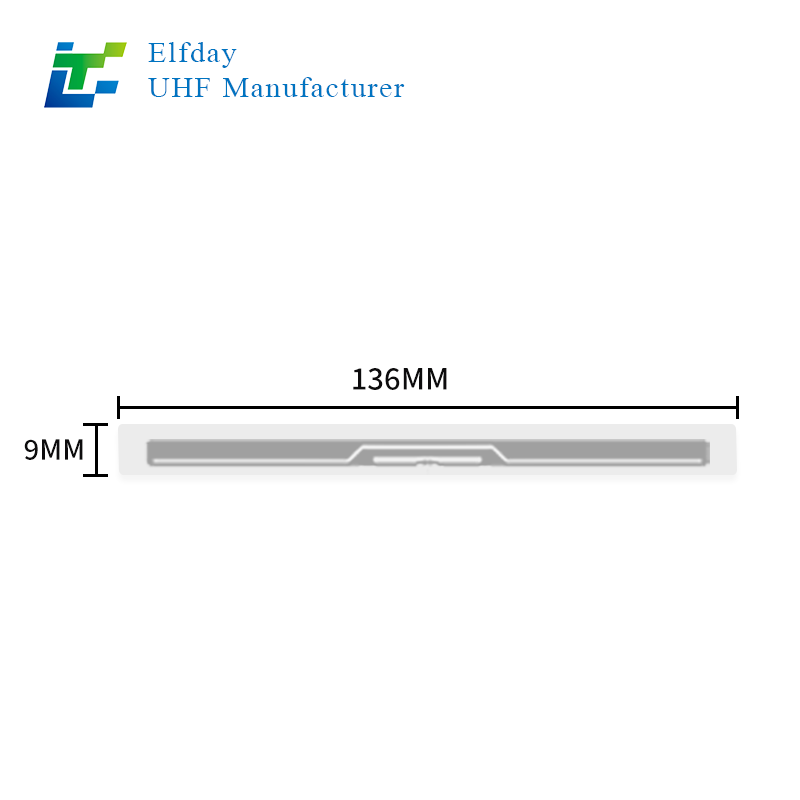
7. Check Tag Size, Shape, and Installation Space
The physical dimensions of an RFID tag influence where it can be installed and how easily it integrates into the tracking workflow.
A compact tag may fit a small component but offer different performance characteristics from a larger design. Larger tags can provide more space for antenna structures, although size alone does not guarantee better performance.
Before finalising a tag, check:
-
Available mounting area.
-
Surface curvature and contours.
-
Clearance from metal or other interfering materials.
-
Required orientation and positioning.
-
Visibility and accessibility for inspection.
-
Compatibility with product packaging or existing equipment.
If the tag must fit inside a narrow space or behind a protective cover, test the complete assembly. A tag's performance can change when it is installed within the final product rather than tested separately.
8. Verify Compatibility With Your RFID System
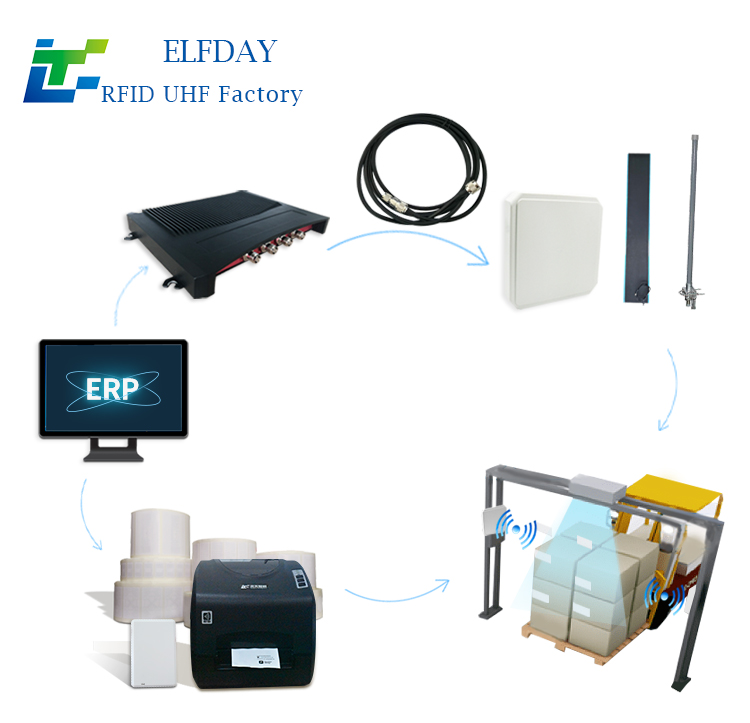
The selected tag must work with the reader hardware, software, and data-management process used by your project.
Before purchasing, confirm the following:
Frequency compatibility: The tag and reader must support compatible frequency bands.
Air-interface standard: Check that the tag supports the protocol expected by the reader and system.
Data requirements: Determine whether you need a unique identifier, additional user memory, a particular encoding format, or other tag-specific capabilities.
Reader configuration: Consider antenna placement, reader power settings, and the way tags will be presented during normal operations.
Software integration: Confirm that the system can associate tag identifiers with the relevant product, asset, location, or inventory record.
In many tracking applications, the RFID tag stores an identifier while the main business information remains in a connected database. This can simplify updates and reduce the need to store large amounts of information directly on the tag.
Do not assume that every RFID tag works with every reader. Compatibility should be confirmed before bulk ordering.
9. Compare Durability, Service Life, and Total Cost
The lowest-priced RFID tag may not be the most economical option over the full life of a tracking project.
A low-cost label may be appropriate for a disposable package. A reusable industrial asset may justify a more durable tag if it reduces replacement work, relabelling, and operational interruptions.
When comparing options, evaluate:
-
Purchase price per tag.
-
Installation and labour costs.
-
Expected service life.
-
Resistance to the actual operating environment.
-
Replacement frequency.
-
Reader and infrastructure requirements.
-
Potential costs caused by missed reads or damaged tags.
For reusable assets, test tags under representative handling conditions before committing to a large order. A pilot can reveal whether a more durable tag offers sufficient operational value to justify its higher initial cost.
The best option is the one that meets your performance requirements at an acceptable total cost, not necessarily the one with the lowest unit price.
10. Test RFID Tags Before Full Deployment
A structured test helps confirm whether a tag will perform as expected in the real tracking environment.
Use the following process:
-
Select representative items. Include the different materials, shapes, sizes, and contents present in your project.
-
Install the tags as intended. Use the planned adhesive, fasteners, brackets, or embedded mounting method.
-
Test with the actual reader. Use the same reader type, antenna arrangement, and basic configuration intended for deployment.
-
Measure read performance. Check identification consistency at realistic distances, orientations, and movement speeds.
-
Test environmental conditions. Where relevant, evaluate temperature, moisture, vibration, cleaning exposure, and repeated handling.
-
Check the complete workflow. Confirm that the reader captures the tag ID and that the software associates it with the correct record.
-
Document the results. Record the tag model, mounting position, reader configuration, test conditions, and any failures.
Define acceptance criteria before testing. These might include a minimum read success rate, acceptable identification time, resistance to detachment, or performance under specified environmental conditions.
The exact criteria should reflect the operational risks and requirements of your project. Once a suitable tag passes the test, document the approved specification so that future orders remain consistent.
11. Common Mistakes to Avoid When Selecting RFID Tags
Several avoidable mistakes can lead to unnecessary expense or unreliable tracking.
Choosing by price alone. A cheap tag may be unsuitable for metal surfaces, outdoor exposure, or repeated use.
Assuming maximum read range is guaranteed. Published ranges are influenced by test conditions and may not reflect the actual installation.
Ignoring the mounting surface. Metal, liquids, and product geometry can affect radio-frequency performance.
Overlooking attachment durability. A tag that detaches during daily handling can create gaps in asset records.
Skipping system compatibility checks. A tag may be physically suitable but incompatible with the reader or software workflow.
Ordering in bulk before testing. A small pilot can uncover installation and performance issues before they affect an entire deployment.
Avoiding these mistakes makes it easier to choose a tag that meets both technical requirements and day-to-day operational needs.
Frequently Asked Questions
How do I know which RFID tag is right for my application?
Start by identifying the tracked item, its material, the operating environment, and the required reading method. Then evaluate frequency, read range, mounting options, durability, and reader compatibility. Test suitable candidates on representative items before placing a large order.
Are all RFID tags compatible with the same reader?
No. Tags and readers must support compatible frequency bands and communication protocols. Confirm compatibility with the specific reader hardware and system configuration used in your project.
Should I choose a passive or active RFID tag?
Passive tags obtain operating energy from the reader's radio signal and are widely used for product, inventory, and many asset-tracking applications. Active tags use a power source, typically a battery, and may support longer-range applications or additional functionality. The right choice depends on required range, tag size, maintenance, infrastructure, and cost.
What type of RFID tag works best on metal?
An on-metal RFID tag designed for mounting on metal is generally a suitable starting point. The final choice depends on the surface, available space, required read range, and environmental conditions. Always test the tag in its intended mounting position.
How important is RFID tag size?
Tag size affects installation options and can influence antenna performance. Smaller tags are useful where space is limited, while larger tags may be more suitable for certain long-range or industrial applications. Actual performance depends on the complete tag design and installation conditions.
Do I need a custom RFID tag for my project?
Not always. Standard tags may be sufficient when their dimensions, materials, performance, and attachment methods meet your requirements. Custom designs may be worth evaluating when the application involves unusual surfaces, restricted installation space, specialised housings, or specific integration needs.
How many RFID tags should I test before deployment?
There is no universal number. Test enough samples to represent the range of items, materials, mounting positions, and operating conditions in your project. Larger or more variable deployments may require testing across multiple locations and operating scenarios.
What information should I prepare before requesting RFID tag samples?
Prepare the item material and dimensions, operating temperature, exposure to moisture or chemicals, preferred attachment method, reading distance, reader frequency, application workflow, and expected service life. Photos of the item and its proposed tag location can also help clarify installation requirements.
Identifying the right RFID tag for your tracking project requires a balanced assessment of the tracked item, material, frequency, read range, environment, mounting method, system compatibility, and long-term cost.
The most reliable approach is to define clear requirements, shortlist tags that meet those requirements, and validate their performance under real operating conditions. By testing before full deployment and documenting the approved specification, businesses can reduce compatibility issues and build a tracking system that supports more consistent identification and asset visibility.