



How Far Can an RFID Tag Be Read? RFID Read Range Explained
How far can an RFID tag be read? This is one of the most common questions when choosing an RFID system.
The answer depends on several factors, including the RFID frequency, tag design, RFID reader, reader antenna, tag orientation, mounting surface, and operating environment.
In general, UHF RFID tags can support longer read distances than HF and LF RFID tags, which is why UHF RFID is widely used for warehouse inventory, retail, logistics, pallet tracking, and asset management.
However, the maximum read range listed for an RFID tag should not be treated as a guaranteed distance in every application.
A tag that can be read from several meters away in an open environment may perform differently when attached to metal equipment, a liquid-filled product, or densely packed inventory.
This guide explains RFID tag read range, the factors that affect it, and how to choose an RFID tag based on actual application requirements.
What Is RFID Read Range?
RFID read range refers to the maximum distance at which an RFID reader can successfully communicate with and identify an RFID tag.
The distance is usually measured between the RFID reader antenna and the RFID tag.
For example, if an RFID reader can reliably identify a tag from several meters away, that distance represents part of the system's effective read range.
However, RFID read range is not a fixed characteristic of the tag alone.
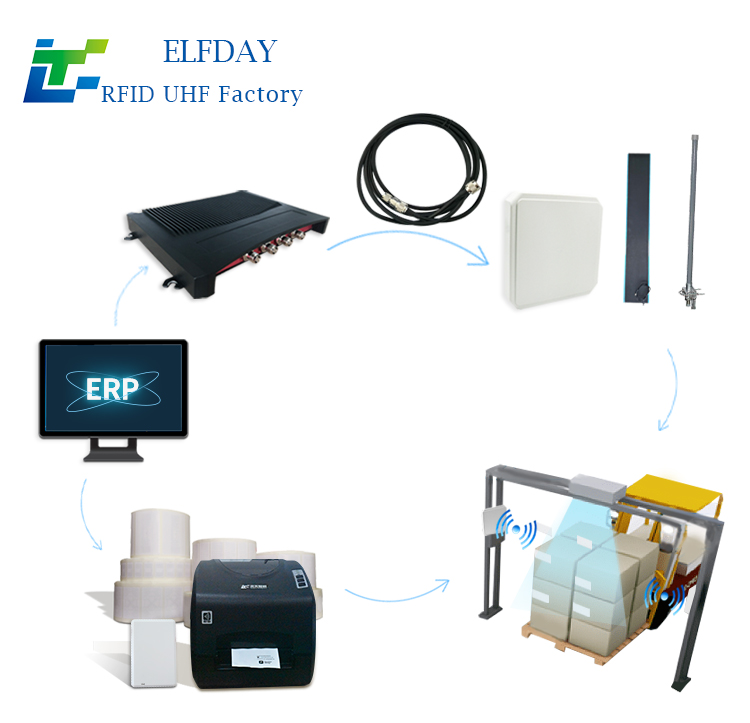
It is a result of the complete RFID system:
RFID Tag + RFID Reader + Antenna + Environment + Installation
This is why two RFID tags with similar specifications can perform differently in real-world applications.
How Far Can RFID Tags Be Read?
There is no single read distance that applies to every RFID tag.
A general comparison is:
| RFID Technology | Typical Use | General Read Distance |
|---|---|---|
| LF RFID | Animal identification, access control | Short range |
| HF RFID | Libraries, access control, NFC-related applications | Short to moderate range |
| UHF RFID | Inventory, logistics, retail, asset tracking | Longer range |
| Active RFID | Specialized tracking and monitoring | Potentially much longer |
The actual range depends on the specific system and operating conditions.
For many inventory and logistics applications, passive UHF RFID tags are attractive because they can support relatively long read distances without requiring an internal battery.
What Determines RFID Tag Read Range?
Several factors can affect RFID performance.
1. RFID Frequency
Frequency is one of the most important factors.
RFID systems commonly use three frequency categories:
-
LF RFID
-
HF RFID
-
UHF RFID
These technologies have different communication characteristics.
UHF RFID is commonly selected when longer read distances and fast identification are important.
HF RFID is often used for shorter-range applications such as libraries and access control.
LF RFID is commonly used for specialized close-range identification applications.
2. RFID Tag Antenna
The RFID tag antenna plays a major role in determining read performance.
The antenna is responsible for receiving energy from the reader and communicating with it.
Antenna design can vary according to:
-
Frequency
-
Tag size
-
Required read range
-
Mounting surface
-
Application
-
Orientation
A larger tag is not automatically better, but antenna size and design can have a significant influence on performance.
3. RFID Reader Power
The RFID reader generates the RF signal used to communicate with passive RFID tags.
Reader output power affects the strength of the RF field.
However, simply increasing reader power does not guarantee better results.
RFID systems must operate within applicable regulatory requirements, and excessive power may create unwanted reads or interference.
The goal is to create a suitable read zone rather than simply maximize transmission power.
4. Reader Antenna
The RFID reader antenna is another important factor.
Different antennas can produce different RF coverage patterns.
For example, a system may use:
-
Linear-polarized antennas
-
Circular-polarized antennas
-
Directional antennas
-
Different antenna gains and beam patterns
The antenna should be selected according to the movement and orientation of the tagged items.
5. Tag Orientation
The orientation of the RFID tag relative to the reader antenna can affect read performance.
This is particularly important for UHF RFID.
If a tag is positioned in an unfavorable orientation, the reader may receive a weaker response.
In applications where products can move in different directions, antenna polarization and tag orientation should be considered during system design.
6. Distance Between Tag and Reader
RFID communication naturally becomes more difficult as the distance increases.
A tag may be easy to read when it is close to the reader but become unreliable at greater distances.
For this reason, RFID system design should focus on the required operating distance, not simply the maximum possible distance.
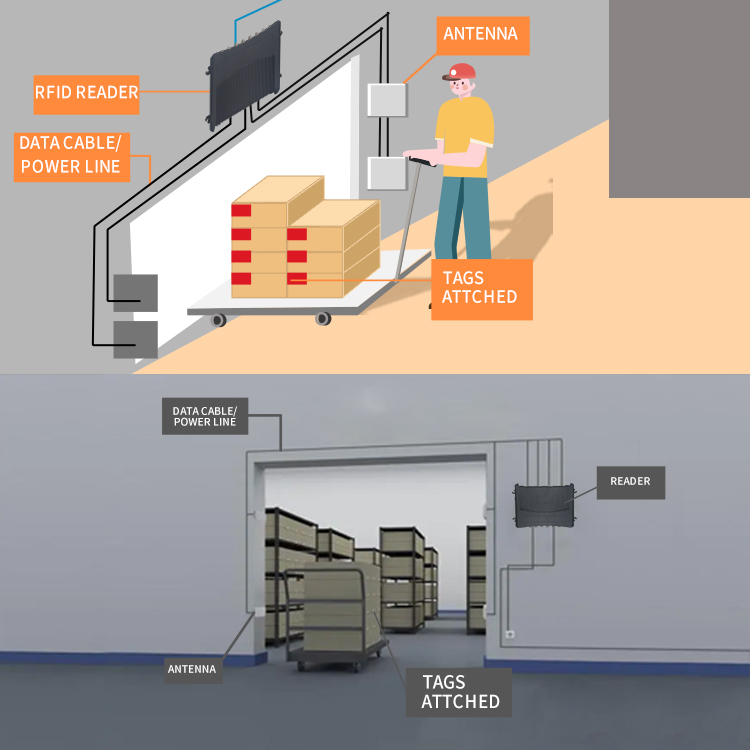
For example, a warehouse portal may require reliable tag identification within a defined passage area rather than the longest possible read distance.
7. Tagging Material
The material surrounding the RFID tag can significantly affect performance.
Common materials include:
-
Cardboard
-
Plastic
-
Glass
-
Wood
-
Fabric
-
Metal
-
Liquids
Cardboard and many plastic surfaces are generally easier for UHF RFID applications.
Metal and liquids require more careful tag selection and testing.
8. Metal Surfaces
Metal is one of the most common challenges for UHF RFID tags.
When a standard RFID tag is placed directly on metal, the metal can affect the tag antenna and reduce communication performance.
In these applications, an on-metal RFID tag is usually a better option.
On-metal tags are designed specifically for installation on conductive surfaces.
Common applications include:
-
Metal machinery
-
Tools
-
Equipment
-
Steel containers
-
Automotive components
-
IT equipment
The actual read range still depends on the asset and tag design.
9. Liquids
Liquids can also affect UHF RFID communication.
For example, a UHF RFID tag attached to a dry cardboard carton may perform differently from a tag attached directly to a bottle containing liquid.
Applications involving liquids may require:
-
Specialized RFID tags
-
Different tag placement
-
Additional spacing
-
Application testing
10. Environmental Conditions
The operating environment can affect RFID read range.
Potential factors include:
-
Temperature
-
Humidity
-
Water
-
Chemicals
-
Dust
-
Machinery
-
Metal structures
-
Electromagnetic interference
Industrial environments can be more challenging than controlled indoor environments.
A tag that performs well in a laboratory may not produce the same results in a factory or warehouse.
UHF RFID Read Range
UHF RFID is widely associated with longer RFID read ranges.
This makes it useful for:
-
Warehouse inventory
-
Retail inventory
-
Pallet tracking
-
Carton tracking
-
Logistics
-
Asset management
-
Manufacturing
Passive UHF RFID tags can often be read from significantly farther away than many HF or LF RFID tags.
However, the exact distance varies significantly.
Instead of asking:
"What is the maximum read range of this RFID tag?"
it is often more useful to ask:
"What read range can this RFID tag reliably achieve in my actual application?"
This distinction is important when designing an RFID system.
Passive RFID Read Range
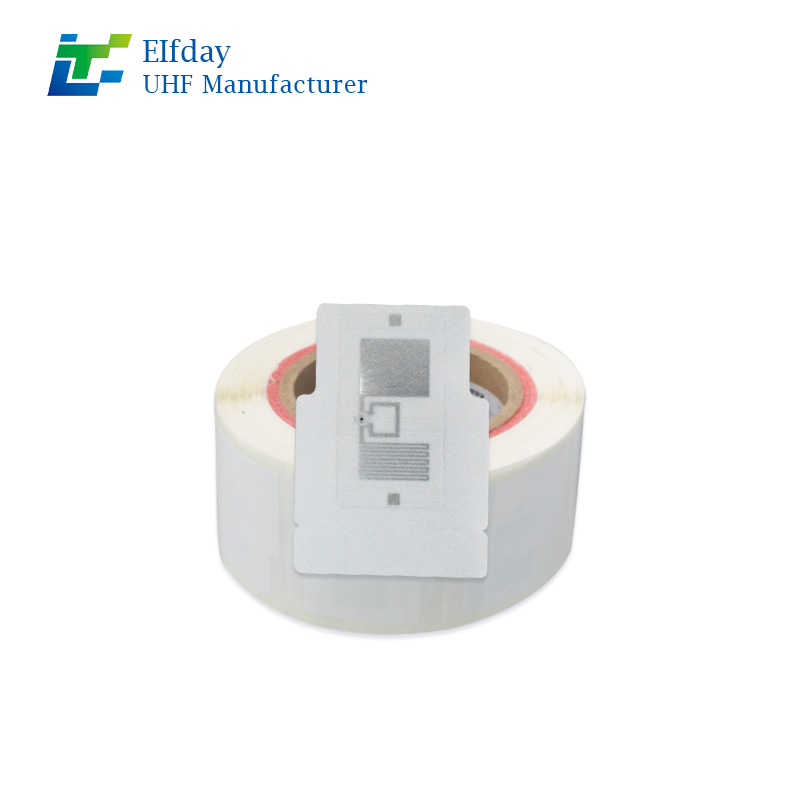
Passive RFID tags obtain energy from the RFID reader.
Because they do not contain an internal battery, their read range depends heavily on the energy available from the reader and the efficiency of communication between the tag and reader.
Passive RFID read range is affected by:
-
Frequency
-
Reader power
-
Reader antenna
-
Tag antenna
-
Tag chip
-
Tag orientation
-
Mounting surface
-
Environment
Passive UHF RFID generally provides longer read distances than passive HF and LF RFID in many applications.
Active RFID Read Range
Active RFID tags contain an internal battery.
Because they have their own power source, active RFID systems can support longer communication distances and additional functions in certain applications.
Active RFID may be considered for:
-
Large asset tracking
-
Vehicle tracking
-
Location monitoring
-
Real-time tracking
-
Sensor applications
However, active RFID tags are generally larger and more expensive than passive RFID tags and require battery management.
What Is a Good RFID Read Range?
There is no universal definition of a "good" RFID read range.
The appropriate read range depends on the application.
For example:
Retail Inventory
Employees may use handheld RFID readers relatively close to products.
A moderate read distance may be sufficient.
Warehouse Portal
A fixed reader may need to identify tags as pallets or cartons pass through a defined doorway.
A longer and controlled read zone may be more useful.
Tool Tracking
A small industrial tool may be scanned from a short distance using a handheld reader.
Conveyor Tracking
Tags may need to be detected automatically as products move past a fixed RFID reader.
The required read range should therefore be determined by the actual workflow.
Maximum Read Range vs Reliable Read Range
This is an important distinction.
Maximum read range is the farthest distance at which a tag may be detected under particular conditions.
Reliable read range is the distance at which the RFID system can consistently identify the tag under the expected operating conditions.
For commercial RFID deployments, reliable performance is generally more important than the theoretical maximum.
For example, a system that can occasionally detect a tag at a very long distance may be less useful than a system that consistently identifies the tag throughout the required operating zone.
How Can You Increase RFID Read Range?
If an RFID system is not achieving the desired read distance, several factors can be evaluated.
Use the Correct RFID Tag
The tag antenna should match the application and operating frequency.
Select an Appropriate Reader Antenna
The antenna should provide suitable coverage for the intended read zone.
Optimize Tag Orientation
Where possible, position the tag consistently relative to the reader antenna.
Move the Tag Away From Metal
If a standard tag is being mounted on metal, consider using an on-metal RFID tag.
Adjust Tag Placement
Moving a tag to another location on a product can sometimes improve performance.
Reduce RF Interference
Identify equipment or environmental factors that may interfere with the RFID system.
Test Different Tag Designs
Different antenna designs can perform differently on the same product.
Application testing is often the fastest way to identify a suitable tag.
Can RFID Tags Be Read Through Packaging?
In many cases, yes.
One advantage of RFID is that direct visual line of sight is generally not required.
For example, a UHF RFID reader may identify tags attached to products inside a cardboard carton.
However, packaging materials can affect performance.
Potentially challenging materials include:
-
Metalized packaging
-
Liquids
-
Dense materials
-
Conductive materials
The complete product and packaging should therefore be tested with the selected RFID tag.
Can RFID Tags Be Read Through Walls?
RFID is not generally designed to provide reliable identification through arbitrary walls.
The ability of an RFID signal to pass through a material depends on the material, thickness, frequency, tag design, reader power, and other conditions.
Metal walls and structures can significantly affect RFID communication.
For controlled applications, RFID readers and antennas should be positioned to create a defined read zone rather than relying on signals passing through building structures.
Can Multiple RFID Tags Be Read at the Same Time?
Yes.
One of the major advantages of UHF RFID is its ability to identify multiple tags within a reader's operating area.
This is useful for applications such as:
-
Inventory counting
-
Pallet tracking
-
Carton tracking
-
Warehouse receiving
-
Retail stock checks
However, reading many tags simultaneously can create a more complex RF environment.
Tag density, product arrangement, reader configuration, and antenna placement all influence performance.
How to Test RFID Read Range
A proper read-range test should use the actual application conditions.
Step 1: Use the Actual RFID Tag
Do not test only with a generic sample if the final application will use a different tag.
Step 2: Use the Actual Product
The product material and shape can affect RFID performance.
Step 3: Test the Actual Mounting Position
The same tag can behave differently depending on where it is placed.
Step 4: Use the Intended Reader and Antenna
The reader and antenna should match the final system configuration.
Step 5: Test Different Orientations
Rotate the tag and product to identify potential orientation-related performance differences.
Step 6: Test the Required Operating Zone
Measure performance at the distances that actually matter for the application.
Step 7: Test Under Real Conditions
Where possible, test with:
-
Actual inventory
-
Actual packaging
-
Actual equipment
-
Actual environment
-
Expected tag density
This provides a much more realistic indication of RFID performance.
How to Choose an RFID Tag Based on Read Range
When selecting an RFID tag, consider the following:
| Requirement | Consideration |
|---|---|
| Short-range identification | HF or LF may be suitable |
| Longer-range identification | UHF RFID may be suitable |
| Metal surface | On-metal RFID tag |
| Long-term asset tracking | Durable RFID tag |
| High-volume inventory | Passive UHF RFID tag |
| Outdoor application | Rugged/environment-resistant tag |
| Liquid-containing product | Application-specific testing |
| Multiple-tag reading | UHF RFID system |
These are general guidelines. The final RFID tag should be selected based on the complete application.
Frequently Asked Questions About RFID Read Range
How far can an RFID tag be read?
The read range depends on the RFID frequency, tag, reader, antenna, orientation, mounting surface, and environment. UHF RFID generally supports longer read distances than LF and HF RFID.
What RFID tag has the longest read range?
There is no single RFID tag with the longest range for every application. Active RFID can support longer communication distances, while passive UHF RFID is widely used when longer-range battery-free identification is required.
How far can a passive RFID tag be read?
Passive RFID read range varies by frequency and system configuration. Passive UHF RFID tags generally support longer ranges than many passive HF and LF tags.
Can RFID tags be read from several meters away?
Yes, some UHF RFID systems can identify tags from several meters away. The actual distance depends on the tag, reader, antenna, orientation, product material, and environment.
Does RFID tag size affect read range?
Tag size and antenna design can affect RFID performance. However, a larger tag is not automatically better because antenna design and application conditions are also important.
Does metal reduce RFID read range?
Metal can significantly affect standard RFID tags. An on-metal RFID tag is designed specifically for mounting on metal surfaces and can provide better performance in these applications.
Do liquids affect RFID read range?
Yes. Liquids can affect UHF RFID communication. Specialized tag designs and application-specific testing may be required.
Can RFID tags be read without line of sight?
Generally, yes. RFID does not normally require the direct visual line of sight needed by a barcode scanner.
Can one reader read multiple RFID tags?
Yes. UHF RFID readers can be designed to identify multiple tags within their operating area, which is useful for inventory and logistics applications.
How can I improve RFID read range?
Use an RFID tag designed for the application, optimize the reader antenna and tag orientation, select the appropriate reader configuration, and test the tag on the actual product and environment.
RFID tag read range depends on the complete RFID system rather than the tag alone.
Frequency, RFID chip, antenna design, reader power, reader antenna, tag orientation, mounting surface, product material, and environmental conditions can all affect the final reading distance.
UHF RFID tags are commonly selected for applications requiring relatively long read ranges and fast identification of multiple items, including warehouses, retail stores, logistics operations, manufacturing facilities, and asset tracking.
However, the most important measurement is not the theoretical maximum distance. It is the reliable read range under actual operating conditions.
Before deploying RFID at scale, test the selected tag with the actual product, mounting surface, reader, antenna, and environment. This helps ensure that the RFID system can consistently identify tagged items throughout the required operating area.