




How Does an RFID System Work? A Comprehensive Analysis from Tag Identification to Data Processing
RFID (Radio Frequency Identification) technology enables businesses to identify, track, and manage tagged objects without requiring direct line-of-sight scanning. From warehouse inventory and logistics tracking to manufacturing operations and access control, RFID systems help organizations collect identification data and use it to improve operational visibility.
But how does an RFID system actually work?
An RFID system involves more than simply reading a tag. It follows a series of connected steps, including radio frequency communication, tag identification, data transmission, information processing, and interaction with business software. Understanding this complete workflow helps businesses select suitable equipment, plan system deployment, and improve identification reliability.
This article explains how an RFID system works, from the moment a reader communicates with a tag to the point where the collected information becomes useful business data.
Understanding the Basic Working Principle of an RFID System
An RFID system uses radio waves to identify objects carrying RFID tags. Instead of scanning a printed code, an RFID reader communicates with a tag through an antenna and receives identification information electronically.
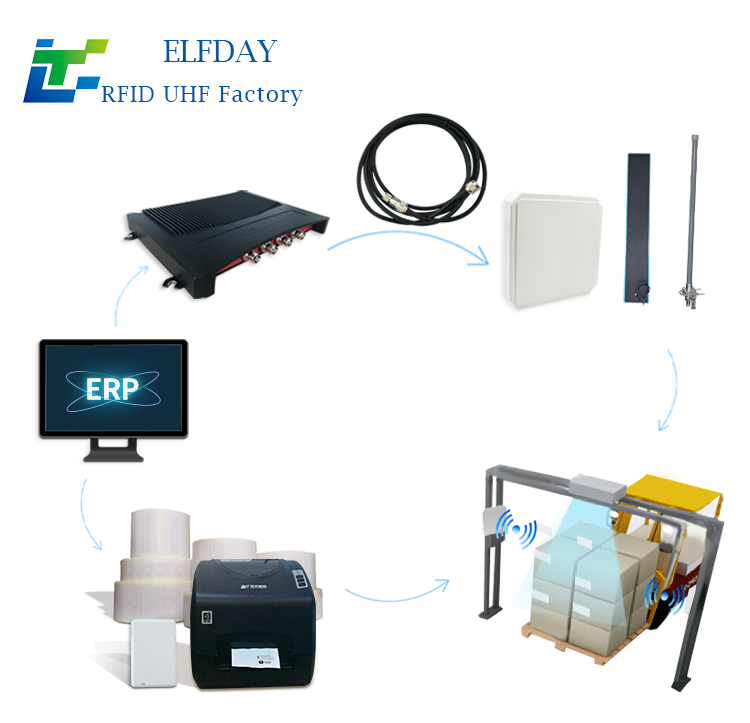
A typical RFID system consists of four main elements:
-
RFID tags: Attached to objects and used to store identification data.
-
RFID readers: Generate radio frequency signals and communicate with tags.
-
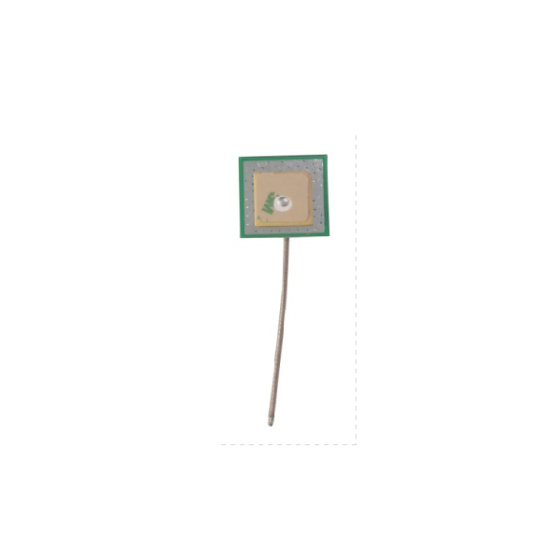
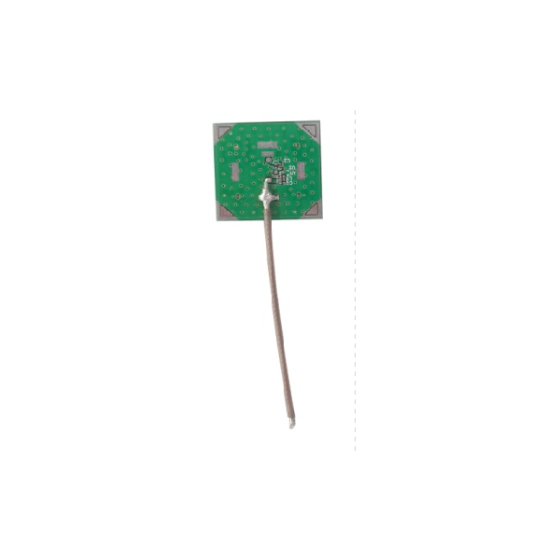
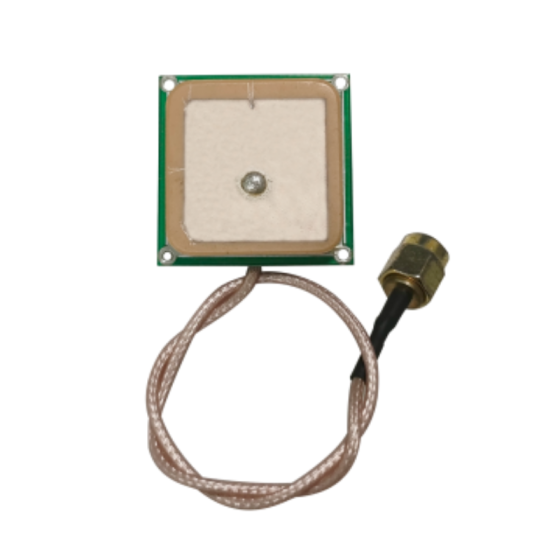
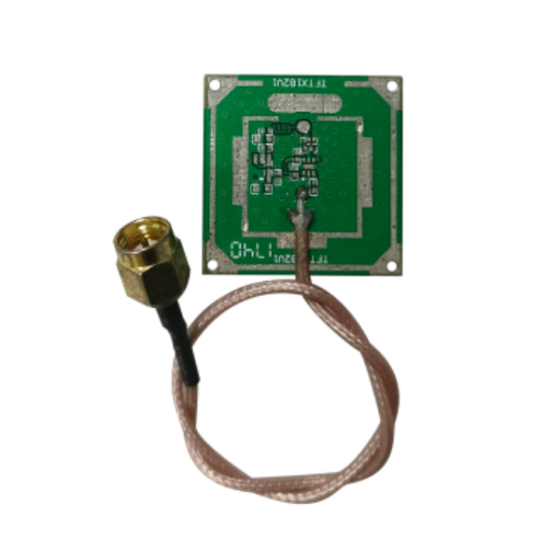
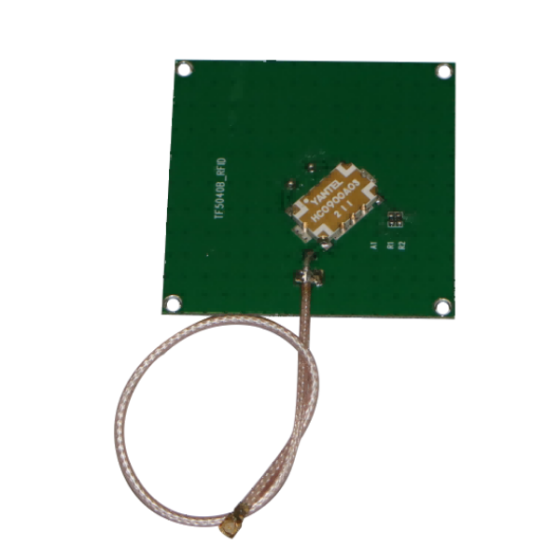
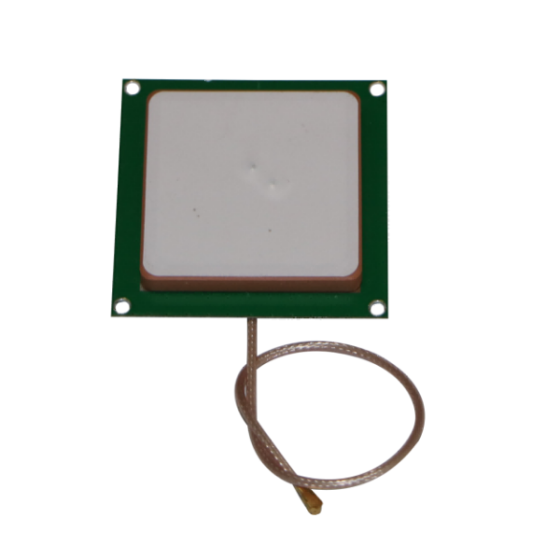
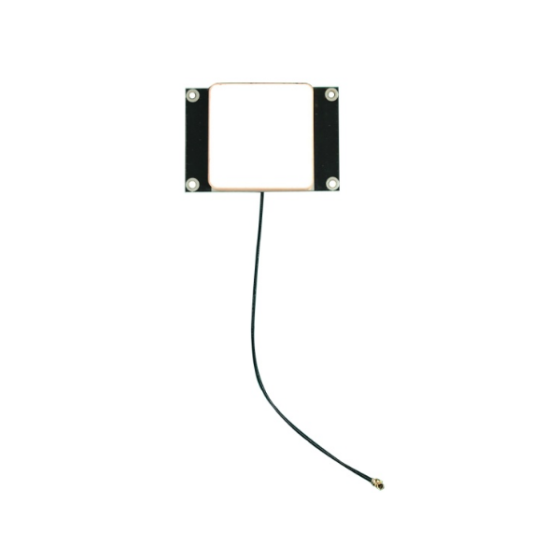
RFID antennas: Transmit and receive radio frequency signals, depending on the system design.
-
RFID software or management systems: Process identification events and connect them with business information.
These components work together to create an identification and data collection process.
For example, when a tagged product passes through an RFID reading area, the reader communicates with the tag and obtains its identification information. The reader then sends the collected data to software, where the product can be identified, recorded, and associated with its inventory information.
The exact communication process depends on the RFID frequency and tag type. Passive RFID tags generally obtain operating energy from the reader's radio frequency field, while active RFID tags use an internal power source.
Step One: The RFID Reader Sends a Radio Frequency Signal
The identification process begins when the RFID reader activates its radio frequency communication field.
The reader generates a signal at a frequency supported by the RFID system. Its antenna transmits this signal into a designated reading area.
When a compatible RFID tag enters the effective communication area, it may receive the signal and respond according to the communication protocol.
The reading area depends on several factors, including:
-
RFID frequency and tag design
-
Reader output power and antenna characteristics
-
Tag orientation and installation position
-
Surrounding materials, especially metal and liquids
-
Environmental interference and system configuration
For this reason, the physical reading area should be tested under actual operating conditions rather than estimated from reader specifications alone.
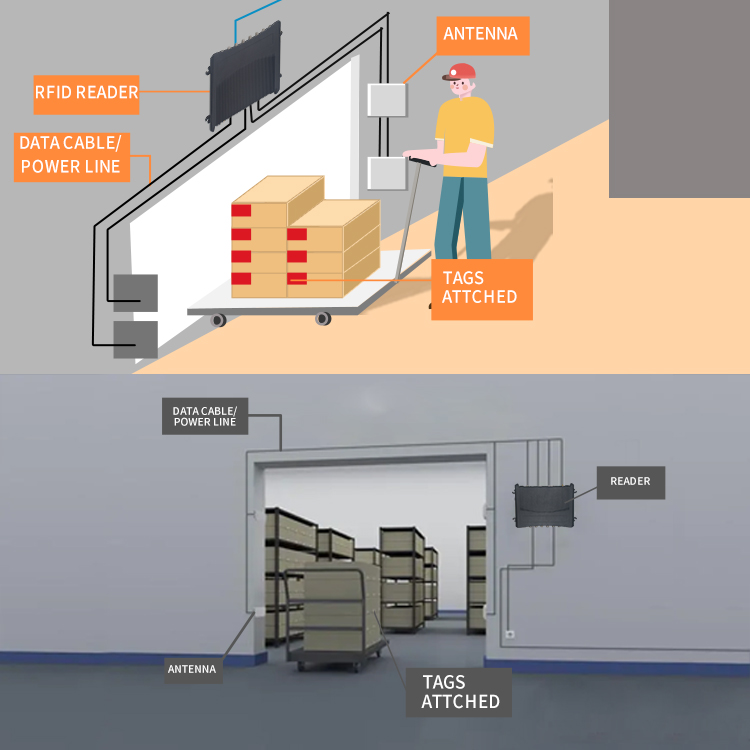
In a warehouse, for example, antennas may be installed around a conveyor, storage entrance, or inventory station to create a controlled identification zone.
Step Two: The RFID Tag Receives the Signal and Responds
After receiving a suitable signal, the RFID tag communicates its stored information to the reader.
The response mechanism varies according to the tag type.
Passive RFID Tags
Passive RFID tags do not have their own battery. They use energy from the reader's radio frequency field to power the chip and communicate a response.
In many passive UHF RFID systems, the tag communicates by changing how it reflects the reader's signal. This process is commonly known as backscatter communication.
Passive tags are widely used in inventory management, warehouse tracking, retail operations, and logistics because they do not require an internal battery.
Active RFID Tags
Active RFID tags contain an internal power source, typically a battery. Depending on their design and communication protocol, they can transmit signals using their own power.
They are often considered for applications that require longer communication distances or periodic monitoring of mobile assets.
Semi-Passive RFID Tags
Semi-passive tags also contain an internal power source, but their communication behavior differs from fully active tags. Some designs use the battery to power the chip while relying on reader-generated radio frequency signals for communication.
The choice between passive, active, and semi-passive RFID depends on application requirements, including identification range, tag size, battery considerations, operating environment, and total system cost.
Step Three: The RFID Reader Identifies the Tag
When the reader receives a tag response, it decodes the information according to the relevant RFID air-interface protocol.
In many RFID applications, the most important information is the tag's unique identifier or Electronic Product Code (EPC). This identifier can be used as a reference to locate the corresponding object record in a database.
For example, an RFID tag attached to a storage container may contain an identifier such as:
EPC: 300833B2DDD9014000000001
The identifier itself does not necessarily contain every detail about the container. Instead, the business system can use it to retrieve associated information, such as:
-
Item or asset name
-
Product number
-
Serial number
-
Storage location
-
Inventory status
-
Ownership or department
-
Previous tracking records
This approach allows RFID tags to carry relatively compact identification data while more detailed information remains in the connected database.

How Are Multiple RFID Tags Identified?
In applications where many tags are present simultaneously, the reader uses anti-collision procedures defined by the communication protocol to manage tag responses.
For example, EPC Gen2 / ISO 18000-63 UHF RFID systems use an inventory process that helps the reader identify multiple tags within its communication field.
The reader and tags coordinate their responses so that tags can be identified in an organized manner. Actual reading efficiency depends on factors such as tag population, reader configuration, tag sensitivity, antenna coverage, and surrounding conditions.
Step Four: RFID Data Is Transmitted to the Management System
After identifying tags, the reader sends the collected information to a connected computer, server, or RFID middleware platform.
The communication method depends on the reader model and system architecture. Common options include:
-
Ethernet
-
Wi-Fi
-
USB
-
Serial communication
-
Industrial communication interfaces
-
Cellular or other wireless connections
A reader may send information such as:
-
Tag identifier
-
Reader identification
-
Antenna port
-
Read timestamp
-
Signal strength or other available read parameters
The exact fields depend on the reader and software configuration.
For example, when an RFID reader detects a tagged carton at a warehouse entrance, it may send the EPC, reader ID, antenna port, and timestamp to the management platform.
The software can then determine which reading area detected the carton and when the identification event occurred.
It is important to distinguish between tag identification and business-event confirmation. A single tag read does not automatically prove that an item has completed a shipment, entered inventory, or passed quality inspection. Those conclusions require business rules and, where appropriate, additional process information.
Step Five: RFID Middleware Processes and Filters the Data
An RFID reader may detect the same tag multiple times while an object remains within the reading area. In environments with many tags and readers, raw read data can become repetitive or difficult to interpret.
RFID middleware helps convert these raw observations into more useful identification events.
Typical middleware functions include:
Duplicate Read Filtering
The system can filter repeated reads of the same tag within a defined time window or processing rule.
This helps reduce unnecessary records and makes downstream data easier to manage.
Data Aggregation
The software can combine multiple observations into a more meaningful event.
For example, several reads of the same tag by one reader during a short period may be grouped into a single identification event.
Reader and Antenna Association
The system can associate a tag read with the reader and antenna that detected it.
This information helps businesses understand where an identification event occurred, although antenna detection alone does not always establish an object's exact physical position.
Event Validation
Middleware can apply business rules to determine whether a read should trigger a specific action.
For example, a warehouse system may compare a detected tag against an expected shipment list before recording a shipment-related event.
The quality of middleware configuration is important because overly aggressive filtering may remove useful observations, while insufficient filtering may create duplicate or misleading records.
Step Six: RFID Data Is Matched With Business Information
After filtering and processing, the system can use the tag identifier to retrieve associated information from a database or enterprise application.
This is where RFID identification becomes meaningful business information.
Consider a manufacturing facility that uses RFID tags to track work-in-process materials.
When a reader identifies a tag, the management system can look up the corresponding production record and determine:
-
Which product or component the tag represents
-
Which production order it belongs to
-
Its current recorded process stage
-
Which workstation last recorded it
-
Whether it is expected at the next operation
The system can then update the relevant record according to configured business rules.
RFID technology provides identification data, while the connected application determines how that data should be interpreted and used.
Step Seven: The System Updates Records and Triggers Business Actions
Once the identification event has been validated, the RFID platform can send the result to other business systems.
Depending on the application, this may include:
-
Updating inventory quantities or status
-
Recording asset movement
-
Associating products with storage locations
-
Confirming the presence of tagged items at a checkpoint
-
Triggering an alert when an unexpected tag is detected
-
Updating production tracking records
-
Sending information to an ERP, WMS, MES, or asset management platform
For example, in a warehouse receiving process, a reader may identify multiple tagged cartons at a receiving station. The software compares the detected EPCs with the expected delivery records and flags missing or unexpected items for further verification.
The system should not automatically treat every detected tag as a confirmed business transaction. Process rules, reader-zone design, and operational procedures determine when an event is considered valid.
A Complete RFID System Workflow Example
The following example illustrates how an RFID system can work in a warehouse inventory process.
Scenario: A warehouse uses RFID tags to identify incoming cartons and update inventory records.
-
RFID tags are attached to cartons, and each tag is associated with a product or carton record.
-
An RFID reader and antennas are installed at the receiving area.
-
As cartons enter the reading zone, the reader communicates with compatible tags.
-
The tags respond with their identification information.
-
The reader collects the tag data and sends it to the RFID software platform.
-
Middleware filters repeated observations and organizes the read events.
-
The system compares the detected identifiers with expected receiving records.
-
Validated receiving events are recorded in the warehouse management system.
-
Staff review exceptions, such as unexpected or missing identifiers, when necessary.
This workflow reduces reliance on manual barcode scanning at individual checkpoints. However, successful implementation still requires suitable tag selection, antenna placement, reader configuration, and process testing.
Factors That Affect RFID System Performance
Even when an RFID system follows the correct communication process, its actual performance can vary depending on the application environment.
Several factors deserve attention during system design.
Tag Selection
Different RFID tags are designed for different materials, surfaces, and operating conditions.
For example, standard labels may be suitable for many carton and plastic applications, while metal assets may require specially designed on-metal RFID tags.
Antenna Placement
Antenna position and orientation affect the radio frequency field and the likelihood of identifying tags in the intended area.
Poor antenna placement may create coverage gaps or unwanted reads from outside the target zone.
Environmental Conditions
Metal structures, liquids, nearby electronic equipment, and other environmental factors may influence RFID communication.
Testing should use representative products, packaging, installation positions, and operating conditions.
Reader Configuration
Reader power, antenna settings, inventory parameters, and other configuration options can influence identification performance.
Higher reader power is not always the best solution. Excessive coverage may increase unwanted reads and make it more difficult to define a controlled reading zone.
Software and Network Integration
Reliable data processing requires stable communication between readers, middleware, databases, and business applications.
System designers should also consider network interruptions, duplicate event handling, data retention, and recovery procedures.
How to Build an Effective RFID Data Processing Workflow
A successful RFID deployment requires more than connecting a reader to a computer. Businesses should design the entire workflow around their operational requirements.
A practical implementation process includes:
1. Define the identification objective.
Determine whether the system needs to track inventory, identify assets, monitor production movement, or manage access.
2. Select suitable RFID tags and readers.
Match tag frequency, form factor, mounting method, reader capability, and antenna configuration to the application.
3. Design the reading area.
Plan reader and antenna positions according to item movement, expected tag orientation, and the surrounding environment.
4. Establish data rules.
Define how the system handles duplicate reads, unexpected tags, missing identifiers, and repeated identification events.
5. Integrate with business software.
Connect RFID data with the appropriate WMS, ERP, MES, or asset management platform.
6. Test the complete process.
Evaluate tag identification, data transmission, event processing, and business-system updates under real operating conditions.
7. Monitor and optimize.
Review missed reads, unwanted reads, duplicate records, communication failures, and operational feedback to improve the system over time.
An RFID system works through a coordinated process that connects radio frequency communication with digital data management. The reader communicates with RFID tags, receives identification information, and transfers the collected data to software. Middleware then filters and organizes the observations before business applications use them to update records or trigger operational actions.
Understanding the complete process—from tag identification to data processing—helps businesses design more reliable RFID solutions for inventory management, logistics, manufacturing, and asset tracking.
EFLDAY provides RFID-related products, including RFID tags, readers, antennas, and other identification solutions. Choosing compatible components and testing them within the intended application environment are important steps toward building an effective RFID system.
Frequently Asked Questions
Does an RFID system need an internet connection to work?
Not necessarily. RFID readers can communicate with local computers or servers through supported interfaces without requiring an internet connection. Internet access may be needed for cloud-based management, remote monitoring, or communication between different locations.
Can an RFID reader identify multiple tags at the same time?
Yes. Many RFID systems support multi-tag identification through anti-collision procedures. The actual number of tags that can be identified efficiently depends on the RFID protocol, tag population, reader configuration, antenna design, and operating environment.
What information is stored in an RFID tag?
An RFID tag may store an identifier and, depending on its memory configuration and application, additional data. Many systems use the tag identifier to retrieve detailed product or asset information from an external database.
What is the difference between an RFID reader and RFID middleware?
An RFID reader handles radio frequency communication with tags and collects their responses. RFID middleware processes the collected observations, filters duplicate reads, organizes events, and passes relevant information to business applications.
Why does an RFID system sometimes read the same tag multiple times?
A tag may remain within the reader's communication area and respond during multiple inventory cycles. Middleware can apply filtering and event-processing rules to manage repeated observations according to the application's requirements.
Can RFID data be integrated with an ERP or WMS?
Yes. RFID systems can integrate with ERP, WMS, MES, and other business platforms through supported interfaces, APIs, middleware, or custom integration methods. The specific approach depends on the reader, software architecture, and target application.

