




How Do You Choose RFID Tags for Harsh Industrial Environments?
Choosing RFID tags for harsh industrial environments starts with understanding what the tag will actually experience in the field. Industrial RFID tags may need to withstand heat, cold, chemicals, moisture, dust, abrasion, vibration, impacts, outdoor exposure, and challenging mounting surfaces.
The right tag is not necessarily the largest, most rugged, or longest-range option. It should match the specific application.
A practical selection process looks at:
-
Environmental exposure
-
Temperature range
-
Chemical exposure
-
Moisture and water
-
Mounting surface
-
Physical impact and abrasion
-
Adhesive requirements
-
RFID frequency and read range
-
Installation conditions
-
Real-world testing
What Makes an RFID Tag Suitable for Harsh Industrial Environments?
An industrial RFID tag needs to maintain both physical durability and RFID performance under the conditions where it will be used.
Depending on the application, this may require resistance to:
-
High temperatures
-
Low temperatures
-
Chemicals
-
Oil and grease
-
Water and humidity
-
Dust
-
UV exposure
-
Abrasion
-
Impact
-
Vibration
-
Repeated cleaning
-
Freeze-thaw cycles
A standard paper RFID label may be appropriate for a clean indoor warehouse but unsuitable for a manufacturing line, construction site, chemical facility, or outdoor equipment yard.
The first step is therefore to define the environment rather than starting with a particular tag model.
1. Identify the Environmental Conditions
Before selecting an RFID tag, make a list of everything the tag will encounter.
For example:
| Environmental factor | Questions to ask |
| Temperature | What are the minimum and maximum temperatures? |
| Chemicals | Which chemicals will contact the tag? |
| Water | Will the tag encounter rain, washing, or immersion? |
| Dust | Will dust or particles accumulate on the tag? |
| Abrasion | Will the surface be rubbed or scratched? |
| Impact | Could the tag be hit by tools or equipment? |
| Vibration | Will the asset experience continuous vibration? |
| UV exposure | Will the tag remain outdoors? |
| Cleaning | Will the tag be repeatedly washed? |
| Temperature cycling | Will the tag repeatedly heat and cool? |
This environmental profile provides the foundation for RFID tag selection.
2. Choose the Right Temperature Rating
Temperature is one of the most important considerations for industrial RFID applications.
High-temperature environments can include:
-
Manufacturing lines
-
Automotive production
-
Metal processing
-
Heat treatment
-
Industrial ovens
-
Painting processes
Low-temperature environments may include:
-
Cold storage
-
Freezers
-
Refrigerated logistics
-
Outdoor winter applications
Extreme temperatures can affect the RFID chip, antenna, substrate, protective housing, and adhesive.
More importantly, the maximum temperature alone is not enough. You should also consider exposure duration and temperature cycling.
For example:
Normal temperature → High-temperature process → Cooling → High-temperature process
Repeated thermal cycles may create stress that does not appear during a single high-temperature exposure.
3. Evaluate Chemical Resistance
Industrial RFID tags may encounter:
-
Oils
-
Fuels
-
Lubricants
-
Solvents
-
Detergents
-
Cleaning agents
-
Acids
-
Alkaline solutions
-
Industrial chemicals
Chemical resistance is not a universal property. A tag that performs well with one chemical may not perform the same way with another.
When evaluating chemical resistance, identify:
-
Chemical type
-
Concentration
-
Temperature
-
Exposure duration
-
Exposure frequency
-
Direct contact or occasional splash
The protective housing, substrate, coating, and adhesive should all be considered.
A chemically resistant outer layer does not automatically mean the adhesive underneath can withstand the same environment.
4. Consider Water, Humidity, and Cleaning
Industrial environments often involve more than simple moisture.
The tag may encounter:
-
Rain
-
Condensation
-
High humidity
-
Water spray
-
Pressure washing
-
Steam cleaning
-
Temporary immersion
If the tag will be repeatedly exposed to water, a sealed or rugged construction may provide better protection than a conventional paper label.
However, water resistance and chemical resistance are different properties.
For example, a tag may withstand rain but fail after repeated exposure to a strong cleaning solution.
If industrial equipment is pressure-washed, test the tag using the actual water pressure, temperature, cleaning chemicals, and exposure time.
5. Check the Mounting Surface
The mounting surface can be just as important as the environmental conditions.
Industrial RFID tags may be installed on:
-
Steel equipment
-
Aluminum components
-
Plastic containers
-
Rubber parts
-
Glass
-
Painted metal
-
Composite materials
-
Wooden pallets
Metal is particularly important because it can affect UHF RFID antenna behavior.
If a tag is installed directly on metal, a conventional RFID label may provide poor or inconsistent performance.
In such cases, an on-metal RFID tag may be more appropriate.
The key principle is:
Choose the RFID tag for the actual mounting surface, not just the asset category.
6. Determine the Required Read Range
A harsh environment does not automatically require the longest possible RFID read range.
Instead, determine how the RFID system will actually be used.
Ask:
-
How far away will the reader be?
-
Will tags move past a fixed reader?
-
Will workers use handheld readers?
-
How many tags must be identified at once?
-
Will tags be read through packaging?
-
Will the asset be moving?
-
Are there metal structures nearby?
For example, a small tool may only need to be identified from a short distance with a handheld reader, while a pallet moving through a warehouse may require a different antenna and tag configuration.
Read range should therefore be treated as part of the system design, not as an isolated tag specification.
7. Choose the Appropriate RFID Frequency
RFID frequency affects how the tag behaves in different environments.
Common RFID technologies include:
-
LF RFID
-
HF RFID
-
UHF RFID
UHF RFID is widely used for longer-range identification and inventory applications. HF RFID is often used for shorter-range applications where close-range interaction is acceptable. LF RFID is commonly associated with specialized identification applications.
For industrial tracking, the choice should consider:
-
Required read distance
-
Tag density
-
Product materials
-
Metal
-
Liquids
-
Reader configuration
-
Operating environment
The harshness of the environment does not by itself determine the frequency. The frequency should match the required identification method and surrounding materials.
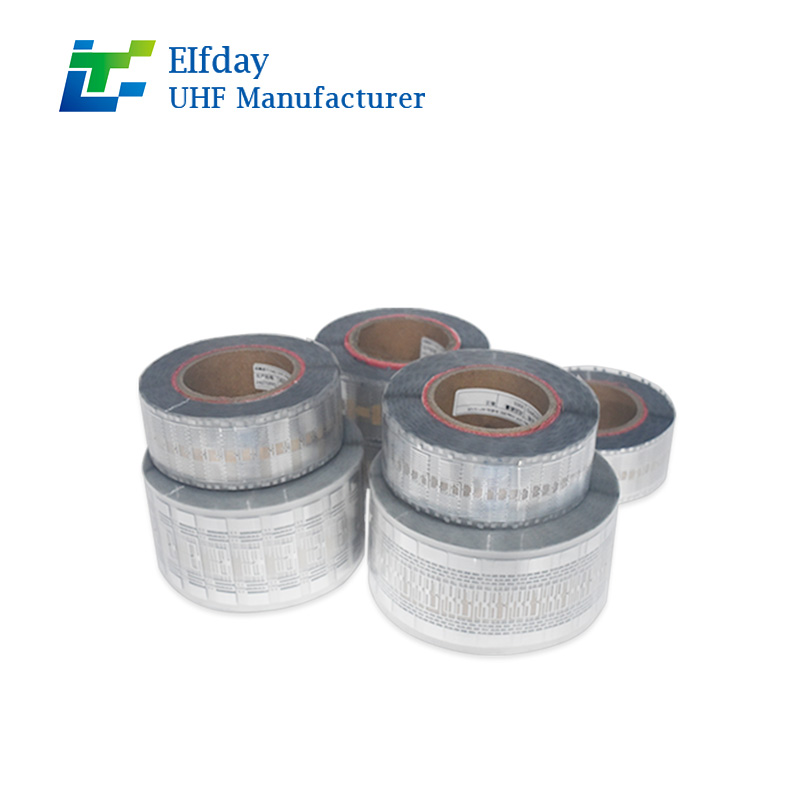
8. Pay Attention to RFID Tag Construction
Two RFID tags using the same general RFID technology can have very different levels of durability.
Construction may include:
-
Flexible labels
-
Plastic housings
-
Encapsulated tags
-
Rugged industrial housings
-
Protective films
-
Specialized substrates
-
Reinforced antenna structures
A rugged housing can protect the electronics from physical and environmental damage.
However, protective materials can also affect RF performance. The finished tag should therefore be tested in its actual construction rather than assuming that adding a protective layer will have no effect on reading.
9. Evaluate the Adhesive
The adhesive is one of the easiest parts of an RFID tag to overlook.
In industrial environments, adhesive failure can result from:
-
Extreme temperatures
-
Chemicals
-
Moisture
-
Oil
-
Dust
-
Surface contamination
-
Vibration
-
Mechanical stress
For example, a tag may remain physically intact after months of chemical exposure but eventually detach because the adhesive loses its bonding strength.
When choosing an adhesive, consider:
-
Application temperature
-
Operating temperature
-
Surface material
-
Surface cleanliness
-
Chemical exposure
-
Expected service life
-
Mechanical stress
For permanent asset identification, adhesive performance should be tested together with the tag.
10. Consider Physical Impact and Abrasion
Industrial equipment can be exposed to considerable physical wear.
Tags may be:
-
Scratched
-
Hit
-
Pressed
-
Bent
-
Rubbed
-
Exposed to vibration
-
Contacted by tools
-
Covered by dirt or debris
If the tag is placed in a protected location, a flexible label may be sufficient.
If the tag is installed on an exposed piece of machinery, a rugged housing may provide better protection.
Tag placement can therefore be as important as tag construction.
A durable tag mounted in a highly exposed location may still be vulnerable to damage.
11. Think About Dust and Outdoor Exposure
Outdoor industrial assets may encounter:
-
Dust
-
Mud
-
Rain
-
Snow
-
Sunlight
-
UV radiation
-
Temperature changes
-
Physical impacts
Examples include:
-
Construction equipment
-
Shipping containers
-
Utility equipment
-
Agricultural machinery
-
Outdoor storage assets
-
Heavy machinery
For outdoor applications, consider both environmental protection and long-term material stability.
UV exposure can gradually degrade some plastics, coatings, labels, and adhesives.
A tag intended for long-term outdoor use should therefore be evaluated for the expected service life rather than only short-term performance.
12. Match the RFID Tag to the Asset
Different industrial assets may require different RFID tag designs.
Metal Machinery
Use a suitable on-metal design when the tag will be mounted directly on metal.
Plastic Containers
Many conventional RFID tags can work on plastic, but product contents and container shape should still be considered.
Tools
Small tools may require compact tags that can survive handling, abrasion, and impacts.
Pallets and Containers
Reusable pallets and containers may require durable tags that can survive repeated movement, washing, and outdoor exposure.
Heavy Equipment
Construction and industrial machinery may require rugged tags that can withstand vibration, dirt, moisture, impact, and temperature changes.
13. Consider Tag Placement
Even a high-performance industrial RFID tag can perform poorly if installed in the wrong location.
Avoid placing the tag where it will be:
-
Constantly hit
-
Covered by metal
-
Exposed to excessive friction
-
Obstructed by liquids
-
Difficult for the reader to reach
For metal assets, test multiple mounting positions.
For liquid-containing products, maintain suitable tag placement and spacing from the liquid when necessary.
For machinery, a protected flat surface may provide better long-term durability than an exposed edge.
14. Test the Complete RFID System
One of the most important steps in industrial RFID selection is testing the complete system.
The test should include:
RFID tag + actual asset + mounting method + RFID reader + real environment
A useful test process is:
Select candidate tags → Mount on actual assets → Record baseline performance → Expose to real conditions → Inspect physical condition → Test RFID performance → Repeat environmental cycles
Test factors can include:
-
Read range
-
Read consistency
-
Tag attachment
-
Physical damage
-
Chemical exposure
-
Temperature exposure
-
Water exposure
-
Cleaning cycles
-
Impact and vibration
Laboratory specifications can provide useful guidance, but real-world testing helps reveal problems caused by the combination of tag, asset, environment, and reader.
Which RFID Tag Should You Choose for Different Industrial Conditions?
| Environment | Key requirement |
| High temperature | Heat-resistant materials and construction |
| Freezer | Low-temperature materials and suitable adhesive |
| Chemical exposure | Chemical-resistant materials and adhesive |
| Outdoor | UV, moisture, and weather resistance |
| Metal equipment | On-metal RFID design |
| Pressure washing | Sealed construction and durable attachment |
| Heavy machinery | Rugged housing and impact resistance |
| Dusty environments | Protected construction |
| Repeated cleaning | Water and chemical resistance |
| High vibration | Secure attachment and durable construction |
The table is a starting point rather than a universal specification. The actual environmental conditions should determine the final selection.
Standard RFID Labels vs Rugged Industrial RFID Tags
| Feature | Standard RFID Label | Rugged Industrial RFID Tag |
| Indoor warehouse | Often suitable | Suitable |
| Moisture | Limited to moderate | Better suited |
| Chemical exposure | Usually limited | Designed for specific conditions |
| High temperature | Limited | Specific high-temperature options available |
| Physical impact | Limited | Higher durability |
| Metal surfaces | May require special design | On-metal options available |
| Outdoor exposure | Application dependent | Better suited to demanding conditions |
| Pressure washing | Usually unsuitable | Some designs can support repeated washing |
| Long service life | Application dependent | Designed for demanding applications |
The most durable option is not automatically the best choice. It should provide the required protection without introducing unnecessary cost, size, or installation complexity.
A Practical RFID Tag Selection Checklist
Before purchasing RFID tags for an industrial application, answer these questions:
Environment
-
What temperatures will the tag experience?
-
Will it encounter chemicals?
-
Will it be exposed to water or humidity?
-
Will it be outdoors?
-
Will it encounter dust or dirt?
Physical Conditions
-
Will the tag experience impacts?
-
Will it be exposed to abrasion?
-
Will the asset vibrate?
-
Will the tag be repeatedly handled or washed?
Mounting
-
Is the surface metal?
-
Is it plastic, glass, rubber, or composite?
-
Is the surface curved?
-
Can the tag be installed in a protected location?
RFID Performance
-
What read range is required?
-
Which RFID frequency is appropriate?
-
Will tags be read individually or in groups?
-
Will the assets be stationary or moving?
Service Life
-
How long must the tag remain attached?
-
Will environmental conditions repeat?
-
Will the asset be cleaned regularly?
-
Will the tag experience freeze-thaw or heat-cool cycles?
Common Mistakes When Choosing Industrial RFID Tags
Choosing Based Only on Read Range
A long read range does not guarantee that the tag will survive the environment.
Assuming All Rugged Tags Are the Same
"Rugged" can describe physical construction, but the exact chemical, temperature, water, and abrasion resistance still need to be verified.
Ignoring the Adhesive
A durable housing cannot compensate for an adhesive that fails under the application conditions.
Testing the Tag Without the Asset
A tag may work perfectly in isolation but behave differently when mounted on metal, plastic, liquid-containing products, or other materials.
Testing Only One Environmental Factor
Real industrial environments often combine conditions.
For example:
Heat + chemicals + vibration + metal
can be much more demanding than testing each factor separately.
Failing to Test Long-Term Exposure
A tag that survives one day may not provide the same performance after months of repeated environmental cycles.
Frequently Asked Questions
What are the best RFID tags for harsh industrial environments?
The appropriate RFID tag depends on the specific environment. Important selection factors include temperature, chemical exposure, moisture, physical impact, mounting surface, read range, and required service life.
Are rugged RFID tags waterproof?
Some rugged RFID tags are designed to resist water or withstand immersion, but waterproof performance depends on the specific construction and application conditions.
Can RFID tags withstand industrial chemicals?
Some RFID tags are designed for exposure to specific chemicals. Chemical resistance should be evaluated according to the exact chemical, concentration, temperature, and exposure duration.
Do industrial RFID tags work on metal?
Yes. On-metal RFID tags are specifically designed to maintain suitable RFID performance when installed on metal surfaces.
Can RFID tags survive high temperatures?
Some RFID tags are designed for high-temperature applications. The maximum temperature, exposure duration, and temperature cycling should all be considered.
How long can a rugged RFID tag last?
Service life depends on the tag construction and environmental conditions. A tag used indoors may last very differently from one exposed to chemicals, UV radiation, pressure washing, vibration, or extreme temperatures.
Should industrial RFID tags be tested before deployment?
Yes. Testing the complete tag and asset combination under actual operating conditions can help identify problems with adhesion, durability, read range, and long-term reliability.
Choosing RFID tags for harsh industrial environments requires matching the tag to the real conditions rather than selecting a tag based on a single specification.
Start by evaluating temperature, chemicals, moisture, physical wear, mounting surface, outdoor exposure, adhesive requirements, RFID frequency, and read range.
For challenging applications, the most reliable approach is to test the complete RFID solution on the actual asset and under representative environmental conditions. This helps confirm that the tag can remain attached, physically intact, and readable throughout its expected service life.
In industrial RFID applications, durability and RFID performance need to be considered together. A tag is only suitable when it can survive the environment and still provide reliable identification where and when it is needed.