



Every Asset Matters: How RFID Helps Keep Industrial Operations Moving
In industrial environments, every asset plays an important role in keeping operations running smoothly. From production tools and machinery to transport containers, maintenance equipment, and spare parts, businesses depend on these resources to maintain productivity and meet operational targets.
However, managing hundreds or even thousands of assets across a large industrial facility is not always easy. Equipment can be misplaced, maintenance schedules may be overlooked, and employees may spend valuable time searching for tools or checking inventory manually. These challenges can lead to unnecessary delays, higher operating costs, and reduced productivity.
This is where RFID technology can make a difference. By using RFID tags and readers to identify and track industrial assets automatically, businesses can improve asset visibility, simplify inventory management, and support more efficient industrial operations.
So, how does RFID help industrial facilities keep every asset accounted for and operations moving? Let's take a closer look.
What Is RFID Industrial Asset Tracking?
RFID industrial asset tracking is a technology-based approach to identifying and monitoring physical assets using Radio Frequency Identification (RFID).
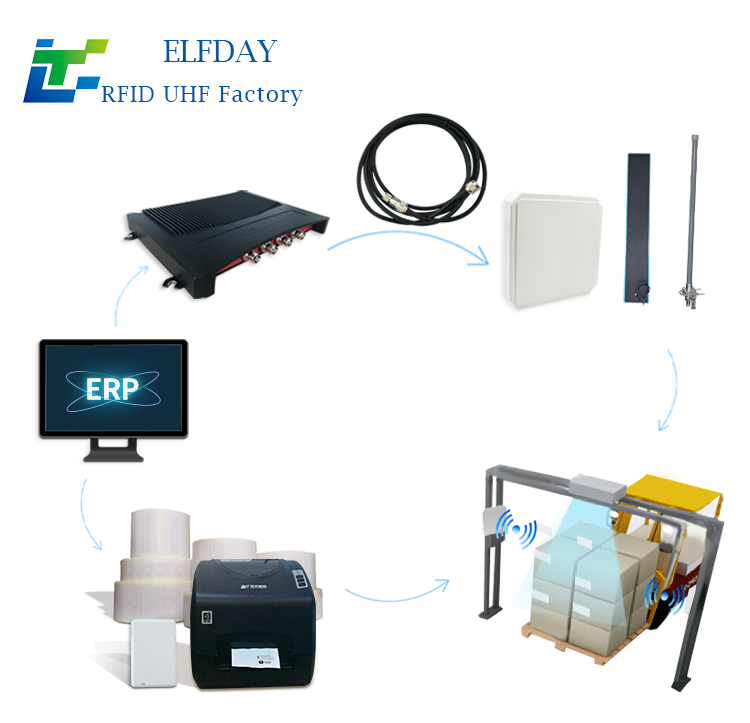
An RFID system typically consists of three main components:
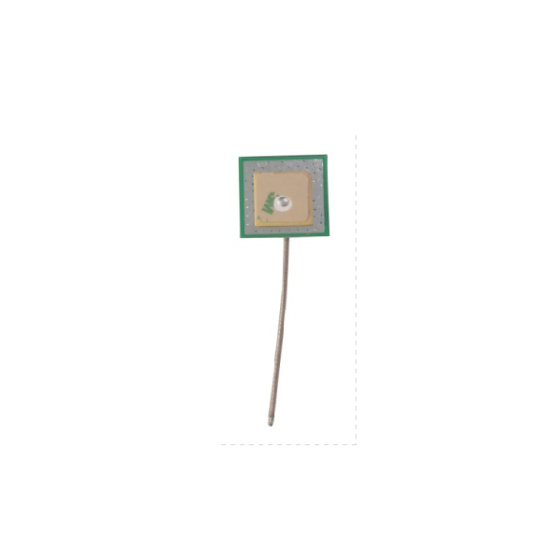
RFID tags: Attached to equipment, tools, containers, or other assets. Each tag contains a unique identification number or stored data.
RFID readers: Use radio waves to communicate with RFID tags and collect identification information.
Asset management software: Processes the collected data and helps businesses manage asset locations, movement records, inventory status, and maintenance information.
Unlike traditional barcode systems, RFID does not generally require direct line-of-sight scanning. Depending on the RFID frequency, tag type, reader configuration, and surrounding environment, multiple tagged assets can be identified within a reader's operating range.
This makes RFID particularly useful in industrial environments where assets move frequently between production lines, warehouses, maintenance areas, and storage facilities.
Why Is Asset Tracking Important in Industrial Operations?
Industrial facilities rely on a wide range of physical assets to maintain daily operations. Even a small asset management problem can affect multiple departments.
Here are four common challenges that RFID industrial asset tracking can help address.
1. Misplaced Equipment and Tools
Industrial workers often share tools and equipment across different workstations. Without an effective tracking system, locating a specific tool can take longer than expected.
RFID tags provide each asset with a unique identity. When RFID readers are installed at strategic locations, businesses can record asset movements and make it easier to identify where equipment was last detected.
2. Time-Consuming Manual Inventory Checks
Traditional inventory checks often involve employees scanning barcodes or recording asset information manually. This process can be time-consuming, particularly when managing large quantities of industrial equipment.
RFID technology can automate parts of the identification and inventory process. Employees can use RFID readers to collect information from multiple tags without scanning each item individually, reducing repetitive work.
3. Limited Asset Visibility
When assets move between departments or storage areas, it can become difficult to maintain accurate records.
An RFID asset tracking system helps businesses capture movement events at designated checkpoints. This provides a clearer picture of asset usage and movement history, supporting better operational coordination.
4. Inefficient Equipment Maintenance
Industrial equipment requires regular inspection and maintenance. However, incomplete equipment records or overlooked maintenance schedules can create operational risks.
By associating RFID tag IDs with digital asset records, businesses can quickly identify equipment and access relevant maintenance information, inspection histories, and service records.
How Does RFID Help Keep Industrial Operations Moving?
RFID supports industrial operations by connecting physical assets with digital management systems. Instead of relying entirely on manual identification and recordkeeping, businesses can use automated data collection to improve everyday workflows.
1. Real-Time Asset Identification and Tracking
RFID technology makes it easier to identify industrial assets as they move through designated reading areas.
For example, when tagged equipment passes an RFID checkpoint, the reader can capture its unique ID and send the information to the management system.
This allows businesses to:
Identify equipment without manually checking labels.
Record asset movement between designated areas.
Improve visibility into equipment circulation.
Reduce time spent searching for missing tools.
It is important to note that RFID does not automatically provide GPS-style continuous positioning. Location visibility depends on reader placement, system configuration, and the tracking technology being used.
2. Faster Industrial Inventory Management
Accurate inventory information is essential for maintaining efficient industrial operations.
With RFID, businesses can identify multiple tagged items during a single reading operation, depending on system capacity and environmental conditions.
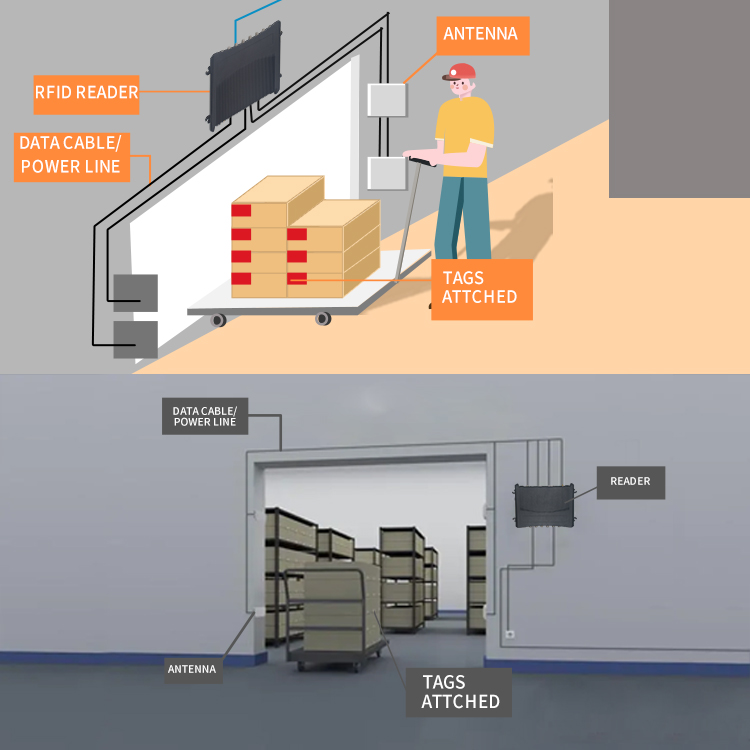
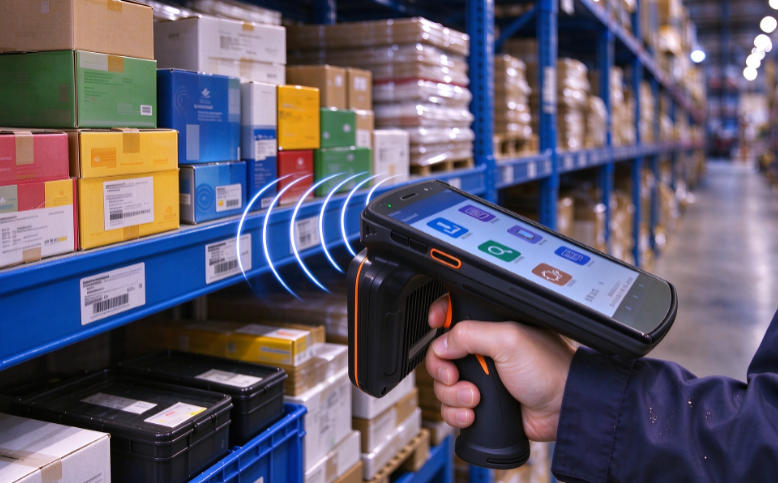
For example, warehouse employees can use handheld RFID readers to check tagged tools, equipment, and spare parts. Fixed RFID readers can also be installed at warehouse entrances and exits to record asset movements.
This helps reduce manual counting efforts and makes inventory records easier to update.
3. Better Equipment Utilization
Industrial businesses often own expensive equipment that may not be used efficiently.
Some machines and tools remain idle in storage, while other departments may experience equipment shortages. Without accurate usage information, managers may struggle to understand how resources are distributed.
RFID data can help businesses analyze equipment movement and utilization patterns. By reviewing asset records, managers can identify underused equipment, improve resource allocation, and make more informed purchasing decisions.
4. Improved Maintenance Management
Preventive maintenance is essential for reducing unexpected equipment downtime.
RFID tags can connect individual assets to digital maintenance records. When employees scan a tag, they can retrieve information such as:
Equipment identification details.
Maintenance and inspection history.
Scheduled service dates.
Repair and replacement records.
Responsible departments or personnel.
This makes it easier to identify equipment and access its maintenance information without relying solely on paper records.
5. More Efficient Asset Transfers
Industrial assets frequently move between production workshops, warehouses, maintenance departments, and external service locations.
RFID checkpoints can record these movements automatically when assets pass through designated reading zones.
For example, an RFID reader installed at a warehouse exit can identify tagged equipment leaving the storage area. The system can then update the corresponding asset movement record.
This improves transfer visibility and helps departments coordinate equipment availability.
Where Can RFID Be Used in Industrial Asset Management?
RFID technology can support different asset management requirements across industrial facilities. The specific solution depends on asset materials, operating conditions, reading distance, and tracking objectives.
Manufacturing Facilities
Manufacturing plants use various tools, fixtures, components, and machines throughout production.
RFID tags can identify production tools, monitor the movement of equipment between workstations, and help maintain digital asset records.
By improving asset visibility, manufacturers can reduce time spent locating equipment and support smoother production workflows.
Industrial Warehouses
Warehouses need to manage a large number of assets, including storage containers, handling equipment, tools, and spare parts.
RFID readers installed at warehouse entrances, exits, and storage areas can help record asset movements and simplify inventory checks.
This is particularly useful for facilities that handle frequent internal transfers.
Maintenance Departments
Maintenance teams depend on specialized tools, testing instruments, and replacement components.
RFID-based identification helps technicians locate tagged equipment and access relevant maintenance records. It can also support tool check-in and check-out processes.
Logistics and Transportation
Industrial logistics operations often involve reusable transport containers, pallets, equipment cases, and handling devices.
RFID tags can help identify these assets as they move through warehouses, loading areas, and distribution facilities. This supports better tracking of reusable assets and helps reduce losses caused by poor visibility.
Which RFID Tags Are Suitable for Industrial Asset Tracking?
Choosing the right RFID tag is important because industrial assets vary in material, shape, size, and operating environment.
Different applications may require different RFID tag designs.
|
RFID Tag Type |
Typical Application |
Key Consideration |
|
On-metal RFID tags |
Metal machinery and equipment |
Designed to work on metal surfaces |
|
Industrial RFID tags |
Factory equipment and tools |
Durability and environmental resistance |
|
RFID hard tags |
Reusable containers and equipment |
Physical protection |
|
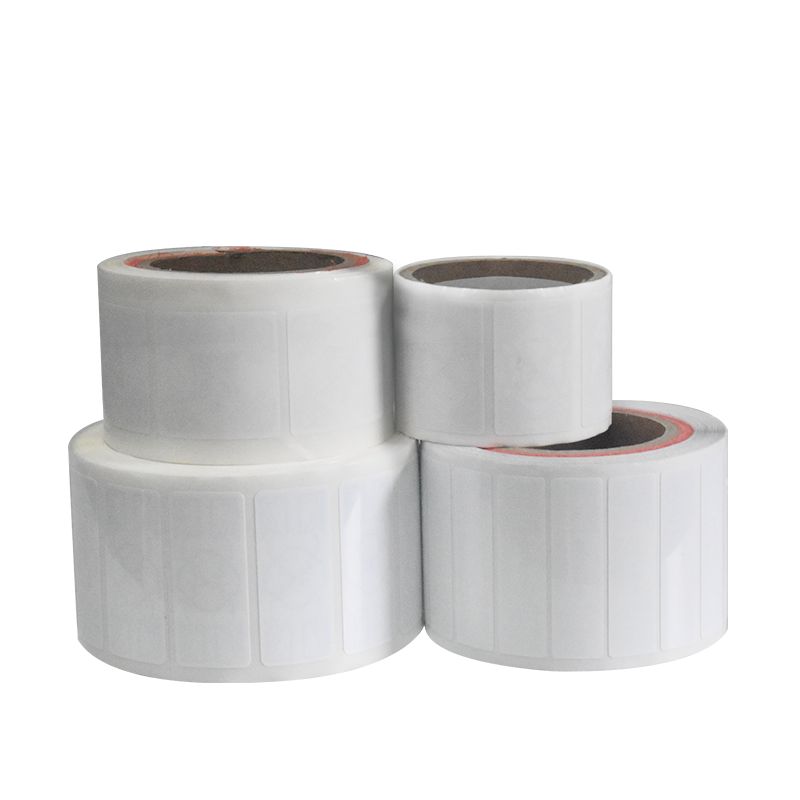
RFID labels |
General asset identification |
Lightweight and easy to attach |
|
High-temperature RFID tags |
Heat-exposed industrial equipment |
Temperature resistance |
When selecting RFID tags for industrial applications, businesses should consider several factors:
Material compatibility: Metal surfaces can interfere with conventional RFID tags, so specialized on-metal tags may be necessary.
Environmental resistance: Tags should match the application's exposure to dust, moisture, chemicals, vibration, and temperature.
Reading distance: The required identification distance determines the appropriate RFID frequency, tag design, and reader configuration.
Attachment method: Adhesive, screws, cable ties, or other mounting methods should be selected according to the asset's surface and operating conditions.
Tag durability: Tags should withstand the physical demands of their intended working environment.
Selecting suitable RFID hardware helps improve reading reliability and supports long-term asset tracking performance.
How to Build an Effective RFID Asset Tracking System
Implementing RFID in an industrial facility requires more than simply attaching tags to equipment. Businesses need to consider how assets move, where identification should take place, and how collected data will be used.
The following steps provide a practical starting point.
Step 1: Identify the Assets to Be Tracked
Start by determining which assets require tracking. These may include production tools, machinery, maintenance equipment, reusable containers, and warehouse assets.
Prioritize high-value equipment and frequently moved items.
Step 2: Select Suitable RFID Tags
Choose RFID tags according to the asset's material, dimensions, operating environment, and identification requirements.
For example, metal equipment may require on-metal RFID tags, while reusable industrial containers may benefit from durable RFID hard tags.
Step 3: Determine RFID Reader Locations
Identify the areas where asset identification or movement recording is most important.
Common installation points include:
Warehouse entrances and exits.
Production line checkpoints.
Equipment storage areas.
Maintenance department entrances.
Loading and unloading zones.
The placement of RFID readers should account for reading coverage, nearby metal structures, interference, and the movement paths of tagged assets.
Step 4: Connect RFID Hardware to Management Software
RFID readers collect tag identification data, which can be transmitted to an asset management platform through an appropriate integration.
The software can associate each tag ID with an asset record, allowing employees to access equipment information and review movement history.
Step 5: Test and Optimize the System
Before expanding the solution across an entire facility, test it in a selected area.
Evaluate reading accuracy, missed reads, duplicate reads, interference, and performance under actual operating conditions. Adjust tag selection, reader positions, and system settings as necessary.
A well-planned implementation helps businesses build a reliable RFID asset tracking solution that can expand as operational requirements grow.
What Are the Main Benefits of RFID for Industrial Asset Management?
RFID provides several practical advantages for industrial businesses.
|
Key Benefit |
How RFID Helps |
|
Improved asset visibility |
Records asset identification and movement events |
|
Faster inventory checks |
Identifies multiple tagged items in one reading operation |
|
Reduced manual work |
Automates parts of asset identification and data collection |
|
Better equipment utilization |
Provides movement data for resource planning |
|
Maintenance support |
Connects assets with digital maintenance records |
|
Improved operational coordination |
Makes asset transfer information easier to access |
The overall value of RFID depends on the quality of the implementation, including tag selection, reader placement, software integration, and operational processes.
Frequently Asked Questions About RFID Industrial Asset Tracking
1. Can RFID track industrial equipment in real time?
RFID can support real-time or near-real-time asset identification when readers are installed at appropriate locations and connected to a management system.
However, conventional passive RFID systems generally record assets when they enter a reader's detection zone rather than continuously tracking their exact positions. Applications requiring continuous location tracking may need active RFID, RTLS, or other complementary technologies.
2. Can RFID tags be attached directly to metal equipment?
Yes. Specialized on-metal RFID tags are designed for use on metal surfaces.
Unlike conventional RFID tags, these products incorporate designs that help reduce the interference caused by nearby metal. They are commonly used for tracking machinery, metal tools, industrial containers, and other metal assets.
3. Does RFID improve industrial inventory accuracy?
RFID can improve inventory management by automating identification and reducing manual data entry.
However, actual accuracy depends on tag performance, reader coverage, asset positioning, environmental interference, and system configuration. Proper testing and deployment are essential.
4. Can RFID track tools and small industrial equipment?
Yes. RFID tags can be attached to many types of industrial tools and smaller equipment.
Businesses can use handheld RFID readers for inventory checks or fixed readers at designated checkpoints to record equipment movements.
The tag size and design should match the dimensions and materials of the item being tracked.
5. Is RFID suitable for harsh industrial environments?
Yes, provided the RFID hardware is selected according to the operating conditions.
Industrial RFID tags are available with different levels of protection against moisture, dust, impact, vibration, and high temperatures. Businesses should check product specifications and test the tags under actual working conditions before deployment.
Conclusion: Every Asset Deserves Better Visibility
Industrial efficiency depends on more than machinery and production capacity. It also depends on how effectively businesses manage the tools, equipment, containers, and other assets that support daily operations.
RFID technology provides a practical way to improve industrial asset identification, simplify inventory checks, record equipment movements, and connect physical assets with digital management systems.
From manufacturing facilities and industrial warehouses to maintenance departments and logistics operations, RFID helps businesses gain better visibility into the resources they depend on.
When every asset is easier to identify, locate, and manage, industrial teams can spend less time dealing with asset-related uncertainties and more time keeping operations moving.
Investing in the right RFID tags, readers, and asset management solutions can be an important step toward more connected, efficient, and reliable industrial operations.