



Retail RFID Tags: Smart Stock Management Solutions for Modern Retail Stores
Managing inventory efficiently is essential for retail businesses. From clothing stores and supermarkets to electronics retailers, inaccurate stock records, misplaced products, and time-consuming inventory checks can affect daily operations and customer satisfaction.
Retail RFID tags offer an efficient way to improve product identification and inventory visibility. By integrating RFID technology with a stock management system, retailers can automatically identify products, perform faster inventory counts, and monitor stock movement across stores and warehouses.
An RFID stock management solution helps businesses reduce manual work, improve inventory accuracy, and maintain better control over product availability.
What Are Retail RFID Tags?
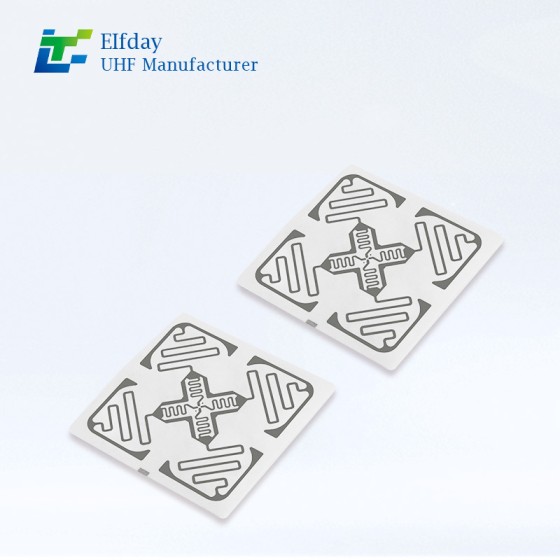
Retail RFID tags are radio frequency identification devices used to identify and track individual products. Each tag contains a microchip and antenna that communicate with RFID readers, allowing product information to be collected wirelessly.
Unlike traditional barcode labels, RFID tags do not generally require direct line-of-sight scanning. Multiple tagged products can be identified within a reading area, making RFID particularly useful for retail inventory management.
Common retail RFID tag types include:
RFID Hang Tags: Commonly used for clothing, footwear, and fashion accessories.
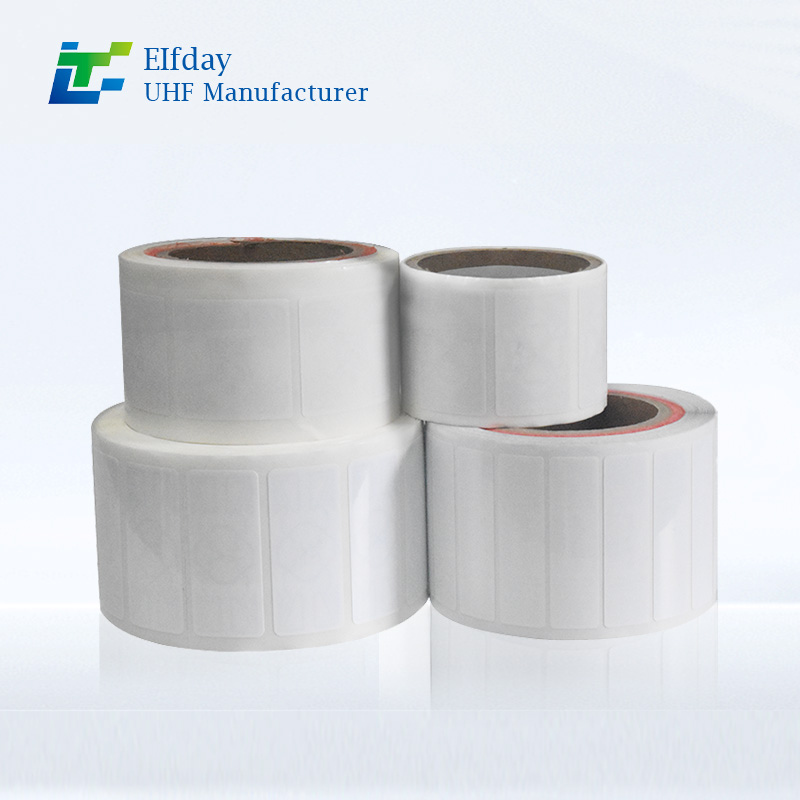
RFID Adhesive Labels: Applied to product packaging, cartons, and retail items.
RFID Wash Care Labels: Designed for garments requiring textile-based identification.
Specialized RFID Tags: Used for electronics, jewelry, and other products with specific identification requirements.
UHF RFID tags are widely used in retail because they support bulk product identification and efficient inventory counting.
What Is an RFID Stock Management Solution?
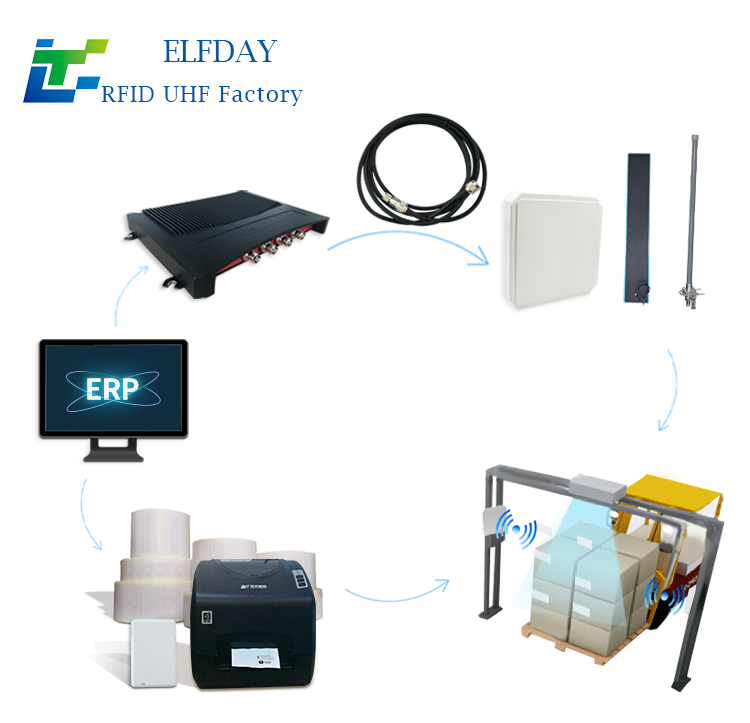
An RFID stock management solution combines RFID tags, readers, antennas, and inventory management software to automate product tracking and stock control.
Each product is assigned a unique RFID identification code. When tagged products pass through an RFID reading area or are scanned with a handheld reader, their information is collected and synchronized with the inventory management system.
A typical retail RFID solution includes:
RFID Tags: Provide unique identification for individual products.
RFID Readers: Collect product information wirelessly.
RFID Antennas: Establish communication between tags and readers.
Management Software: Processes inventory data and updates stock records.
This system allows retailers to monitor product quantities, locations, and movement without relying entirely on manual barcode scanning.
How Retail RFID Tags Improve Stock Management
Automated Inventory Counting
Traditional inventory counting often requires employees to scan products individually. This process can be time-consuming, especially in stores with thousands of items.
With RFID technology, employees can use handheld UHF RFID readers to identify multiple tagged products quickly. This makes stocktaking more efficient and reduces repetitive manual scanning.
Improved Stock Visibility
An RFID stock management system provides better visibility into product quantities and locations.
Retailers can use RFID data to check inventory in sales areas, stockrooms, and distribution centers. This helps employees locate products more efficiently and identify differences between recorded and actual inventory.

Reduced Stock Discrepancies
Manual inventory processes may result in missed scans, incorrect records, and misplaced products.
RFID automatically captures product identification information at designated reading points, helping retailers improve inventory records and identify stock discrepancies.
Better Replenishment Management
Accurate inventory information helps retailers identify products that need replenishment.
When stock levels fall below predefined thresholds, the inventory management system can generate alerts to support timely replenishment and reduce the risk of out-of-stock situations.
Multi-Store Inventory Tracking
For retail chains operating multiple stores, RFID technology can help track product movement between warehouses and retail locations.
Businesses can monitor incoming goods, outgoing shipments, store inventory, and inter-store transfers through a centralized management platform.
Key Applications of RFID Tags in Retail
Retail RFID tags can be used across different product categories and retail environments.
Clothing and Apparel Stores
RFID hang tags and textile RFID labels are widely used for clothing inventory management.
Retail employees can quickly count garments, locate specific products, and check stock availability by size, color, and style.
Footwear and Fashion Accessories
RFID labels attached to shoe boxes and fashion accessories help retailers identify individual products and manage inventory across shelves and storage areas.
Supermarkets and Grocery Stores
RFID can support product identification, stock monitoring, and inventory management in selected grocery and retail applications. Tag and system selection should account for packaging materials, product characteristics, and operating conditions.
Electronics Retail
RFID tags can be attached to electronic product packaging to improve inventory visibility and help monitor product movement between storage and sales areas.
Retail Warehouses
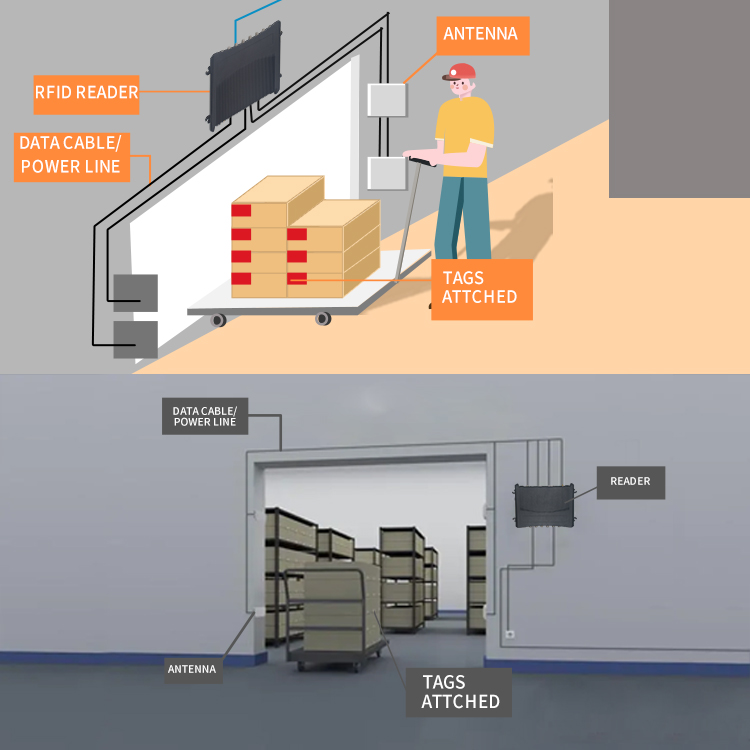
RFID readers installed at warehouse entrances and receiving areas can automatically identify tagged cartons and products, helping streamline inbound and outbound inventory operations.
RFID Tags vs. Barcode Labels for Retail Inventory
Both RFID and barcode technologies are used in retail product identification, but they offer different capabilities.
| Feature | RFID Tags | Barcode Labels |
| Identification method | Radio frequency | Optical scanning |
| Line of sight | Generally not required | Required |
| Multiple-item reading | Supported | Usually individual scanning |
| Inventory counting | Suitable for bulk identification | More manual |
| Individual product identification | Supported | Supported |
| Automation | High potential | Depends on scanning setup |
RFID is particularly useful for retailers that manage large product inventories and need faster, more automated stocktaking.
Barcodes remain a practical option for applications where low-cost individual scanning is sufficient.
How to Choose the Right Retail RFID Tags
Choosing the right RFID tags depends on product materials, application requirements, and the existing inventory management system.
RFID Frequency
UHF RFID is commonly selected for retail inventory tracking because it supports multiple-tag reading and relatively long reading distances. HF RFID may be suitable for applications requiring shorter-range identification.
Tag Design and Material
Retail RFID tags are available in different formats, including paper hang tags, adhesive labels, textile labels, and specialized tags. The design should match the product and attachment requirements.
Chip and Encoding
Consider chip performance, EPC memory, user memory requirements, and encoding compatibility. Each product should have a unique identification code to support accurate inventory tracking.
Reader Compatibility
RFID tags should work with the selected RFID readers and antennas. For UHF retail applications, EPC Gen2 / ISO 18000-63 compatibility is commonly used.
Customization
Businesses may require custom tag sizes, printed logos, barcodes, QR codes, or pre-encoded EPC numbers. Selecting a supplier that supports these requirements can simplify deployment.
How to Implement an RFID Stock Management System
A successful retail RFID implementation generally involves five steps:
-
Product Tagging: Attach RFID tags to individual products and assign unique identification codes.
-
Reader Deployment: Install handheld or fixed RFID readers in relevant retail and warehouse areas.
-
Software Integration: Connect RFID data with existing inventory management, POS, or ERP systems.
-
Inventory Monitoring: Use RFID readers to perform stocktaking and record product movements.
-
Data Analysis: Evaluate inventory accuracy, stock availability, and replenishment requirements.
Retailers should begin with a pilot project to test tag performance, reading accuracy, and software compatibility before expanding the solution across multiple stores.
What are retail RFID tags used for?
Retail RFID tags are used to identify and track individual products, automate inventory counting, improve stock visibility, and monitor product movement across retail stores and warehouses.
Which RFID tags are best for retail inventory management?
UHF RFID tags are commonly used for retail inventory management because they support bulk identification and relatively long reading distances. The best tag depends on the product material, size, reading environment, and system requirements.
Can RFID tags track individual clothing items?
Yes. Each clothing item can be assigned a unique RFID identification code. Retailers can use handheld or fixed RFID readers to identify garments and manage inventory by product type, size, color, and style.
Are RFID tags better than barcodes for stock management?
RFID offers advantages in automated and bulk inventory identification, while barcodes are generally more economical for individual product scanning. The appropriate solution depends on inventory volume, labor requirements, and business objectives.
Can retail RFID tags be customized?
Yes. Retail RFID tags can be customized in size, shape, material, printing, chip selection, and encoding according to specific product and inventory management requirements.
Retail RFID tags provide an effective foundation for smarter stock management. By connecting individual products with an RFID stock management solution, retailers can automate inventory counting, improve stock visibility, reduce inventory discrepancies, and streamline replenishment operations.
From clothing stores and footwear retailers to electronics businesses and retail warehouses, RFID technology helps organizations gain better control over product inventory.
Choosing the right RFID tags, readers, and software integration is essential for achieving reliable performance and long-term value.
Looking for customized retail RFID tags?
We provide RFID tag solutions for retail product identification, clothing inventory management, and automated stock tracking. Contact our team to discuss your requirements, including tag design, UHF frequency, chip selection, printing, and encoding options.