



How Does an RFID-Based Diamond Management System Assist in Managing Diamond Certificates and Product Information?
Diamond businesses handle valuable products that require accurate identification, detailed documentation, and reliable inventory management. Each diamond may have its own grading certificate, weight, cut, color, clarity, origin information, and transaction history. Managing these records manually can become complicated, particularly for businesses handling large diamond inventories.
An RFID-based diamond management system provides a way to connect physical diamonds with their corresponding digital records. By assigning an RFID identification number to each diamond or its packaging, businesses can associate product information and certificate records with a unique identifier.
This approach helps organize diamond documentation, simplify product information retrieval, and improve inventory traceability.
But how does an RFID-based diamond management system work, and how can it help businesses manage diamond certificates and product information? Let's explore the main functions and implementation considerations.
How Does an RFID-Based Diamond Management System Work?
An RFID-based diamond management system combines RFID identification technology with a centralized product information database.
Each diamond is associated with an RFID tag or an RFID-enabled identification label. The tag contains a unique identification number that links the physical item to its digital record.
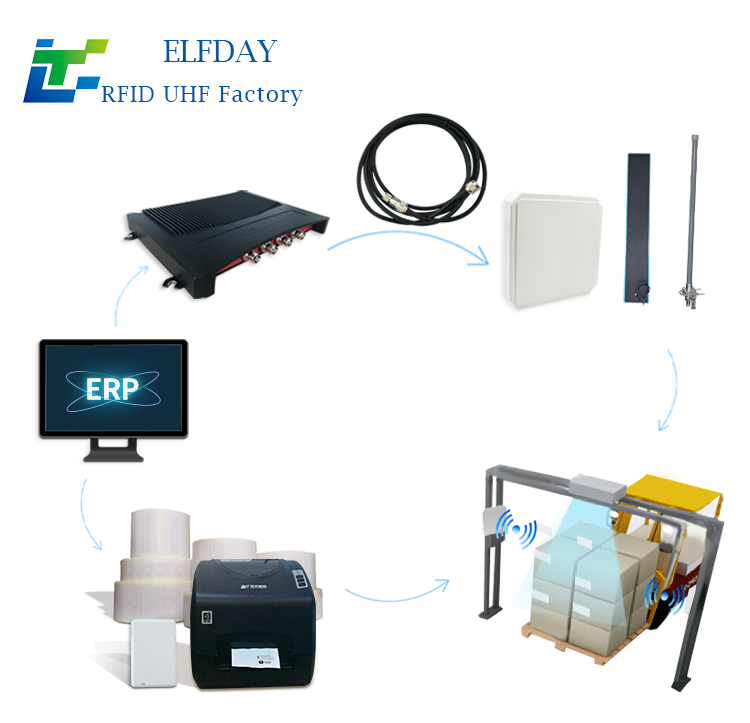
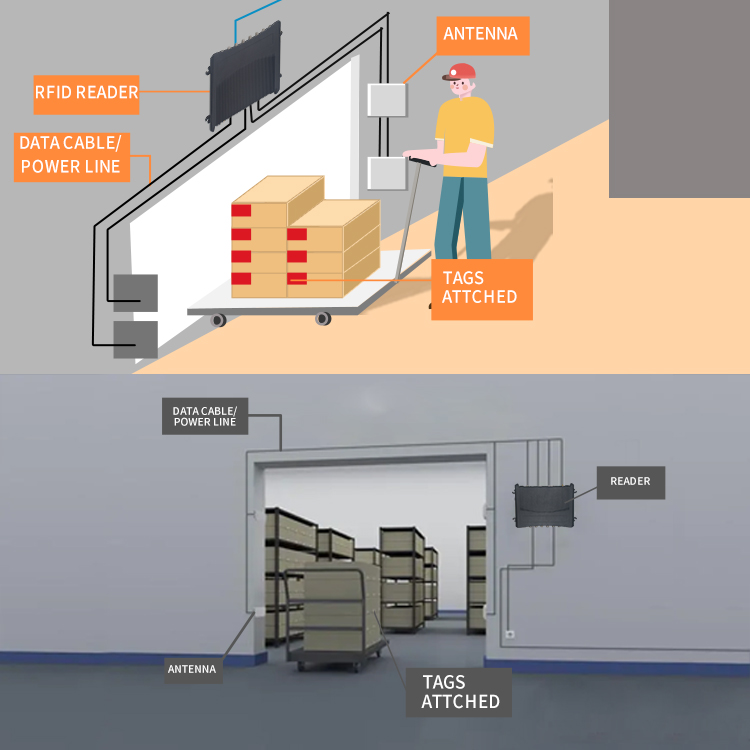
A typical system includes the following components:
-
RFID tags: Provide unique identification for individual diamonds or their designated packaging.
-
RFID readers: Collect identification data from readable RFID tags.
-
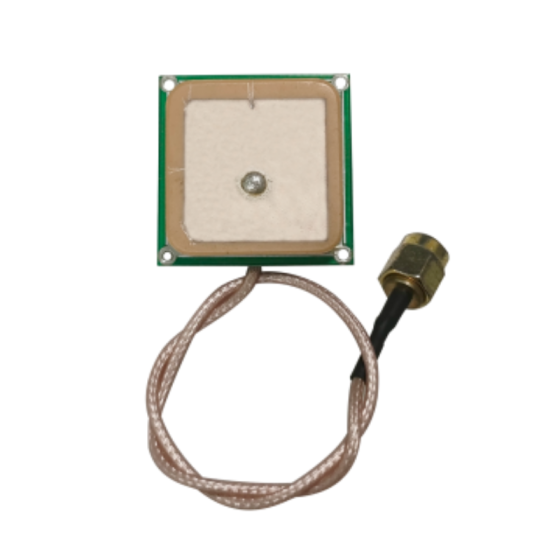
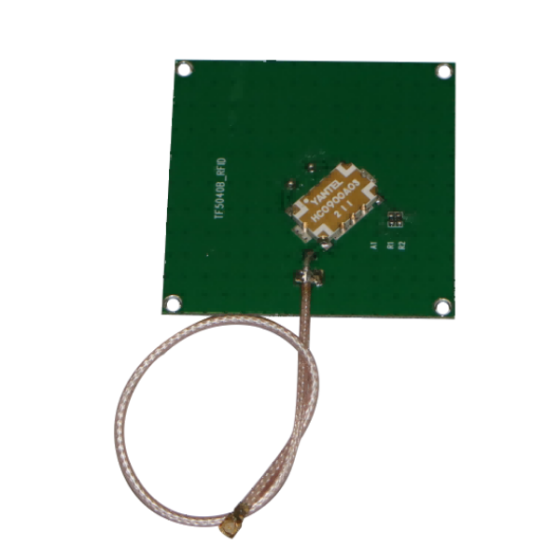
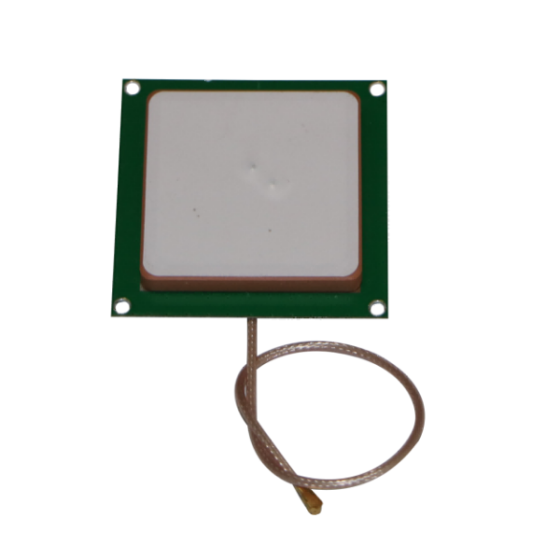
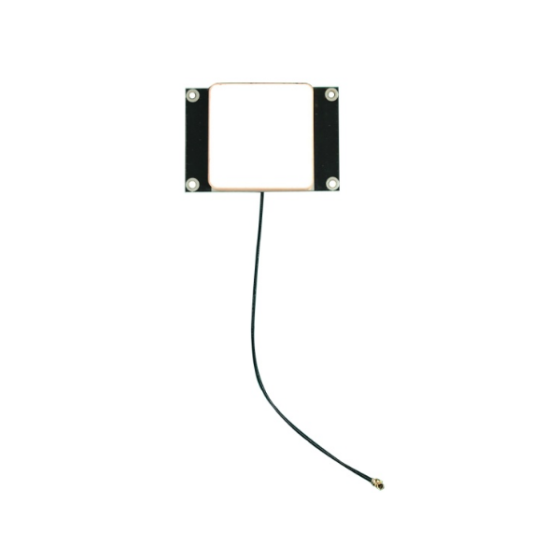
RFID antennas: Establish the reading area for inventory identification and verification.
-
Management software: Connects RFID identification data with diamond records and certificate information.
-
Database: Stores product specifications, certificate references, inventory status, and related business records.
When an RFID reader detects a tag, the software uses its identification number to retrieve the corresponding diamond record.
Instead of searching through paper documents or manually entering product numbers, authorized employees can access the associated information through the management system.
It is important to understand that RFID tags identify physical items or their associated carriers. They do not independently verify a diamond's authenticity, grading, or certificate validity.
How Does RFID Connect Diamonds With Their Certificates?
One of the most useful functions of an RFID diamond management system is linking physical diamonds with their corresponding grading certificates.
Diamond certificates contain important information used to describe and evaluate individual stones. Depending on the issuing laboratory and certificate type, these records may include:
-
Certificate or report number.
-
Carat weight.
-
Cut grade.
-
Color grade.
-
Clarity grade.
-
Measurements.
-
Polish and symmetry.
-
Fluorescence.
-
Inscription or identification details, where applicable.
The management system can store these details or maintain a reference to the corresponding digital certificate.
Unique RFID Identification
Each diamond or its designated package is assigned a unique RFID identification number.
This number is associated with the relevant certificate record in the database.
Certificate Information Association
When the RFID tag is registered, employees can enter the certificate number and other product details into the system.
The database then establishes a relationship between the RFID ID and the corresponding diamond documentation.
Certificate Information Retrieval
When an authorized employee scans the RFID tag, the system retrieves the associated record.
This makes it easier to find certificate information without manually searching through separate files or paper documents.
For businesses managing many diamonds, this process can help reduce documentation lookup time and improve record organization.
How Can RFID Help Manage Diamond Product Information?
Besides certificate management, an RFID system can provide a centralized way to organize diamond product information.
Each RFID identification number can be linked to a detailed product record.
Depending on business requirements, the database may contain:
| Information Category | Example Data |
| Basic identification | RFID ID, product number, diamond category |
| Certificate details | Certificate number, issuing laboratory, report date |
| Diamond specifications | Carat weight, cut, color, clarity, measurements |
| Physical identification | Shape, laser inscription reference, packaging ID |
| Inventory information | Warehouse location, storage status, inventory quantity |
| Business information | Purchase date, supplier, purchase reference |
| Sales information | Order number, sales status, transaction reference |
This centralized structure helps employees retrieve relevant product information through a single identification workflow.
It can also reduce duplicate data entry when diamond records are connected with existing inventory or enterprise management systems.
How Does RFID Improve Diamond Inventory Identification?
Diamond inventory management often involves identifying many small, valuable items stored in boxes, trays, or individual packages.
Traditional manual inventory procedures may require employees to check product numbers, compare certificates, and verify records individually.
RFID technology can provide an additional identification method.

Faster Item Identification
RFID readers can identify multiple readable tags within their configured reading areas without requiring direct visual scanning of each tag.
This can simplify certain inventory identification tasks, especially when diamonds are stored in RFID-enabled packages or trays.
Inventory Record Comparison
The system can compare detected RFID IDs with the expected inventory records.
If an expected tag is not detected, the software can flag the item for further inspection.
Similarly, an unexpected tag may indicate that a package or diamond has been placed in the wrong inventory area.
Reduced Manual Data Entry
Because the RFID ID links directly to an existing product record, employees may not need to repeatedly enter product numbers or certificate references during routine identification.
Actual identification performance depends on tag size, packaging materials, antenna configuration, item arrangement, and the reading environment.
For small diamonds, the RFID tag is often more practical on a package, tray, or identification carrier rather than directly on the gemstone.
How Can RFID Support Diamond Traceability?
Diamond businesses may need to maintain records of product movements between suppliers, warehouses, grading facilities, retailers, and customers.
An RFID-based management system can help record these movements by associating identification events with inventory transactions.
For example, a diamond package may be identified when it is:
-
Received into inventory.
-
Transferred to another storage location.
-
Sent for grading or inspection.
-
Assigned to a sales order.
-
Dispatched to a customer.
-
Returned for further processing.
When RFID identification is integrated with inventory software, relevant events can be recorded against the corresponding diamond or package record.
This creates a more organized movement history and helps employees understand where an item was last registered.
However, RFID event records alone do not prove the complete physical chain of custody. Businesses should combine identification records with appropriate transaction controls, access permissions, and verification procedures.
How Does RFID Help Reduce Certificate and Product Information Errors?
Diamond certificate management requires accurate matching between physical products and their documentation.
If a certificate is associated with the wrong diamond, even a well-organized database can produce incorrect business records.
An RFID system can help reduce this risk by establishing a consistent identification relationship.
For example:
-
Assign an RFID ID to a diamond package.
-
Register the corresponding diamond product number.
-
Enter the certificate number and grading information.
-
Verify the physical diamond against the certificate using the business's established inspection procedure.
-
Confirm the RFID ID and product record are correctly associated.
-
Use the RFID ID for subsequent inventory identification.
This process helps employees retrieve the intended record and reduces dependence on manually searching for similar product numbers.
For higher-value inventory, businesses should also implement controlled record updates and approval procedures to prevent unauthorized changes.
Can RFID Help Verify Diamond Certificate Information?
RFID can make certificate information easier to retrieve, but it is important to distinguish between record association and certificate verification.
An RFID tag does not independently confirm whether a certificate is genuine or whether its grading information is accurate.
A properly designed management system can support certificate verification workflows by storing:
-
The certificate number.
-
The issuing laboratory.
-
A digital certificate reference.
-
The original document or authorized document link.
-
Verification status.
-
The date and employee responsible for the latest check.
Where the issuing laboratory provides an official online verification service, the system may also link to that service.
Employees can then use the certificate number or official verification reference to perform the required checks.
For example, a business may use an RFID scan to retrieve a diamond's certificate record and then access the issuing laboratory's official verification page.
This creates a convenient connection between physical identification and certificate documentation without treating RFID as proof of authenticity.
What RFID Tags Are Suitable for Diamond Management?
Diamond management applications have different requirements from conventional warehouse inventory systems.
Diamonds are small, valuable, and often stored in compact packaging. The RFID tag must therefore fit the packaging or identification method without interfering with handling and storage.
Potential options include:
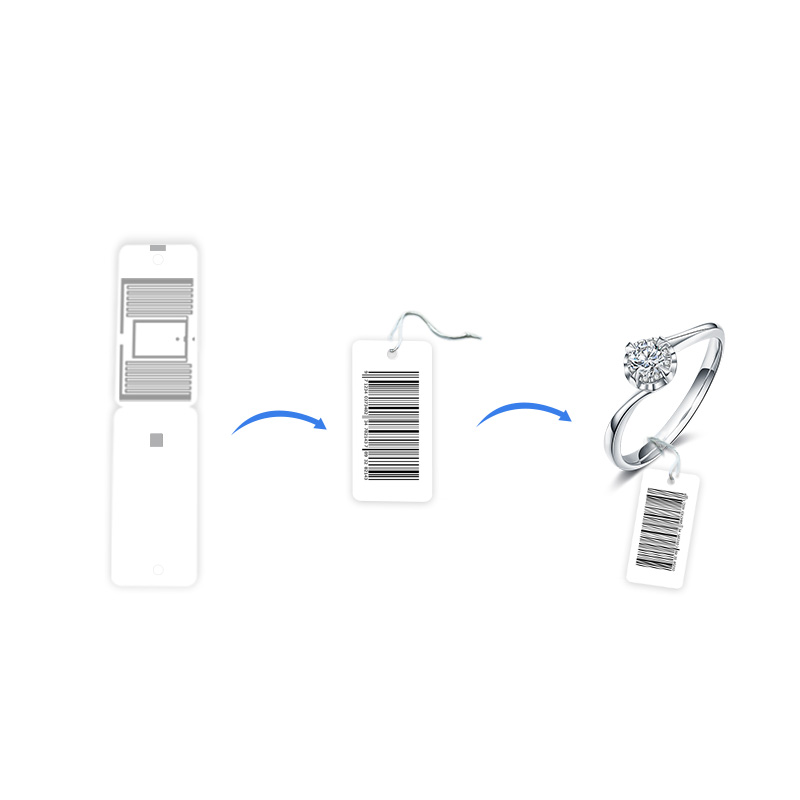
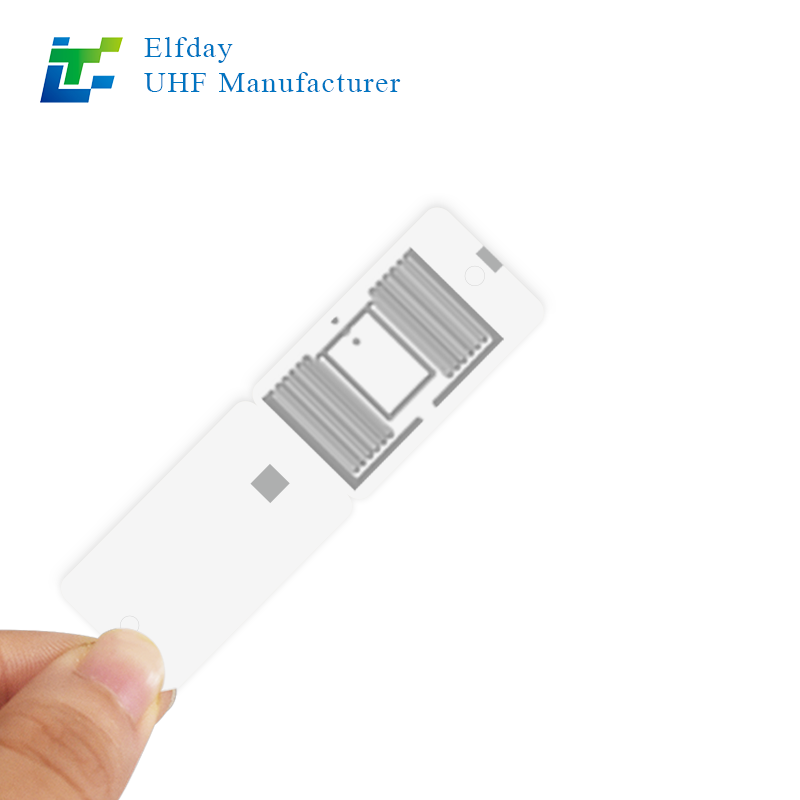
Compact RFID Labels
Small RFID labels can be considered for diamond packaging, identification cards, or individual product containers.
Their suitability depends on available space, packaging material, and the required reading performance.
RFID-Enabled Diamond Packaging
For businesses that prefer not to attach RFID tags directly to gemstones, tags can be integrated into boxes, pouches, trays, or other designated carriers.
This approach keeps the RFID identifier associated with the diamond's packaging rather than the gemstone itself.
Customized RFID Tags
When packaging dimensions are particularly small or the reading environment is demanding, a customized RFID tag may be worth evaluating.
The design should consider tag dimensions, operating frequency, antenna structure, packaging materials, and reader configuration.
Before deployment, businesses should test the complete tagged package under actual storage and scanning conditions.
How Should Businesses Implement an RFID Diamond Management System?
A successful RFID diamond management project requires coordination between tag identification, certificate records, inventory procedures, and existing business software.
A practical implementation process can include the following steps:
Step 1: Define the identification method
Decide whether each RFID tag will identify an individual diamond, a sealed package, a tray, or another designated carrier.
Step 2: Establish product data standards
Define the required product fields, certificate references, inventory information, and naming conventions.
Step 3: Select suitable RFID tags
Evaluate tag dimensions, packaging materials, operating frequency, and reader compatibility.
Step 4: Establish certificate registration procedures
Create a standardized process for entering certificate numbers and associating digital documents with the correct product records.
Step 5: Integrate RFID with management software
Connect RFID identification data with inventory, product information, and relevant business systems.
Step 6: Test the complete workflow
Test item identification, certificate retrieval, inventory comparison, and product movement recording.
Step 7: Establish access and data controls
Define which employees can view, create, or modify diamond records and certificate information.
Starting with a pilot inventory can help identify practical issues before expanding the system.
What Are the Main Benefits of RFID Diamond Management?
When properly designed and implemented, an RFID-based diamond management system can support several business operations.
| Management Requirement | How RFID Helps |
| Certificate management | Links RFID IDs with certificate records and document references |
| Product identification | Connects physical packages or items with unique database records |
| Information retrieval | Helps employees access diamond specifications through RFID identification |
| Inventory management | Supports identification and comparison of tagged inventory |
| Product traceability | Helps record registered movements and inventory transactions |
| Documentation organization | Centralizes certificate references and product information |
| Record accuracy | Reduces reliance on repeated manual product-number entry |
The actual benefits depend on RFID tag selection, system integration, database quality, and employee procedures.
An RFID-based diamond management system assists with certificate and product information management by connecting each diamond or its designated package with a unique RFID identification number.
Through RFID tags, readers, management software, and a centralized database, businesses can retrieve certificate references, access diamond specifications, identify inventory, and maintain product movement records.
This approach can make diamond documentation more organized and simplify routine inventory identification.
However, RFID identification should be combined with appropriate physical diamond inspection, certificate verification, and data management procedures. It is a tool for connecting physical products with digital records, not a standalone method for proving diamond authenticity or grading accuracy.
Looking for RFID solutions for diamond inventory and certificate management? EFLDAY can help evaluate compact RFID tags, packaging integration, reader configurations, and customized identification solutions for diamond businesses.