



Which RFID Tag Specifications Matter Most Before You Buy?
Buying RFID tags involves more than comparing prices or choosing a familiar tag format. The specifications determine whether a tag can communicate with your reader, fit the target item, withstand the operating environment, and deliver the identification performance your application requires.
The most important RFID tag specifications to review before purchasing are frequency, read range, chip and memory capabilities, physical dimensions, mounting compatibility, environmental resistance, and data requirements. The relative importance of each specification depends on whether you are tracking retail products, warehouse inventory, industrial equipment, reusable containers, or other assets.
This guide explains what each specification means, which details deserve closer attention, and how to compare RFID tags before placing an order.
1. RFID Frequency and Protocol Compatibility
Frequency is one of the first specifications to check because it determines which readers and communication standards can work with the tag.
The three commonly discussed RFID frequency categories are low frequency (LF), high frequency (HF), and ultra-high frequency (UHF).
| Frequency category | Typical characteristics | Common application areas |
| LF | Short-range identification for specific applications | Certain animal identification and specialised access systems |
| HF | Close-range communication, including many smart-card applications | Access cards, selected product interactions, and library systems |
| UHF | Often supports longer-range reading and efficient multi-tag identification | Warehousing, retail inventory, logistics, and asset tracking |
These categories have different operating characteristics, and actual performance depends on the specific technology, tag design, reader configuration, and local radio regulations.
When comparing RFID tag specifications, check the following:
-
The tag's operating frequency or supported frequency band.
-
The communication protocol or air-interface standard.
-
Whether your existing reader supports that frequency and protocol.
-
Whether the tag is suitable for the region where the system will operate.
For example, a UHF tag intended for a warehouse inventory system will not automatically work with an HF reader. Physical similarity between tags does not guarantee technical compatibility.
Buying tip: Confirm the exact frequency and protocol requirements with your reader documentation before comparing individual tag models.
2. Read Range and Reading Conditions
Read range describes the distance at which an RFID system can successfully identify a tag. It is an important specification, but a single maximum-distance figure rarely tells the whole story.
Actual reading performance depends on several factors:
-
Reader power and antenna characteristics.
-
Tag antenna design and sensitivity.
-
Tag orientation relative to the reader antenna.
-
The material on which the tag is mounted.
-
Nearby metal, liquids, and other sources of interference.
-
The speed and direction of moving items.
A tag advertised for long-range reading may perform differently when attached to a metal tool or positioned close to a liquid-filled container.
Before buying, define the reading conditions your project requires. A handheld reader used for locating equipment has different needs from a fixed reader identifying cartons on a conveyor.
Ask suppliers or technical teams to clarify whether the stated range represents a maximum under controlled conditions or a measured result under an application similar to yours.
If reading accuracy is critical, evaluate more than distance. Check whether the tag can be identified consistently at the required distance, orientation, and item speed.
3. Chip Type, Memory, and Data Capabilities
An RFID tag's integrated circuit, commonly called its chip, handles communication with the reader and provides the memory functions supported by the tag design.
Not every project needs the same chip capabilities. For many inventory applications, a unique identifier is sufficient. Other applications may require additional memory or specific security and access-control functions.
Unique Identifier
A unique identifier allows the tracking system to distinguish one tagged item from another. The identifier can be associated with a product record, asset profile, storage location, or other information in the business database.
For many supply-chain and inventory applications, storing an identifier on the tag and keeping detailed records in software is a practical approach.
User Memory
Some RFID chips provide additional user memory, while others offer little or no general-purpose user memory. The available capacity varies by chip model and memory configuration.
Before purchasing, determine whether you need to store additional information directly on the tag or whether a unique identifier is enough.
Do not compare memory capacity using a single number without checking how that memory is organised and what functions are supported.
Security and Access Features
Some chips support functions such as memory access controls, password protection, or other security-related capabilities. These features vary by chip family and protocol.
If the project involves sensitive operational data or controlled tag updates, verify the exact supported functions rather than assuming that every RFID tag provides the same level of protection.
Buying tip: Specify the chip family or required capabilities when necessary, but avoid paying for memory or functions that your application will not use.
4. Tag Dimensions, Shape, and Thickness
Physical dimensions determine where an RFID tag can be installed and whether it fits the target product or asset.
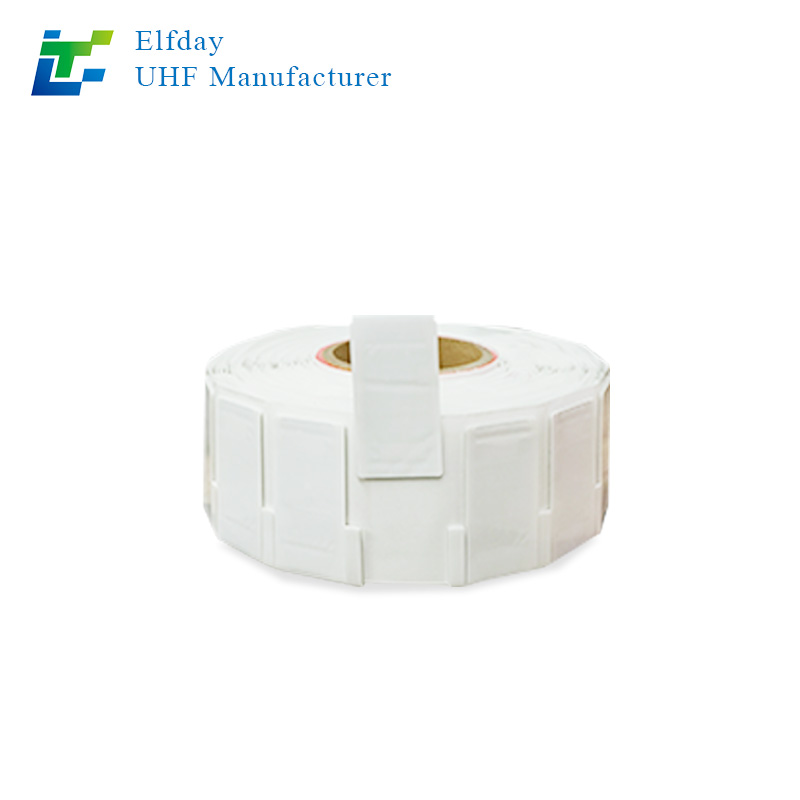
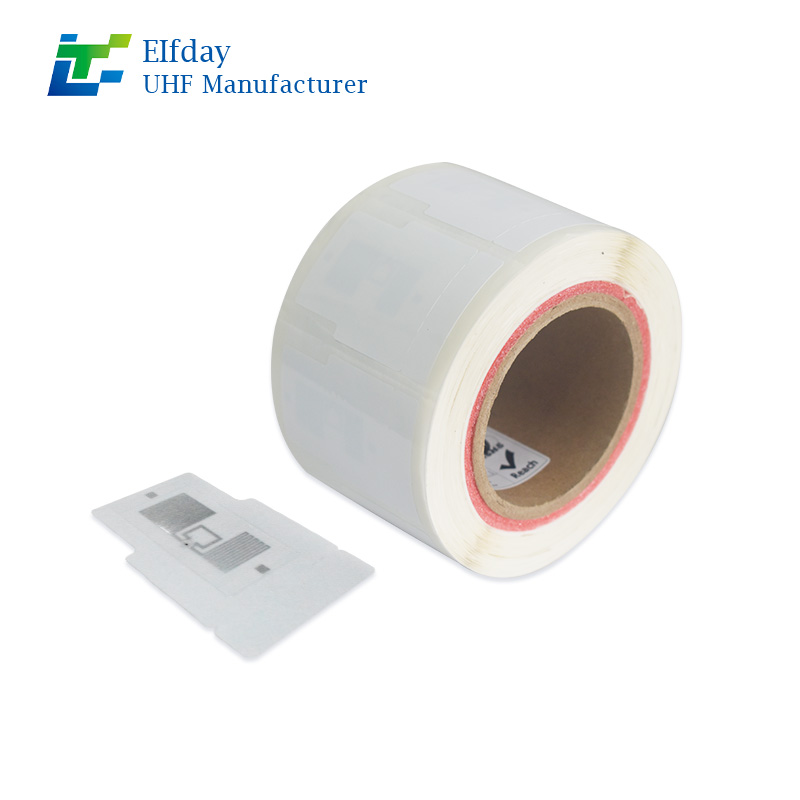
Common formats include thin adhesive labels, compact hard tags, flexible inlays, and rigid industrial tags. Each format serves different installation and durability requirements.
Before ordering, check:
-
Overall length and width.
-
Total thickness, including the housing where applicable.
-
Antenna or active area dimensions, if relevant to installation.
-
Mounting-hole locations or attachment points.
-
Required clearance from the surrounding materials.
-
Whether the tag fits the available surface or enclosure.
A compact tag can be useful for small products and components, but smaller dimensions may limit antenna design options. A larger tag may offer different performance characteristics, although greater size does not automatically guarantee a longer read range.
For products with curved surfaces, narrow mounting areas, or internal installation spaces, confirm the dimensions using a physical sample or a detailed technical drawing.
5. Material Compatibility and Mounting Surface
The tag's mounting surface is a critical specification because the material around the antenna can influence RFID performance.
Non-Metallic Surfaces
Standard RFID labels are commonly used on cardboard, paper, wood, and many plastic surfaces. The final result still depends on product geometry, packaging contents, and the intended reading conditions.
Metal Surfaces
Metal can interfere with conventional RFID antenna designs. If the tag will be attached to metal equipment, tools, machinery, or metal containers, check whether an on-metal RFID tag is required.
Review the tag's specified mounting surface and installation instructions. Some designs depend on particular spacing, positioning, or attachment arrangements to achieve their intended performance.
Liquid-Containing Products
Liquids can affect radio-frequency behaviour, particularly in UHF applications. When tagging bottles, liquid containers, or products with high water content, evaluate the tag in its actual position and with the product filled as it would be during normal use.
The key specification is not simply the tag's material or appearance. It is whether the complete tag-and-item combination performs reliably in the intended system.
6. Environmental Protection and Operating Temperature
Environmental specifications help determine whether a tag can survive its working conditions.
For warehouse, industrial, outdoor, or reusable-asset applications, consider the following characteristics.
Ingress Protection
Some tags have an IP rating that indicates their protection against specified levels of dust and water ingress under defined test conditions. Not every RFID tag has an IP rating, and the rating should not be interpreted as proof of resistance to every environmental hazard.
Choose a rating based on the actual exposure expected during use, cleaning, storage, and transport.
Operating Temperature
Check the manufacturer's specified operating temperature range. For applications involving freezers, cold storage, heated equipment, or temperature fluctuations, also review any separate installation or storage temperature limits.
The adhesive, enclosure, and antenna materials may have different limitations from the RFID chip itself.
Chemical and Mechanical Resistance
If the tag will encounter oils, cleaning chemicals, solvents, vibration, abrasion, or impact, check for relevant resistance data.
A tag described as industrial-grade is not automatically suitable for every chemical or mechanical condition. Request evidence relevant to the substances and handling conditions involved in your project.
Buying tip: Match environmental specifications to the actual operating conditions rather than selecting the highest rating by default.
7. Antenna Design and Polarisation
The antenna is a major factor in how an RFID tag exchanges radio-frequency signals with a reader.
Antenna design and polarisation can affect reading performance, especially when tagged objects are presented at different angles or orientations.
For example, a tag that performs well when its antenna is aligned with the reader may become more difficult to read when the item is rotated. This can matter when products move unpredictably through a reading zone or when assets are tagged in different positions.
When comparing antenna-related specifications, consider:
-
The tag's intended mounting orientation.
-
The reader antenna's polarisation.
-
Whether the tracked items remain in a consistent position.
-
The expected movement and rotation of tagged objects.
-
Whether nearby tags or materials may influence performance.
Antenna details can be particularly important in fixed-reader applications, conveyor systems, and bulk inventory processes.
If a supplier does not publish detailed antenna information, a practical performance test using your actual reader setup can help determine whether the tag is suitable.
8. Attachment Method and Installation Requirements
Attachment specifications describe how the tag is secured to the item. This can influence installation time, tag retention, maintenance, and long-term performance.
Common options include:
-
Adhesive: Useful for labels and suitable surfaces, provided the adhesive matches the material and environment.
-
Screws or rivets: Used for selected durable tags and industrial assets.
-
Cable ties or straps: Suitable for certain containers, tools, and assets where adhesive attachment is impractical.
-
Embedded installation: Used when the product or component is designed to accommodate the tag internally.
-
Brackets or custom holders: Useful when the tag requires a defined position or controlled separation from the mounting surface.
Before purchasing, verify the required surface preparation, adhesive type, hole spacing, mounting clearance, and installation procedure.
For reusable assets, consider whether the tag must remain attached through repeated handling, cleaning, transport, or maintenance cycles. The easiest tag to install is not necessarily the easiest to maintain over its entire service life.
9. Readability, Durability, and Expected Service Life
Read performance and physical durability should be evaluated together.
A tag may communicate effectively during an initial test but fail prematurely if its housing cracks, adhesive weakens, or antenna structure becomes damaged during use.
For reusable assets, ask how the tag is expected to perform over the intended service period. For disposable product labels, the required service life may be much shorter.
Relevant considerations include:
-
Resistance to routine impacts and abrasion.
-
Adhesive or fastener retention.
-
Exposure to moisture and cleaning procedures.
-
Temperature changes during storage and transport.
-
Frequency of handling or reuse.
-
Ease of inspection and replacement.
Where repeated use is expected, request test information relevant to the intended application. If such data is unavailable, conduct a controlled pilot using representative assets and handling conditions.
10. Standards, Compliance, and Regional Requirements
RFID systems operate within technical and regulatory frameworks that can vary by region and application.
Before purchasing, confirm that the tag and reader support the required frequency band, protocol, and applicable regional requirements.
For projects involving multiple countries, avoid assuming that one reader configuration or frequency plan can be used everywhere without review.
Depending on the application, you may also need to consider product requirements, industry-specific standards, data-handling practices, or customer specifications.
Ask for the relevant technical documentation and verify that the proposed equipment is suitable for the intended deployment location.
11. Compare Total Cost, Not Just Unit Price
Two RFID tags that look similar may differ substantially in durability, installation requirements, read performance, and service life.
A lower unit price may be attractive for disposable packaging. However, for reusable equipment or industrial assets, repeated replacement and installation labour can make a more durable tag the better long-term option.
Compare the following cost factors:
| Cost factor | What to evaluate |
| Unit price | Cost per tag at the required order quantity |
| Installation | Labour, tools, surface preparation, and mounting accessories |
| Replacement | Expected replacement frequency and removal effort |
| System requirements | Reader, antenna, and software compatibility |
| Operational reliability | Potential cost of missed reads or incorrect identification |
| Service life | Expected useful life under actual conditions |
The right purchase decision balances the tag's technical suitability with the overall cost of operating the tracking system.
12. RFID Tag Specification Checklist Before Ordering
Use this checklist to organise your requirements before requesting samples or placing an order.
- Application: Define the products, equipment, containers, or assets being tracked.
- Frequency and protocol: Confirm compatibility with the intended reader.
- Read range: Specify the required reading distance and operating conditions.
- Chip capabilities: Identify memory, identifier, or security requirements.
- Dimensions: Confirm length, width, thickness, and available mounting space.
- Surface compatibility: Identify whether the tag will be mounted on metal, plastic, cardboard, or another material.
- Environmental resistance: Document temperature, moisture, chemicals, impact, and other relevant exposures.
- Antenna performance: Consider orientation, polarisation, and item movement.
- Attachment method: Specify adhesive, fasteners, straps, embedding, or brackets.
- Service life: Define the expected period of use and replacement requirements.
- Compliance: Confirm applicable technical and regional requirements.
- Testing: Establish acceptance criteria and test representative samples before bulk purchasing.
Not every project needs every specification at the same level of detail. Focus on the factors that can directly affect performance, compatibility, safety, or operating cost in your application.
Frequently Asked Questions
What is the most important RFID tag specification?
Frequency and reader compatibility are essential starting points because an incompatible tag cannot communicate correctly with the intended reader. After that, read range, mounting-surface compatibility, environmental resistance, and dimensions should be prioritised according to the application.
How do I compare RFID tags from different suppliers?
Compare tags against the same requirements and test conditions. Review frequency, protocol, chip capabilities, dimensions, mounting surface, read performance, durability, attachment method, and technical documentation. Avoid comparing read-range figures that were measured under different conditions.
Does a higher-memory RFID chip always perform better?
No. Memory capacity and radio-frequency performance are different characteristics. A higher-memory chip may provide useful data capabilities, but it does not automatically deliver a longer read range or better reading consistency.
Is a longer RFID read range always better?
No. Longer range can be valuable for bulk inventory or tracking moving assets, but excessive range may cause unwanted reads from adjacent zones. Select a tag that supports the required reading area and the system's identification accuracy goals.
What specifications matter most for RFID tags used on metal?
Prioritise compatibility with the metal mounting surface, the tag's dimensions and required clearance, attachment method, read performance, and environmental resistance. Confirm that the selected design is intended for the actual mounting arrangement.
Should I request RFID tag samples before buying in bulk?
Yes, particularly when the tags will be used on unfamiliar materials, in demanding environments, or with an existing reader system. Sample testing can reveal installation and compatibility problems before they affect a large order.
What information should I provide when requesting a quote?
Provide the application, item material, available mounting space, required frequency, reader model or protocol, target reading conditions, environmental exposure, attachment preference, expected service life, and estimated quantity. Photos or drawings of the intended installation area can make the requirements clearer.
The most important RFID tag specifications are the ones that determine whether a tag will work reliably in your particular application. Frequency and protocol establish compatibility, read range defines the intended reading conditions, and chip capabilities determine available data functions. Dimensions, materials, attachment methods, and environmental ratings help ensure that the tag fits the item and survives normal use.
Before buying, turn your application requirements into a written specification, compare candidate tags against the same criteria, and test samples with your intended reader and mounting arrangement. This approach helps you make a more informed purchasing decision and reduces the risk of choosing tags that look suitable on paper but underperform in practice.