



How Can RFID Tags Help Retail Stores Reduce Stockouts?
RFID tags can help retail stores reduce stockouts by improving inventory visibility, identifying available merchandise, detecting inventory discrepancies, and supporting faster replenishment. By giving products unique digital identities, RFID allows retailers to check multiple items more efficiently and determine whether products are actually available in stockrooms or on sales floors.
A stockout does not always mean that a retailer has completely run out of a product. In many cases, merchandise may physically exist in the store but remain misplaced, unrecorded, or unavailable on the sales floor. RFID can help retailers identify these situations earlier and take action before they become prolonged stockouts.
What Is a Retail Stockout?
A retail stockout occurs when a product is unavailable for customers when they want to purchase it.
For example, a store may have strong demand for a particular jacket. The inventory system may show several units available, but customers cannot find the jacket on the sales floor.
This situation can happen because the products are:
-
Stored in the back room
-
Misplaced on the sales floor
-
Recorded incorrectly
-
Waiting to be replenished
-
Returned but not properly processed
-
Moved to another location
-
Missing from the expected inventory location
Therefore, reducing stockouts is not only about ordering more products. Retailers also need accurate information about the inventory they already have.
How Can RFID Tags Help Reduce Retail Stockouts?
RFID tags can help reduce stockouts by connecting physical merchandise with digital inventory information.
A typical process can look like this:
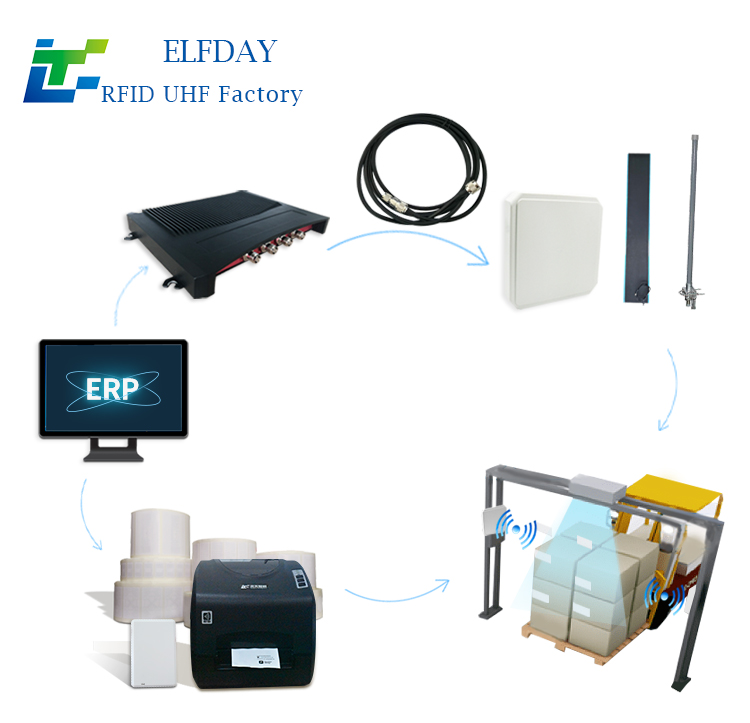
RFID tag → RFID reader → product identification → inventory check → discrepancy detection → replenishment → product available to customers
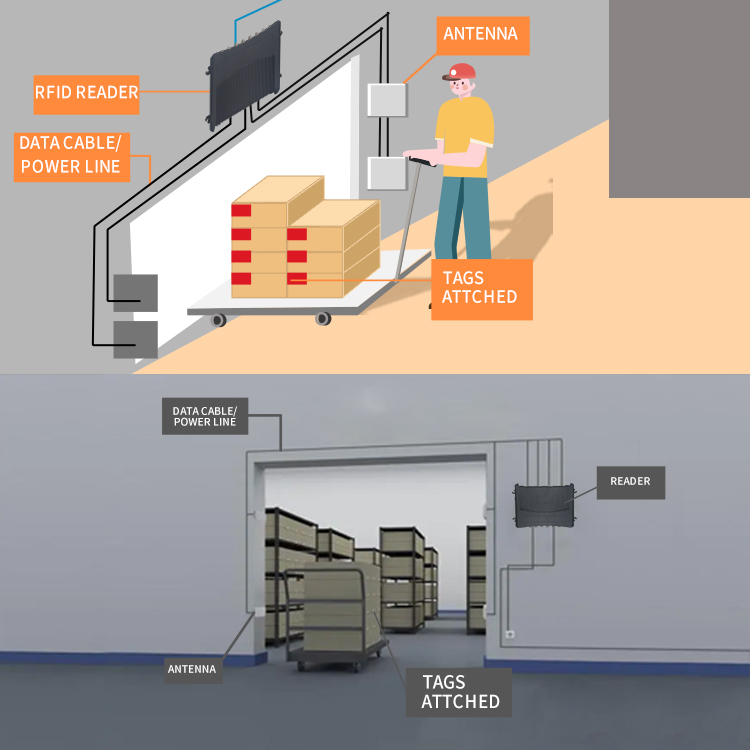
When employees use RFID readers to check merchandise, they can identify multiple tagged products without scanning each barcode individually.
This can make it easier to determine what products are actually available and where inventory may need attention.
1. RFID Improves Retail Inventory Visibility
One of the biggest challenges in preventing stockouts is knowing what inventory is physically available.
A store's inventory system might indicate that a product is in stock, but employees may not know:
-
Where the product is located
-
Whether it is in the stockroom
-
Whether it is on the sales floor
-
Whether the product has been misplaced
-
Whether the recorded quantity is correct
RFID can provide additional visibility into physical merchandise.
By using RFID readers to identify tagged products, employees can perform inventory checks across stockrooms and sales areas and obtain a clearer picture of available inventory.
2. RFID Helps Identify Products Hidden in Stockrooms
A common retail stockout situation occurs when a product is available in the store but not available to customers on the sales floor.
For example:
System shows 10 units → 4 units are on the sales floor → 6 units remain in the stockroom
If employees do not know that the six units are available, the product may appear to be out of stock from the customer's perspective.
RFID can help employees identify merchandise stored in back rooms more efficiently.
This allows staff to find products that can be moved to the sales floor instead of immediately assuming that additional inventory needs to be ordered.
3. RFID Supports Faster Replenishment
Replenishment is one of the most direct ways RFID can help reduce stockouts.
When products sell quickly, retailers need to move available merchandise from storage areas to customer-facing areas.
RFID can help employees determine:
-
Which products are available
-
Which products are missing from the sales floor
-
Which sizes or colors need replenishment
-
Which items may be stored in the wrong location
-
Which products require additional inventory
A typical workflow may look like:
Inventory check → identify available stock → locate products → replenish sales floor → verify inventory
Because RFID can identify multiple products during a reading session, employees can perform these checks more efficiently than relying entirely on individual barcode scans.
4. RFID Helps Detect Inventory Discrepancies
Incorrect inventory records can contribute to stockouts.
Consider a simple example:
Inventory system: 25 units
Physical inventory: 18 units
The difference of seven units could be caused by several factors.
Possible reasons include:
-
Incorrect receiving
-
Unrecorded sales
-
Misplaced merchandise
-
Returns processing errors
-
Inventory transfers
-
Damaged products
-
Manual counting mistakes
RFID can help retailers identify physical products more efficiently and compare them with inventory records.
The technology does not automatically determine why a discrepancy occurred, but it can help retailers detect differences sooner.
5. RFID Makes Inventory Checks More Frequent
Preventing stockouts requires more than one inventory count every few months.
Retail inventory changes continuously.
Products are:
-
Sold
-
Returned
-
Replenished
-
Transferred
-
Moved between stockrooms and sales floors
-
Picked for online orders
If inventory checks are difficult or time-consuming, retailers may perform them less frequently.
RFID can make physical inventory checks faster, which can support more frequent counting.
More frequent checks can help retailers discover inventory problems earlier.
6. RFID Helps Keep Sales-Floor Inventory Available
A product can technically be in stock but still unavailable to customers.
For example, a store may have 12 units of a product, but all 12 are stored in the back room.
From the inventory system's perspective, the product is available.
From the customer's perspective, the product may effectively be out of stock.
RFID can help employees identify products in stockrooms and determine which merchandise should be moved to the sales floor.
This makes RFID particularly useful for retailers where product availability depends on regular shelf or floor replenishment.
7. RFID Can Support Better Replenishment Decisions
Retailers need reliable inventory information to decide when and what to replenish.
If inventory data is inaccurate, a store may:
-
Reorder products unnecessarily
-
Delay replenishment
-
Miss fast-selling items
-
Keep excess inventory in storage
-
Fail to recognize a low-stock situation
RFID can provide additional physical inventory information that supports replenishment decisions.
Instead of relying only on system quantities, employees can use RFID-based inventory checks to confirm what merchandise is actually present.
8. RFID Can Help Reduce Hidden Stockouts
Not every stockout is caused by insufficient inventory.
Some are caused by inventory that exists but cannot be found or used effectively.
These situations can include:
Misplaced Merchandise
Products may be placed in the wrong area and become difficult to find.
Backroom Inventory
Products may remain in storage instead of being replenished onto the sales floor.
Incorrect Inventory Records
The system may show products as available even though the physical quantity is different.
Unprocessed Returns
Returned products may physically exist but not yet be reflected correctly in inventory records.
RFID can help retailers identify these situations through more efficient product-level inventory checks.
RFID and Retail Stockout Prevention
RFID does not prevent stockouts by itself.
Instead, it provides information that can help retailers respond to inventory problems more effectively.
A practical RFID stockout-prevention process may look like this:
1. Tag merchandise
Each relevant product receives an RFID tag with a unique identifier.
↓
2. Capture inventory data
RFID readers identify tagged products during receiving, stock checks, or replenishment activities.
↓
3. Compare physical and system inventory
The retailer identifies differences between recorded inventory and physically detected merchandise.
↓
4. Identify products needing attention
Employees can find products that are missing, misplaced, or sitting in stockrooms.
↓
5. Replenish the sales floor
Available merchandise is moved to customer-facing areas.
↓
6. Update inventory information
RFID data can be integrated with inventory software to support more consistent inventory records.
This process can help retailers address preventable stockouts before immediately ordering additional merchandise.
RFID vs. Barcode for Reducing Stockouts
Both RFID and barcodes can support retail inventory management, but their operating characteristics are different.
| Feature | RFID | Barcode |
| Multiple-item identification | Yes, depending on system setup | Usually one item at a time |
| Individual item identification | Yes | Yes |
| Line of sight | Generally not required | Usually required |
| Inventory counting | Faster bulk identification is possible | More manual |
| Stockroom checks | Well suited | Requires more scanning |
| Sales-floor checks | Can identify multiple tagged products | Usually requires individual scans |
| Automation potential | High | Moderate |
| Typical tag/label cost | Higher | Lower |
RFID may be particularly useful for retailers that need frequent item-level inventory checks across large quantities of merchandise.
Barcode systems can remain practical for many retail workflows, especially where individual product scanning is sufficient.
How RFID Helps Different Retail Stores Reduce Stockouts
The value of RFID can vary depending on the type of retail business.
Clothing Stores
Apparel stores often have many products differentiated by size, color, style, and season.
RFID tags can help employees identify individual garments and quickly check whether particular sizes or colors are available.
This can help prevent situations where a product appears unavailable simply because it is still in the stockroom.
Shoe Stores
Shoe inventory is often highly dependent on size and color.
RFID can help employees identify specific products and determine whether the requested size is physically available.
Electronics Stores
Electronics retailers may use RFID to track packaged products, accessories, and selected higher-value inventory.
Better inventory visibility can help employees locate products and respond to low-stock situations.
Specialty Retail
Stores with large numbers of individual products can use RFID to perform more frequent inventory checks and identify merchandise that needs replenishment.
Can RFID Reduce Online Retail Stockouts?
RFID can also support omnichannel retail operations.
Many retailers use physical stores to fulfill online orders through processes such as:
-
Buy online, pick up in store
-
Click and collect
-
Ship from store
-
Store-based order fulfillment
These processes depend on accurate store-level inventory information.
If an online system says that a product is available but employees cannot find it in the store, an order may be delayed or cancelled.
RFID can help retailers verify physical merchandise before employees pick products for customer orders.
This can improve inventory visibility and help reduce inventory-related fulfillment problems.
What Factors Affect RFID Stockout Prevention?
RFID performance depends on how the system is designed and implemented.
RFID Tag Selection
Different products may require different RFID tag designs.
Products containing metal or liquids can require special consideration because these materials may affect UHF RFID performance.
Tag Placement
Where the tag is attached can affect its ability to communicate with the RFID reader.
Reader Coverage
Important inventory areas need appropriate RFID reader coverage or handheld scanning workflows.
Product Density
Large quantities of closely packed products can affect reading performance.
Store Layout
Shelving, fixtures, walls, and other physical structures can influence RFID performance.
Software Integration
RFID data needs to connect with inventory management systems to become useful for stockout prevention.
Store Processes
Employees still need appropriate procedures for receiving, replenishment, returns, inventory checks, and exception handling.
How to Implement RFID for Retail Stockout Reduction
Retailers considering RFID can start with a focused inventory problem rather than tagging everything immediately.
Step 1: Identify Common Stockout Causes
Determine whether stockouts are mainly caused by:
-
Insufficient inventory
-
Poor replenishment
-
Misplaced products
-
Inaccurate inventory records
-
Slow receiving
-
Unprocessed returns
-
Poor stockroom visibility
Step 2: Select Products to Tag
Choose products where better inventory visibility could provide measurable operational value.
Consider:
-
Sales volume
-
Product value
-
Stockout frequency
-
Product material
-
Packaging
-
Inventory turnover
Step 3: Select Appropriate RFID Tags
The RFID tag should match the product's material, surface, environment, and attachment requirements.
Step 4: Establish Inventory Check Points
Determine where RFID information will be captured.
Possible areas include:
-
Receiving
-
Stockrooms
-
Sales floors
-
Back-of-house areas
-
Shipping areas
-
Order fulfillment stations
Step 5: Connect RFID With Inventory Software
RFID data should be associated with product records and inventory workflows.
This allows RFID events to support inventory checks, discrepancy management, and replenishment activities.
Step 6: Measure Results
Useful metrics may include:
-
Stockout frequency
-
Inventory accuracy
-
Replenishment time
-
Inventory check time
-
Product availability
-
Order cancellation rate
-
Number of misplaced products
These measurements can help retailers determine whether RFID is addressing the original inventory problem.
What Are the Main Benefits of RFID for Retail Stockout Reduction?
The main benefits include:
-
Better inventory visibility
-
Faster inventory checks
-
More accurate stock information
-
Easier product location
-
Faster replenishment
-
Better stockroom visibility
-
Earlier discrepancy detection
-
Improved product availability
-
Better support for online fulfillment
-
Reduced reliance on manual counting
The most important benefit is better visibility into the inventory a retailer already has.
If products are physically available but difficult to locate, RFID can help employees identify them and return them to the sales floor or use them for customer orders.
Frequently Asked Questions
Can RFID completely prevent retail stockouts?
No. RFID cannot guarantee that stockouts will disappear. It can help retailers improve inventory visibility, identify available merchandise, detect discrepancies, and support replenishment, but actual stock levels and customer demand still affect product availability.
How does RFID help with retail replenishment?
RFID can help employees identify products in stockrooms and determine which merchandise is available for the sales floor. This can make replenishment checks faster and help employees respond to low-stock situations.
Can RFID find products that are in the stockroom?
Yes, when the products have suitable RFID tags and the store uses an appropriate RFID reader setup. RFID can help identify tagged products in stockrooms and other inventory areas.
Does RFID reduce out-of-stock problems caused by inaccurate inventory?
It can help. By making physical inventory checks faster and providing item-level identification, RFID can help retailers identify differences between recorded and actual inventory.
Can RFID help reduce online order cancellations?
RFID can support more accurate store-level inventory information, which can help retailers determine whether products are physically available before fulfilling online orders. However, results depend on the RFID system and inventory workflow.
Is RFID useful for clothing stores?
Yes. Clothing stores can use RFID tags on garments, shoes, bags, and accessories to improve item-level inventory visibility, support replenishment, and help employees locate products.
RFID tags can help retail stores reduce stockouts by improving visibility into physical inventory and making inventory checks faster and more frequent.
When retailers can identify products in stockrooms and sales areas, detect inventory discrepancies, and determine which merchandise needs replenishment, they can respond to inventory problems more efficiently.
RFID is particularly useful for reducing stockouts caused by inaccurate inventory records, misplaced merchandise, and products that remain in stockrooms instead of reaching the sales floor.
However, RFID is not a substitute for good inventory management. Tag selection, placement, reader coverage, software integration, replenishment procedures, and employee workflows all affect the results.
When these elements work together, RFID can help retailers maintain clearer inventory information, improve product availability, and reduce avoidable stockout situations.