



How Do RFID Tags Improve Retail Inventory Accuracy?
RFID tags can improve retail inventory accuracy by giving individual products a unique digital identity and allowing RFID readers to identify multiple items without manually scanning each barcode. This helps retailers perform faster and more frequent stock checks, compare physical merchandise with inventory records, detect discrepancies, and maintain better visibility across stockrooms and sales floors.
For retailers, inventory accuracy is important because inaccurate stock information can lead to out-of-stock situations, excess inventory, misplaced products, and problems with online order fulfillment. RFID provides a way to connect physical merchandise with digital inventory data throughout everyday store operations.
What Is Retail Inventory Accuracy?
Retail inventory accuracy refers to how closely a store's inventory records match the merchandise that is physically available.
For example, a retail system may show that a store has:
-
20 black jackets in stock
-
15 pairs of shoes
-
30 handbags
-
12 electronic accessories
However, the actual quantity on the sales floor and in the stockroom may be different because products can be sold, moved, misplaced, returned, damaged, or recorded incorrectly.
A high level of inventory accuracy means the information in the inventory system more closely reflects the physical stock available in the store.
RFID tags can help reduce the gap between these two sources of information.
How Do RFID Tags Improve Retail Inventory Accuracy?
RFID tags improve retail inventory accuracy mainly by making product identification and inventory checking faster and more automated.
A typical process looks like this:
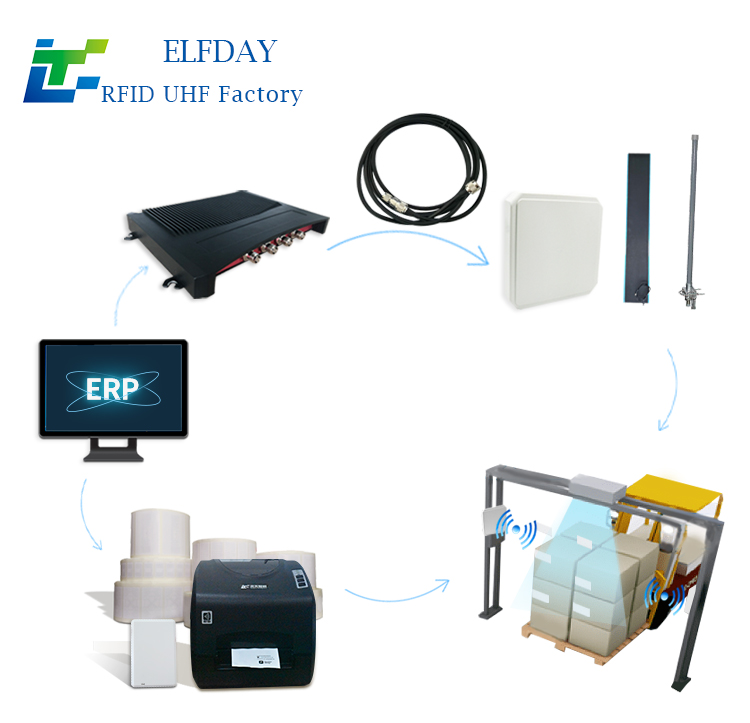
RFID tag attached to product → RFID reader detects item → product identity is captured → inventory data is compared → discrepancies are identified → inventory records are updated
Instead of relying entirely on manual counting or individual barcode scans, retailers can use RFID technology to identify multiple tagged products within a reading area.
This can make inventory checks easier to perform more frequently.
1. RFID Provides Item-Level Product Identification
Each RFID tag can carry a unique identifier associated with a specific product or inventory record.
Depending on the retail application, the associated information may include:
-
Product ID
-
SKU
-
Size
-
Color
-
Category
-
Serial number
-
Product status
-
Inventory location
This item-level identification helps retailers distinguish between products that may otherwise look similar.
For example, a clothing store may have dozens of identical shirts in different sizes and colors. RFID can associate each tagged item with its corresponding inventory information, making it easier to determine which products are physically present.
2. RFID Makes Inventory Checks Faster
Traditional barcode-based inventory counting generally requires employees to scan products individually.
RFID readers can identify multiple tagged products without requiring each item to be manually presented to a scanner.
A handheld RFID reader, for example, can be moved through a stockroom or sales area to detect tagged merchandise.
This can reduce the amount of time required for inventory checks and make it more practical for employees to perform them regularly.
More frequent inventory checks can help retailers discover discrepancies sooner instead of waiting for a large scheduled stock count.
3. RFID Helps Detect Inventory Discrepancies
One important cause of inaccurate retail inventory is the difference between system records and physical merchandise.
For example:
System record: 50 units
Physical inventory: 46 units
Difference: 4 units
An RFID inventory check can help identify the products that are physically present and compare the results with the inventory system.
Potential discrepancies may include:
-
Missing products
-
Misplaced merchandise
-
Incorrect quantities
-
Products recorded in the wrong location
-
Items that were returned but not properly processed
-
Products that were received but not correctly entered
-
Merchandise moved between locations without an inventory update
RFID does not automatically explain why a discrepancy occurred, but it can make the difference easier to detect.
4. RFID Improves Stockroom Visibility
Retail inventory is not limited to products displayed on the sales floor.
A significant amount of merchandise may be stored in back rooms, stockrooms, cabinets, or other storage areas.
Without frequent inventory checks, employees may not know exactly what products are available in these locations.
RFID tags can help employees identify tagged products in stockrooms more efficiently.
For example, if a customer asks for a particular shoe size, employees can use an RFID reader to check whether the product is physically available in the store.
This can improve the connection between system inventory and physical inventory.
5. RFID Helps Keep Sales-Floor Inventory More Accurate
Products can move frequently between stockrooms and sales floors.
A product may be:
-
Received at the store
-
Moved to the stockroom
-
Placed on the sales floor
-
Returned to the stockroom
-
Sold
-
Returned by a customer
Every movement creates an opportunity for inventory records to become inaccurate.
RFID can help retailers perform inventory checks across these areas and identify where tagged products are physically located.
This is particularly useful for stores with large numbers of individual items.
6. RFID Supports Faster Replenishment
Inventory accuracy directly affects replenishment.
If a store's system says that a product is available but the item cannot actually be found, employees may not know that the product needs attention.
RFID can provide better information about physical inventory and help employees identify products that are available in back rooms but missing from the sales floor.
For example:
Customer demand → stock checked → RFID identifies available merchandise → employee locates product → product moved to sales floor
This can help retailers make better use of existing inventory.
7. RFID Reduces Dependence on Manual Counting
Manual counting can require significant employee time, particularly when stores carry thousands of individual products.
Employees may need to:
-
Count products
-
Scan barcodes
-
Record quantities
-
Recheck questionable numbers
-
Investigate differences
-
Update inventory records
RFID can automate part of the identification process.
Because multiple tagged items can be detected during a reading session, employees can spend less time identifying individual products and more time handling exceptions or operational tasks.
This does not eliminate the need for employees or physical inventory checks. Instead, it changes how those checks are performed.
8. RFID Can Support More Frequent Inventory Updates
Inventory accuracy can decrease when physical inventory changes faster than inventory records are updated.
For example, a busy retail store may experience continuous product movement throughout the day.
Products can be:
-
Sold
-
Returned
-
Replenished
-
Transferred
-
Moved between storage areas
-
Picked for online orders
RFID can provide additional identification events that help connect physical product movement with inventory systems.
Whether information is updated in real time or near real time depends on the RFID infrastructure, reader placement, software integration, and business workflow.
RFID itself does not guarantee real-time inventory accuracy.
RFID vs. Barcode for Retail Inventory Accuracy
RFID and barcodes can both be used for retail inventory management, but they work differently.
| Feature | RFID | Barcode |
| Item identification | Can identify multiple tagged items | Usually scans one item at a time |
| Line of sight | Generally not required | Usually required |
| Inventory counting | Suitable for faster bulk identification | More manual |
| Item-level tracking | Yes | Yes |
| Manual scanning | Reduced | Usually required |
| Reading multiple products | Possible | Typically one at a time |
| Automation potential | High | Moderate |
| Cost | Generally higher | Generally lower |
The choice depends on the store's inventory volume, workflow, product type, budget, and accuracy requirements.
RFID does not necessarily replace barcodes. Many retailers can use both technologies for different processes.
How RFID Improves Inventory Accuracy in Different Retail Stores
RFID can be applied to different retail environments, although the specific implementation may vary.
Clothing Stores
Clothing retailers can attach RFID tags to:
-
Shirts
-
Jackets
-
Trousers
-
Dresses
-
Shoes
-
Bags
-
Accessories
Item-level identification can help employees perform faster stock checks and locate products by size, color, or style.
Electronics Stores
Electronics retailers can use RFID to identify individual products, accessories, packaged goods, or higher-value inventory.
The technology can support inventory checks and help identify products that are physically present but incorrectly recorded.
Home and Furniture Retail
Large or packaged products can be tracked with RFID tags to help maintain inventory visibility across storage areas and sales locations.
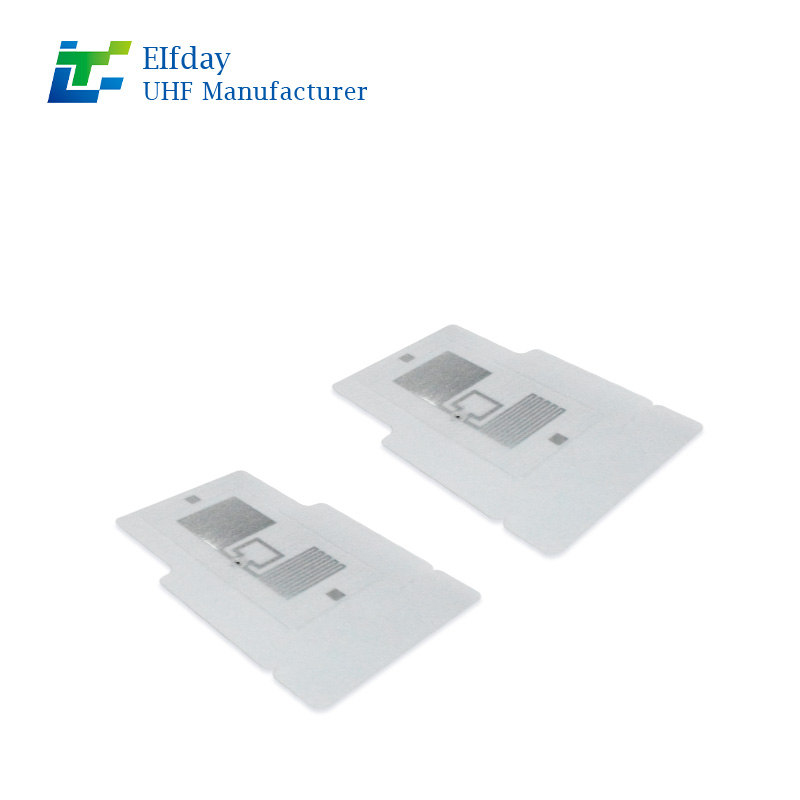
Tag selection may need to account for metal, dense packaging, and other materials that can affect RFID performance.
Specialty Retail
Stores with large numbers of individual products can use RFID to support more frequent inventory checks and improve visibility of merchandise.
What Can Cause RFID Inventory Data to Be Inaccurate?
RFID can improve inventory accuracy, but the technology itself does not guarantee perfect results.
Several factors can affect performance.
Tag Placement
The location of the RFID tag on a product can affect how well it is detected.
Product Materials
Metal and liquids can affect UHF RFID performance. Products containing these materials may require specialized tags or different tag placement.
Reader Coverage
If RFID readers do not cover important inventory areas, some products may not be detected.
Tag Orientation
The orientation of a tag relative to the RFID reader antenna can affect read performance.
Store Layout
Shelving, fixtures, walls, and densely packed merchandise can influence how RFID signals behave.
Software Integration
RFID data needs to be connected with the retailer's inventory management system. If captured RFID information is not properly processed or synchronized, inventory records may still contain errors.
How to Use RFID to Improve Retail Inventory Accuracy
A practical RFID implementation can follow several steps.
Step 1: Identify the Inventory Problem
Determine where inventory accuracy problems occur.
For example:
-
Stockroom discrepancies
-
Missing products
-
Frequent manual counts
-
Online order cancellations
-
Incorrect replenishment
-
Poor visibility of store inventory
Step 2: Decide What Products to Tag
Not every product necessarily requires the same RFID solution.
Retailers should consider:
-
Product size
-
Packaging
-
Material
-
Expected read distance
-
Required durability
-
Tag attachment method
Step 3: Select Suitable RFID Tags
The tag should match the product and operating environment.
Products containing metal or liquids may require specialized RFID tags, while ordinary paper, cardboard, plastic, or textile products may support more conventional tag designs.
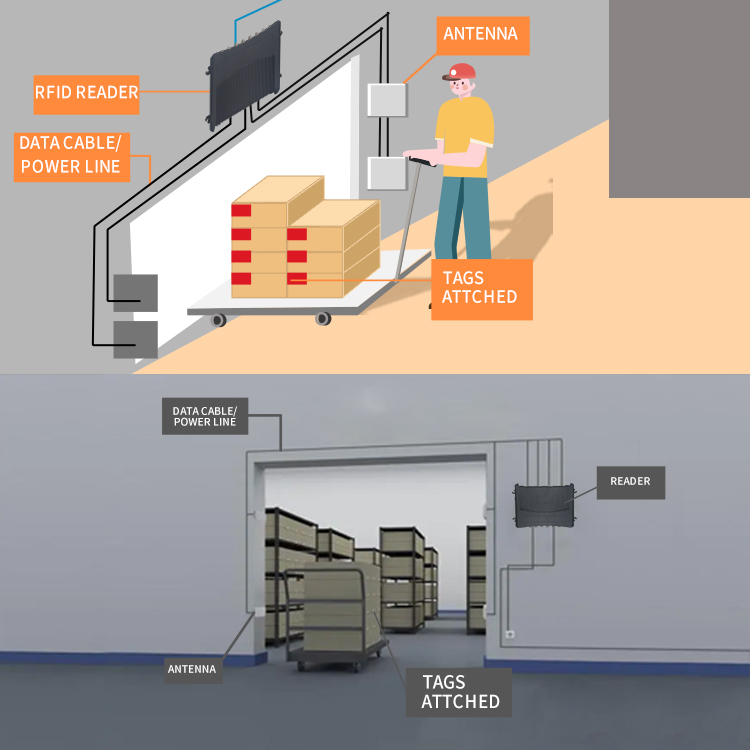
Step 4: Plan Reader Locations
Readers can be positioned or used in areas such as:
-
Receiving zones
-
Stockrooms
-
Sales floors
-
Back-of-house areas
-
Shipping areas
-
Inventory counting locations
The objective is to capture useful inventory events without creating unnecessary reading zones.
Step 5: Connect RFID Data With Inventory Software
RFID identification data becomes more useful when connected to inventory management software.
The system can use RFID events to support:
-
Inventory updates
-
Stock checks
-
Product location information
-
Discrepancy detection
-
Replenishment workflows
-
Order fulfillment
Step 6: Test Real Products
Before expanding an RFID system across a store or retail network, testing should be performed using actual products and store conditions.
Testing should consider:
-
Tag placement
-
Product density
-
Reader location
-
Orientation
-
Metal and liquid products
-
Reading distance
-
Store layout
What Are the Main Benefits of RFID for Retail Inventory Accuracy?
The main benefits include:
-
Faster inventory checks
-
Reduced manual scanning
-
Better item-level identification
-
Improved stockroom visibility
-
Easier discrepancy detection
-
More frequent inventory counting
-
Better replenishment decisions
-
Improved store inventory visibility
-
More consistent inventory records
-
Better support for online order fulfillment
The biggest practical advantage is not simply that RFID can read products quickly. It is that retailers can make inventory checks more frequent and connect physical merchandise more closely with digital inventory records.
Frequently Asked Questions
Does RFID make retail inventory 100% accurate?
No. RFID can improve inventory accuracy, but it does not guarantee 100% accuracy. Tag placement, reader coverage, product materials, orientation, software integration, and store processes can all affect results.
How does RFID reduce inventory errors?
RFID can reduce some inventory errors by automating product identification and making it easier to compare physical merchandise with inventory records. It can also reduce the amount of manual counting and individual barcode scanning required.
Can RFID track individual products in retail stores?
Yes. RFID tags can provide individual products with unique identifiers, allowing retailers to associate physical merchandise with specific inventory records.
Can RFID find missing products in a retail store?
RFID can help identify products that are physically present but recorded incorrectly or located in unexpected areas. However, it does not automatically locate every missing product unless the store has appropriate RFID coverage and workflows.
Is RFID better than barcodes for retail inventory accuracy?
RFID and barcodes have different characteristics. RFID can identify multiple tagged items without individual line-of-sight scanning, while barcodes are generally simpler and less expensive. The appropriate technology depends on the retailer's products, processes, inventory volume, and operational requirements.
Can RFID improve online order fulfillment?
Yes. More accurate store-level inventory information can help retailers determine whether products are physically available before employees pick items for online orders, click-and-collect orders, or ship-from-store fulfillment.
RFID tags can improve retail inventory accuracy by making it easier to identify individual products, perform frequent inventory checks, detect discrepancies, and maintain better visibility of merchandise across stockrooms and sales floors.
Instead of relying entirely on manual counting and individual barcode scans, retailers can use RFID readers to identify multiple tagged products and connect physical inventory with digital records.
The actual improvement depends on several factors, including RFID tag selection, tag placement, reader coverage, product materials, store layout, inventory software, and operational processes.
When these elements are properly designed, RFID can provide a practical way for retailers to maintain more accurate inventory information and make better use of the merchandise they already have in the store.