



How Are RFID Tags Used in Retail Stores?
Retail stores need accurate information about the products they have, where those products are located, and when stock needs to be replenished. Traditional barcode scanning can provide product information, but checking large quantities of merchandise often requires employees to scan items individually.
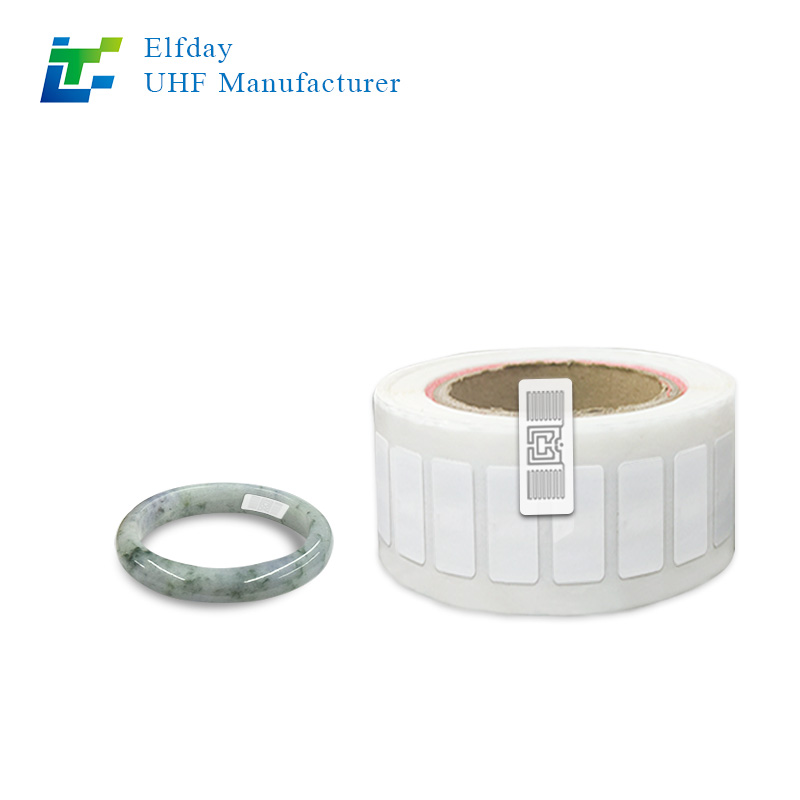
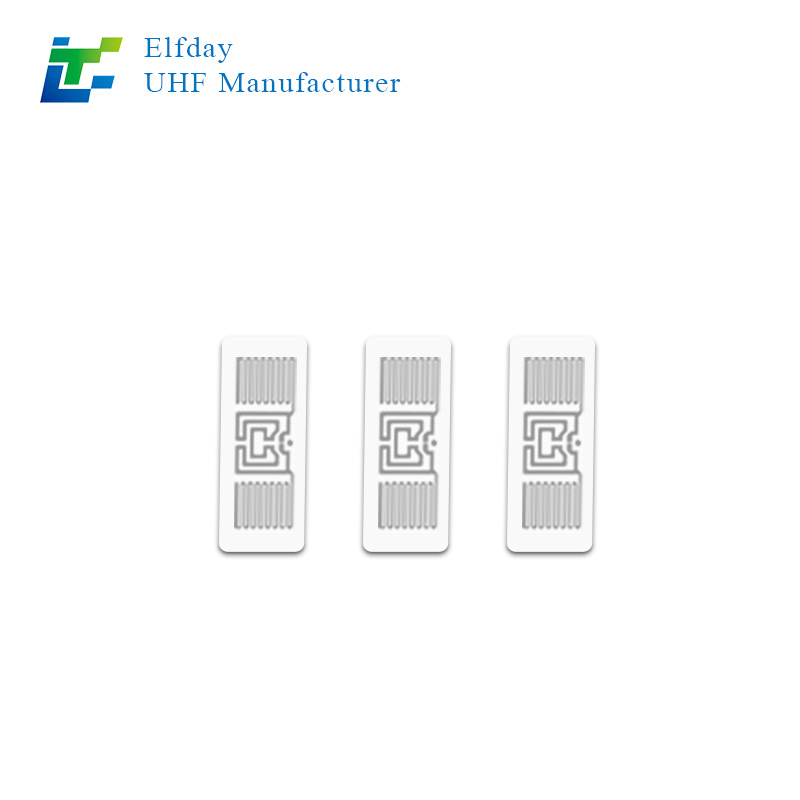
RFID tags are used in retail stores to identify and track merchandise throughout receiving, stockroom storage, sales-floor inventory, replenishment, stock checking, and order fulfillment. By attaching RFID tags to products or their packaging, retailers can use RFID readers to detect multiple tagged items and connect physical merchandise with digital inventory records.
This can help stores perform faster inventory checks, improve stock visibility, locate products more efficiently, and support more consistent inventory management.
How Are RFID Tags Used in Retail Stores?
RFID tags can support several retail activities, including:
-
Receiving merchandise
-
Tracking store inventory
-
Performing stock counts
-
Locating products
-
Monitoring stockroom inventory
-
Replenishing sales-floor products
-
Checking product availability
-
Supporting online order fulfillment
-
Managing returns
-
Tracking selected high-value merchandise
-
Improving inventory visibility
The specific benefits depend on the type of RFID technology, tag placement, reader configuration, product materials, store layout, and software integration.
1. RFID Tags Identify Individual Retail Products
One of the most important uses of RFID in retail is giving products a unique digital identity.
An RFID tag can be associated with information about a specific item, such as:
-
Product identifier
-
SKU
-
Product category
-
Size
-
Colour
-
Serial number
-
Other inventory information
For example, a clothing retailer may attach RFID tags to individual shirts, trousers, jackets, or accessories.
This allows the store to connect the physical item with its corresponding digital inventory record.
2. RFID Helps Stores Receive Merchandise Faster
Receiving is often the first point at which inventory enters a retail store.
Employees need to identify incoming merchandise, verify quantities, and move products into the stockroom or sales area.
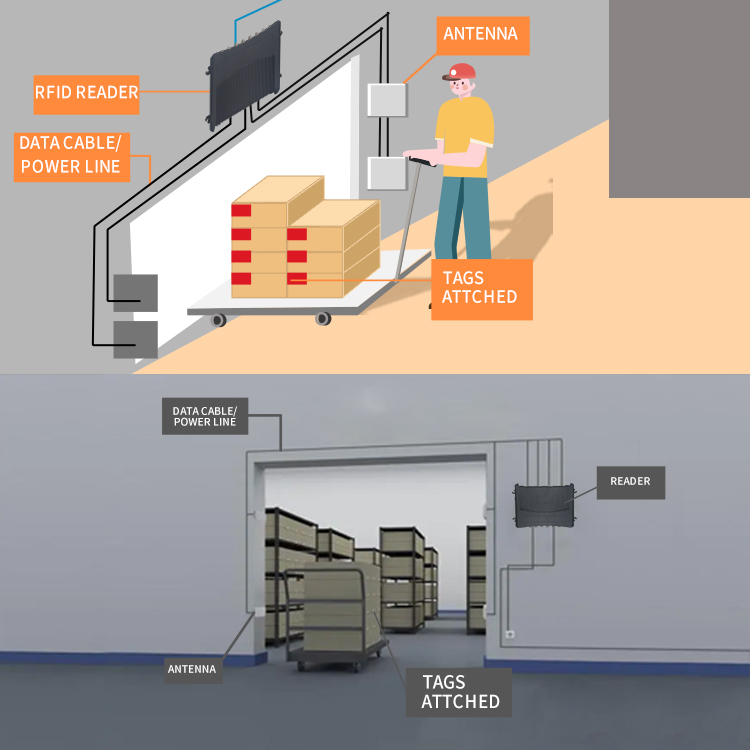
With RFID, tagged products can be detected as they enter a designated reading area.
A typical workflow may look like:
Shipment arrives → RFID tags are detected → Merchandise is identified → Expected shipment is checked → Inventory is updated → Products move to storage or the sales floor
Because multiple RFID tags can potentially be detected during the same reading event, employees may spend less time scanning individual barcodes.
This can make the receiving process more efficient, particularly when stores handle large shipments.
3. RFID Makes Retail Inventory Counts Faster
Retail inventory counts can require employees to check hundreds or thousands of products.
With conventional barcode scanning, products generally need to be scanned individually.
RFID can simplify the identification process.
An employee using a handheld RFID reader can move through a stockroom or sales floor and detect multiple tagged products within the reader's operating range.
For example:
Employee walks through store → RFID reader detects tagged products → Inventory data is captured → System compares physical and recorded stock
This can reduce the amount of time required to identify merchandise during inventory checks.
4. RFID Improves Retail Inventory Visibility
Retail inventory can change throughout the day.
Products may move from the stockroom to the sales floor, between store areas, into fitting rooms, or into an order-picking process.
RFID can provide additional inventory events when tagged merchandise is detected by readers.
This can help retailers maintain a more current understanding of:
-
What products are in stock
-
Which items are available in a particular area
-
Which products need replenishment
-
Which items may be misplaced
-
Which products are difficult to locate
RFID does not automatically provide continuous visibility everywhere in a store. The level of visibility depends on where readers are used and how the system is designed.
5. RFID Helps Locate Products in Stores
A product may be available in a store but difficult for an employee or customer to find.
For example, a retailer may have several units of the same product distributed between the stockroom and sales floor.
A handheld RFID reader can help employees identify tagged items in a particular area.
This can reduce the time spent searching for merchandise.
However, standard RFID is not the same as GPS. The reader needs to be within an appropriate operating range, and precise location information depends on the reader setup and store environment.
6. RFID Supports Faster Shelf Replenishment
Retailers need to keep popular products available on the sales floor.
When inventory moves from the stockroom to the sales floor, RFID can help provide visibility into product availability.
For example:
Stockroom inventory checked → Products identified → Low sales-floor stock detected → Merchandise located → Shelf replenished
By making inventory checks faster, RFID can help employees identify products that may need to be moved from storage to the sales floor.
This is particularly useful for stores with large product ranges.
7. RFID Can Help Reduce Out-of-Stock Situations
An item may appear unavailable to a customer even when additional units are physically stored elsewhere in the store.
For example, a product may be:
-
In the stockroom
-
On another shelf
-
In the wrong location
-
Waiting to be replenished
RFID can help employees identify available tagged inventory more efficiently.
If the system shows that additional units are present in the stockroom, employees can locate and replenish the merchandise.
RFID does not automatically prevent stockouts, but better inventory information can help retailers respond more quickly.
8. RFID Supports Omnichannel Retail
Modern retailers often manage both physical stores and online orders.
A store may be used as a fulfillment location for:
-
Buy online, pick up in store
-
Ship from store
-
Click and collect
-
Store-based order fulfillment
RFID can help identify merchandise available inside the store.
For example:
Online order received → Store inventory checked → RFID identifies product → Employee picks item → Order is prepared
More accurate item-level inventory information can help retailers determine whether a product is physically available for fulfillment.
The effectiveness depends on how RFID data is integrated with the retailer's inventory and order-management systems.
9. RFID Can Support Returns Processing
Returns create another inventory management challenge.
When a customer returns an item, store employees need to identify the product and update its inventory status.
An RFID tag can help associate the returned product with its digital record.
A basic process can be:
Product returned → RFID tag identified → Product record retrieved → Return processed → Inventory status updated
This can reduce some manual identification steps and help return merchandise re-enter the appropriate inventory workflow.
10. RFID Can Support Merchandise Accuracy
Retail inventory errors can occur when products are:
-
Misplaced
-
Incorrectly counted
-
Recorded under the wrong SKU
-
Moved without a system update
-
Returned incorrectly
-
Shipped to customers without proper inventory updates
RFID can provide additional identification events that help retailers compare physical merchandise with digital inventory records.
For example, if the system expects a certain number of tagged items in a store but fewer items are detected, employees can investigate the difference.
RFID does not eliminate inventory errors by itself, but it can provide better data for identifying and investigating them.
11. RFID Can Be Used for High-Value Merchandise
Some retailers may use RFID to track products that require additional visibility.
Examples can include:
-
High-value electronics
-
Luxury goods
-
Designer products
-
Specialty equipment
-
Limited-edition merchandise
The exact application depends on the retailer's inventory strategy.
RFID can help identify whether tagged items are present in designated areas and provide additional movement information.
For applications involving security or loss prevention, RFID may be combined with other technologies rather than used as the only security method.
12. RFID Can Support Fitting Room Operations
In some retail environments, RFID can be used to improve visibility of merchandise entering and leaving fitting-room areas.
For example, tagged garments can be identified when employees perform an inventory check around a fitting-room area.
This can help staff determine whether products need to be returned to the correct sales-floor location.
The exact workflow depends on store layout and RFID reader configuration.
RFID in Retail Stores: A Typical Workflow
A retail RFID process may look like this:
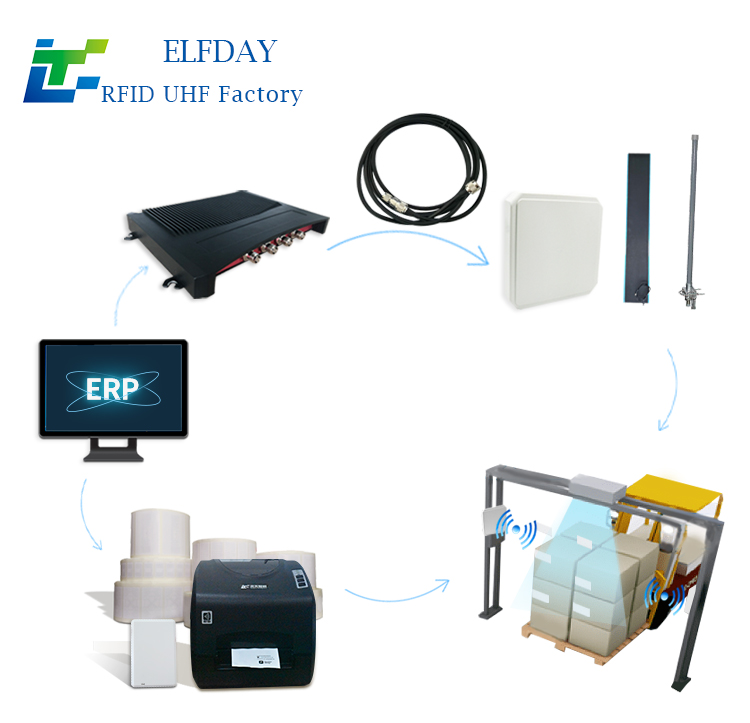
Product tagged → Merchandise shipped → Store receives products → RFID identifies inventory → Stockroom inventory recorded → Products move to sales floor → Inventory checked → Items replenished or sold → Inventory record updated
This creates a connection between physical merchandise and digital inventory information.
RFID is therefore not limited to one individual retail task. It can support several connected inventory processes.
RFID vs. Barcode in Retail Stores
RFID and barcodes both have important roles in retail.
| Feature | RFID | Barcode |
| Direct line of sight | Usually not required | Usually required |
| Multiple-item reading | Possible | Usually individual |
| Manual scanning | Can be reduced | Usually required |
| Item-level tracking | Yes | Yes |
| Inventory counting | Can be faster | Usually more manual |
| Read distance | Depends on RFID type and setup | Generally short |
| Label cost | Generally higher | Generally lower |
| Automation potential | High | Moderate |
RFID does not necessarily need to replace barcode labels.
Retailers can use both technologies depending on their operational requirements, product types, and existing systems.
What Types of Retail Stores Can Use RFID?
RFID can be applied across many retail environments.
Clothing Stores
RFID is commonly suited to item-level merchandise such as:
-
Clothing
-
Shoes
-
Accessories
-
Bags
The technology can support inventory counts, stockroom management, replenishment, and product location.
Electronics Stores
RFID can help identify selected products and track inventory as items move through receiving, storage, and sales areas.
Grocery and Food Retail
RFID can be used for selected products, cases, containers, or reusable assets. Products containing liquids or certain packaging materials may require careful tag selection and testing.
Home and Furniture Retail
RFID can support the identification of larger products, cartons, and inventory units.
Specialty Retail
Stores handling high-value or specialized merchandise can use RFID to provide additional item-level inventory visibility.
What Are the Benefits of RFID in Retail?
The main potential benefits include:
Faster Stock Checks
Multiple tagged items can be detected during a reading process.
Better Inventory Accuracy
Automated identification can reduce some manual counting and data-entry errors.
Improved Product Availability
More frequent inventory checks can help staff identify products that need replenishment.
Less Manual Work
Employees may spend less time scanning individual items.
Better Inventory Visibility
RFID can provide more frequent information about tagged merchandise.
Faster Receiving
Incoming products can be identified more efficiently.
Better Order Fulfillment
Accurate store inventory can help support store-based online order fulfillment.
Easier Returns Processing
Tagged products can be identified more quickly when returned.
What Factors Affect RFID Performance in Retail Stores?
RFID performance depends on the complete environment.
Product Materials
Metal and liquids can affect some RFID applications, particularly UHF RFID.
Tag Placement
The position of the tag can influence read performance.
Reader Location
Readers should be positioned around the workflows where inventory identification is needed.
Store Layout
Shelving, displays, walls, equipment, and product density can affect RFID performance.
Tag Orientation
The orientation between the tag and reader antenna can influence reading reliability.
Software Integration
RFID data needs to connect with inventory and retail management systems to provide useful information.
How to Implement RFID in a Retail Store
A practical implementation can start with a limited use case.
Step 1: Identify the Inventory Problem
Determine whether the main issue is:
-
Slow inventory counts
-
Poor stock visibility
-
Product search time
-
Slow receiving
-
Replenishment problems
-
Order fulfillment
-
Returns processing
Step 2: Decide What to Tag
Products can be tagged individually, or RFID can be applied at carton, pallet, container, or asset level depending on the workflow.
Step 3: Select the Right RFID Tags
Consider:
-
Product material
-
Packaging
-
Tag size
-
Read distance
-
Attachment method
-
Temperature
-
Moisture
-
Metal or liquid content
Step 4: Determine Reader Locations
Readers may be used in:
-
Receiving areas
-
Stockrooms
-
Store entrances
-
Back-of-house areas
-
Sales-floor zones
-
Other important inventory checkpoints
Step 5: Integrate RFID Data
Connect RFID events with the systems used to manage inventory, products, and orders.
Step 6: Test With Real Merchandise
Test RFID tags and readers using the actual products, shelving, displays, and store environment.
Step 7: Measure the Results
Useful metrics can include:
-
Inventory accuracy
-
Stock-check time
-
Receiving time
-
Product search time
-
Replenishment time
-
Order fulfillment accuracy
-
Inventory discrepancy frequency
Common Questions About RFID in Retail
How are RFID tags used in retail stores?
RFID tags are attached to products or packaging and used with RFID readers to identify merchandise during receiving, inventory counting, stockroom management, replenishment, order fulfillment, and returns processing.
Can RFID track individual products in a retail store?
Yes. RFID tags can provide unique identifiers for individual products, allowing retailers to associate physical merchandise with digital inventory records.
Can RFID find products in a store?
RFID can help employees locate tagged products when RFID readers are used in the relevant area. The exact level of location information depends on reader coverage and system design.
Can RFID replace barcodes in retail?
RFID can replace some barcode-based processes, particularly where automated or multi-item identification is useful. However, many retailers may continue using barcodes alongside RFID.
Does RFID improve retail inventory accuracy?
RFID can help improve inventory accuracy by automating item identification and reducing some manual counting tasks. Actual accuracy depends on tag performance, reader coverage, software integration, and store procedures.
Can RFID help prevent retail theft?
RFID can provide item identification and movement information, but it should not automatically be treated as a complete theft-prevention system. Retailers may combine RFID with other loss-prevention technologies and procedures.
Does RFID work on clothing?
Yes. RFID tags are widely suited to many textile and apparel applications because clothing generally does not create the same radio-frequency challenges as metal or liquid-heavy products.
RFID tags are used in retail stores to connect physical merchandise with digital inventory information. From receiving and stockroom management to sales-floor inventory, replenishment, returns, and store-based order fulfillment, RFID can automate many product identification tasks.
The biggest practical advantages are faster inventory checks, reduced manual scanning, better merchandise visibility, improved inventory accuracy, easier product location, and more efficient replenishment.
However, RFID performance depends on how the system is designed. Product materials, tag placement, reader coverage, store layout, tag orientation, and software integration all influence the results.
For retailers considering RFID, a practical approach is to begin with a clearly defined inventory challenge, test the technology with real merchandise, and measure the effect on daily store operations before expanding the system.