



What Are the Benefits of RFID Tags for Warehouse Management?
Warehouse management involves much more than storing products. Teams need to receive incoming goods, track inventory, manage storage locations, pick orders, verify shipments, and keep stock records accurate.
RFID tags can improve warehouse management by automating the identification and tracking of products, cartons, pallets, containers, and assets throughout these processes. Instead of relying entirely on manual barcode scanning and physical counting, RFID readers can detect multiple tagged items and capture inventory events at important points in the warehouse.
The result can be faster inventory handling, better stock visibility, less manual work, and more consistent warehouse data.
What Are the Main Benefits of RFID Tags for Warehouse Management?
The main benefits of RFID tags in warehouse management include:
-
Faster inventory identification
-
Reduced manual scanning
-
Better inventory visibility
-
More efficient receiving
-
Easier cycle counting
-
Improved inventory accuracy
-
Better tracking of inventory movement
-
Faster picking and shipping verification
-
Earlier detection of discrepancies
-
Improved asset and container tracking
-
More consistent warehouse data
-
Greater potential for warehouse automation
The actual results depend on RFID tag selection, reader placement, warehouse layout, product materials, software integration, and the specific workflow being automated.
1. Faster Inventory Identification
One of the most practical benefits of RFID is faster item identification.
With traditional barcode processes, employees generally need to scan items individually and position the barcode correctly for the scanner.
RFID can identify multiple tagged items within a reading area.
For example, a pallet containing several tagged cartons can pass through an RFID reading zone. The system can detect multiple tags and associate them with the corresponding inventory records.
This can reduce the time required to identify large quantities of warehouse inventory.
2. Reduced Manual Scanning
Manual scanning can become repetitive when employees handle hundreds or thousands of items every day.
RFID can automate some of these identification tasks.
Instead of:
Pick up item → Find barcode → Position scanner → Scan → Repeat
an RFID workflow can be:
Tagged item moves through reading area → RFID reader detects tag → System records event
This can allow employees to spend less time on repetitive identification tasks and more time on activities that require human attention.
3. Better Warehouse Inventory Visibility
RFID can provide more frequent information about where inventory has been detected.
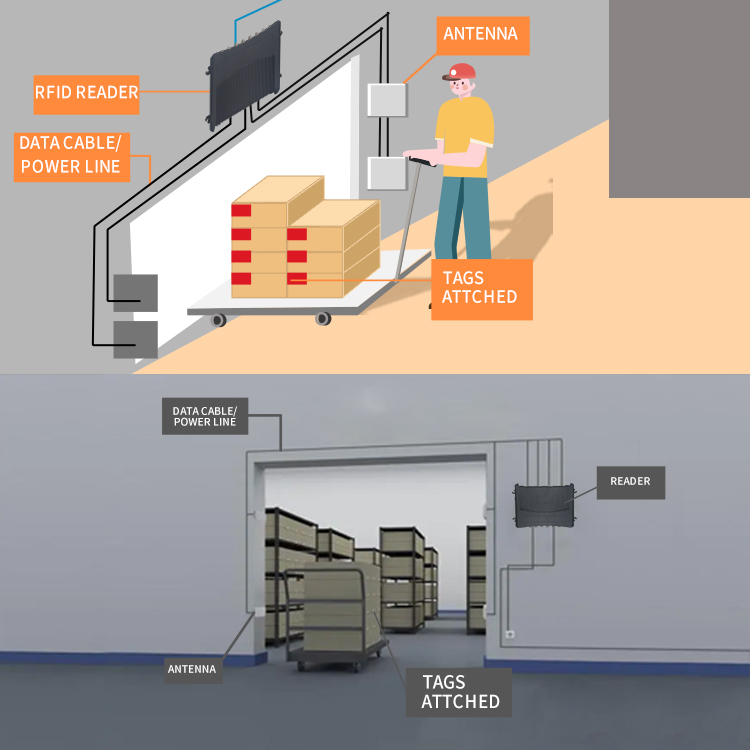
Readers can be positioned at important warehouse locations such as:
-
Receiving docks
-
Storage entrances
-
Picking areas
-
Packing stations
-
Shipping docks
-
Conveyor systems
When tagged inventory passes through these locations, the system can capture an inventory event.
This can help warehouse teams understand not only how much inventory exists, but also how inventory is moving through the facility.
4. More Efficient Warehouse Receiving
Receiving is often one of the busiest warehouse processes.
Employees need to verify incoming shipments, identify products, check quantities, and update inventory records.
RFID can simplify the identification stage.
A typical workflow may look like:
Shipment arrives → Tags are detected → Items are identified → Shipment is verified → Inventory is updated → Goods move to storage
Multiple tagged cartons or pallets can potentially be identified during the same reading event.
This can reduce manual scanning and help employees process incoming inventory more efficiently.
5. Easier Cycle Counting
Regular cycle counting helps warehouses maintain accurate inventory records, but traditional counting can require significant labor.
Employees may need to locate products, count quantities, record results, and compare physical stock with system records.
RFID can make item identification faster during cycle counts.
Using a handheld RFID reader, an employee can move through a storage area and detect multiple tagged items without individually scanning every barcode.
Fixed RFID readers can also support automated identification at selected locations.
RFID does not eliminate the need for inventory controls, but it can reduce the amount of manual identification involved in stock checking.
6. Improved Inventory Accuracy
Inventory accuracy depends on keeping system records aligned with physical stock.
Problems can occur when:
-
Items are received incorrectly
-
Products are misplaced
-
Quantities are entered incorrectly
-
Inventory movements are not recorded
-
Products are shipped without the correct system update
RFID can provide additional identification events that help connect physical inventory with digital records.
For example, if a tagged carton is detected entering a storage zone, the system can record that movement. If the carton later appears at a shipping location, another event can be recorded.
These events can help reduce gaps between physical inventory activity and warehouse records.
However, RFID does not automatically guarantee perfect inventory accuracy. Tag performance, reader coverage, system integration, and operational procedures all affect the final result.
7. Better Tracking of Inventory Movement
Warehouse inventory moves through multiple stages during its lifecycle.
A typical process may be:
Receiving → Put-Away → Storage → Picking → Packing → Shipping
RFID readers can be placed at selected transition points to capture these movements automatically.
This creates an event history that can help warehouse teams understand where inventory was last detected and which stage of the process it has reached.
This is especially useful when products frequently move between different warehouse zones.
8. Faster Picking Operations
Picking accuracy and speed are important parts of warehouse management.
RFID can support picking workflows by helping identify tagged products and confirm inventory movement.
For example, an RFID-enabled picking area can detect tagged items as they leave a storage location or move toward packing.
Depending on the system design, RFID data can be compared with order information to help identify potential picking discrepancies.
RFID does not replace the entire picking process, but it can provide another layer of automated item identification.
9. More Efficient Shipping Verification
Shipping is another important point where inventory errors can create problems.
A warehouse may need to verify that the correct products or cartons are included in a shipment.
RFID can help by detecting tagged inventory as it moves toward the shipping area.
The workflow can be:
Order prepared → Tagged items detected → Items compared with expected shipment → Shipment verified → Goods dispatched
If an unexpected item is detected, the system can flag the event for further investigation.
This can help reduce some types of shipping errors before inventory leaves the facility.
10. Earlier Detection of Inventory Discrepancies
RFID can help warehouses identify potential inventory problems earlier.
Examples include:
-
Missing inventory
-
Unexpected inventory
-
Incorrect storage locations
-
Unrecorded movements
-
Shipment discrepancies
-
Receiving differences
For example, a warehouse may expect 50 tagged cartons in a particular shipment but detect only 48 during receiving.
The difference can be investigated immediately instead of being discovered later during a stock count.
Earlier detection can make inventory problems easier to investigate and resolve.
11. Improved Asset and Container Tracking
Warehouse management is not limited to products.
Many facilities also use reusable assets such as:
-
Plastic totes
-
Storage bins
-
Pallets
-
Carts
-
Containers
-
Equipment
-
Returnable packaging
RFID tags can give these assets unique digital identities.
Readers can then detect the assets as they move between warehouse areas or facilities.
This can help businesses understand asset movement and reduce the amount of time spent manually searching for reusable equipment and containers.
12. Better Warehouse Data
Warehouse management decisions depend on accurate operational data.
RFID can generate data related to:
-
Inventory movement
-
Receiving events
-
Storage activity
-
Picking activity
-
Shipping activity
-
Asset movement
-
Inventory exceptions
When RFID data is integrated with warehouse management software, these events can become part of a broader operational record.
This can help warehouse teams analyze workflows and identify areas where processes may be improved.
RFID Benefits for Different Warehouse Operations
Different warehouse activities can benefit from RFID in different ways.
| Warehouse Activity | Potential RFID Benefit |
| Receiving | Faster identification and shipment verification |
| Put-away | Better movement visibility |
| Storage | More frequent inventory identification |
| Cycle counting | Faster stock checking |
| Picking | Product identification and process verification |
| Packing | Item identification before shipment |
| Shipping | Shipment verification |
| Returns | Faster identification of returned products |
| Asset management | Automated tracking of containers and equipment |
This makes RFID useful as a warehouse-wide identification technology rather than a solution limited to one individual process.
How RFID Compares With Barcode-Based Warehouse Management
RFID and barcodes can both be useful in warehouses.
The main difference is how inventory is identified.
| Feature | RFID | Barcode |
| Line of sight | Usually not required | Usually required |
| Multiple-item reading | Possible | Usually individual |
| Manual scanning | Can be reduced | Usually required |
| Automation potential | High | Moderate |
| Read distance | Depends on RFID type and setup | Generally short |
| Tag or label cost | Usually higher | Usually lower |
| Metal/liquid considerations | Important for some RFID applications | Generally less relevant to radio performance |
| Best suited to | Automated identification and tracking | Simple identification and scanning |
RFID does not necessarily need to replace barcodes.
Some warehouses can use RFID for automated movement tracking while continuing to use barcodes for other identification tasks.
Can RFID Make Warehouse Management More Automated?
Yes, RFID can support warehouse automation by reducing the amount of manual identification required.
For example:
Traditional process
Employee scans product → Employee records movement → System updates inventory
RFID-enabled process
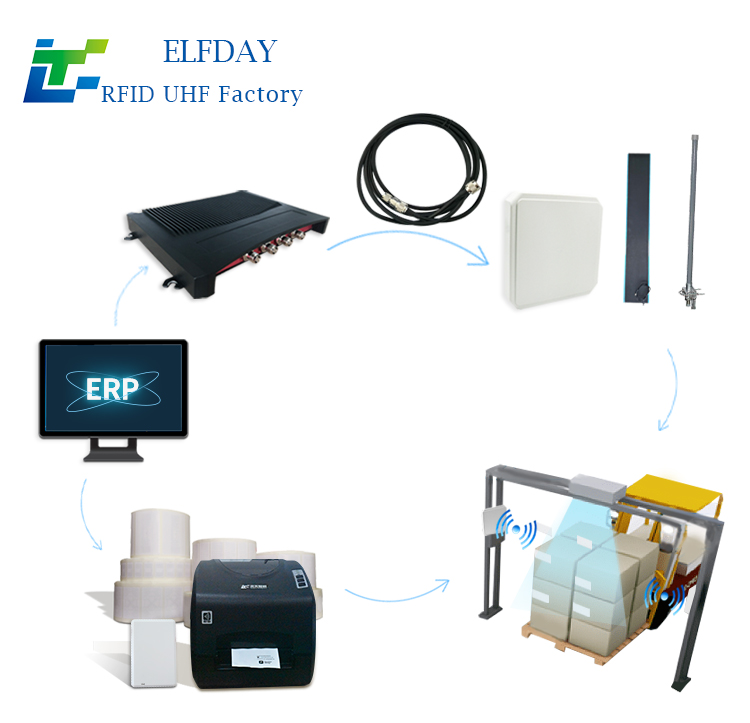
Tagged product moves → Reader detects tag → Software processes event → Inventory record is updated
The second workflow can reduce manual intervention at selected points.
However, RFID is only one component of warehouse automation. Conveyors, warehouse management software, robotics, sensors, network infrastructure, and other technologies may also be involved in a fully automated facility.
What Factors Determine the Benefits of RFID?
Not every warehouse will experience the same results.
Several factors influence RFID performance.
Tag Selection
The RFID tag should match the product and operating environment.
Products containing metal or liquids may require specialized tag designs.
Tag Placement
Where the tag is attached can affect read performance.
Standardizing tag placement can make automated reading more consistent.
Reader Coverage
Important inventory movement points need appropriate RFID reader coverage.
If an important transition is outside the reading area, the corresponding event may not be captured.
Warehouse Layout
Shelving, walls, machinery, conveyors, and other structures can affect radio-frequency performance.
Software Integration
RFID data needs to connect with the systems used for inventory and warehouse management.
Operational Testing
Testing with real products and real warehouse conditions is essential.
A tag that performs well in a laboratory or on one type of packaging may perform differently in an actual warehouse.
How to Introduce RFID Into Warehouse Management
A practical implementation can start with a specific operational problem.
Step 1: Identify the Main Bottleneck
Determine whether the primary issue is:
-
Slow receiving
-
Manual inventory counting
-
Poor inventory visibility
-
Picking errors
-
Shipping verification
-
Asset tracking
-
Inventory discrepancies
Step 2: Select the Tracking Level
Decide whether RFID tags will be applied to:
-
Individual items
-
Cases
-
Cartons
-
Pallets
-
Containers
-
Assets
Step 3: Map the Workflow
Document how inventory moves through the warehouse.
For example:
Receiving → Storage → Picking → Packing → Shipping
Then identify where automated identification could provide the most useful information.
Step 4: Test RFID Tags
Test different tag designs and placements on actual products.
Pay particular attention to products containing metal, liquids, or other materials that may affect RFID performance.
Step 5: Configure Readers
Install fixed or handheld readers based on the warehouse workflow and required coverage.
Step 6: Integrate the Data
Connect RFID events with warehouse or inventory management software.
Step 7: Measure Results
Useful measurements can include:
-
Receiving time
-
Inventory accuracy
-
Cycle-counting time
-
Picking accuracy
-
Shipping verification time
-
Manual scanning time
-
Inventory discrepancy frequency
These measurements can help determine whether RFID is improving the intended warehouse processes.
Common Questions About RFID in Warehouse Management
What is the biggest benefit of RFID in warehouse management?
RFID can automate inventory identification and movement tracking, reducing the need for individual manual scans. This can support faster warehouse processes and more frequent inventory updates.
Can RFID improve warehouse inventory accuracy?
RFID can help improve inventory accuracy by providing automated identification events and reducing some manual data-entry tasks. Actual accuracy depends on system design, tag performance, reader coverage, and software integration.
Can RFID track pallets in a warehouse?
Yes. RFID tags can be attached to pallets and detected as they move through receiving, storage, staging, and shipping areas.
Can RFID reduce warehouse labor?
RFID can reduce some repetitive identification and scanning tasks. It does not necessarily eliminate warehouse labor because employees are still needed for handling goods, exception management, maintenance, and other operational activities.
Does RFID provide real-time warehouse visibility?
RFID can support real-time or near-real-time visibility when readers continuously monitor relevant areas and RFID data is integrated with warehouse software. RFID alone does not guarantee continuous real-time tracking.
Does RFID work on metal warehouse assets?
Specialized RFID tags designed for metal surfaces can be used for many metal assets and equipment. Standard RFID tags may not provide the same performance when directly attached to metal.
The benefits of RFID tags for warehouse management go beyond simply replacing barcode scans.
RFID can help warehouses identify inventory faster, reduce manual scanning, improve inventory visibility, support cycle counting, track inventory movement, verify shipments, detect discrepancies, and manage reusable assets more efficiently.
The technology can also provide a foundation for greater warehouse automation by connecting physical inventory movements with digital records.
However, RFID performance depends on the complete implementation. Tag selection, tag placement, reader coverage, warehouse layout, product materials, software integration, and real-world testing all influence the results.
For warehouses considering RFID, the most useful starting point is to identify a specific operational challenge and test RFID within that workflow. This makes it easier to measure the actual benefits and determine where RFID can provide the most useful level of automation and visibility.