



How Are RFID Tags Used in Warehouse Receiving?
Warehouse receiving is one of the first steps in the inventory management process. When products, cartons, pallets, or containers arrive at a warehouse, employees need to identify the shipment, verify the contents, record the received inventory, and move the goods to the appropriate storage location.
Traditionally, warehouse receiving relies heavily on barcode scanning and manual data entry. RFID tags can help automate parts of this process by allowing multiple tagged items to be identified without scanning each barcode individually.
RFID tags used in warehouse receiving can help teams identify incoming goods, compare shipments with expected orders, update inventory records, and detect receiving discrepancies. When combined with fixed or handheld RFID readers and warehouse management software, RFID can make receiving workflows faster and more visible.
How Are RFID Tags Used in Warehouse Receiving?
RFID tags are attached to products, cartons, pallets, containers, or other incoming inventory before the goods reach the receiving area.
When the shipment arrives, RFID readers capture the identification information stored on the tags. The RFID system can then compare the detected items with purchase orders, advance shipping notices, or expected shipment records.
A typical RFID receiving process looks like this:
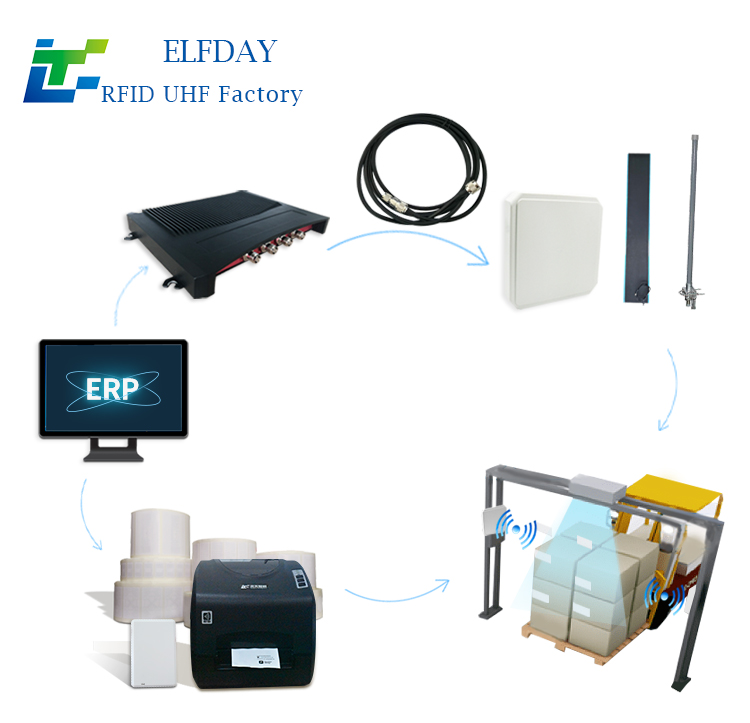
Shipment arrives → RFID tags are detected → Items are identified → Shipment is verified → Inventory is updated → Goods move to storage
Unlike traditional barcode scanning, RFID does not normally require an employee to point a scanner directly at every individual label.
This makes RFID particularly useful when warehouses receive large quantities of products at the same time.
What Happens During Traditional Warehouse Receiving?
Before understanding the role of RFID, it helps to look at a conventional receiving workflow.
A typical process may involve:
-
A truck arrives at the loading dock.
-
Employees unload pallets or cartons.
-
Workers check shipping documents.
-
Barcodes are scanned.
-
Product quantities are counted.
-
Items are compared with purchase orders.
-
Damaged or missing items are recorded.
-
Inventory records are updated.
-
Products are assigned to storage locations.
-
Goods are moved into the warehouse.
When shipments contain hundreds or thousands of individual items, manually scanning each barcode can take considerable time.
RFID can reduce some of the manual identification work by allowing readers to capture multiple RFID tags within their reading area.
How RFID Changes the Warehouse Receiving Process
RFID changes receiving from a primarily item-by-item identification process into a more automated identification workflow.
Instead of scanning every barcode separately, a reader can detect multiple RFID tags within a suitable reading zone.
For example, imagine a pallet containing dozens of tagged cartons arriving at a receiving dock.
With barcode scanning, an employee may need to:
-
Locate each barcode
-
Position the scanner
-
Scan the code
-
Confirm the result
-
Repeat the process
With an appropriately designed RFID system, the pallet can pass through an RFID reading area while the reader captures the tags automatically.
The system can then compare the detected tag IDs with the expected shipment.
This can help reduce repetitive scanning and provide faster visibility into what has arrived.
Step-by-Step RFID Warehouse Receiving Process
1. RFID Tags Are Assigned to Products
RFID tags need to be associated with the products or logistics units being received.
Depending on the operation, tags may be attached to:
-
Individual products
-
Cartons
-
Cases
-
Pallets
-
Reusable containers
-
Shipping totes
-
Industrial assets
Each tag has a unique identifier that allows the system to distinguish one tagged item from another.
The appropriate tagging level depends on the warehouse's inventory requirements.
For example, a warehouse may only need pallet-level identification, while a retail distribution center may require carton-level or item-level tracking.
2. The Shipment Arrives at the Receiving Dock
When the shipment reaches the warehouse, employees unload the goods and move them into the designated receiving area.
This is where RFID readers can begin identifying tagged items.
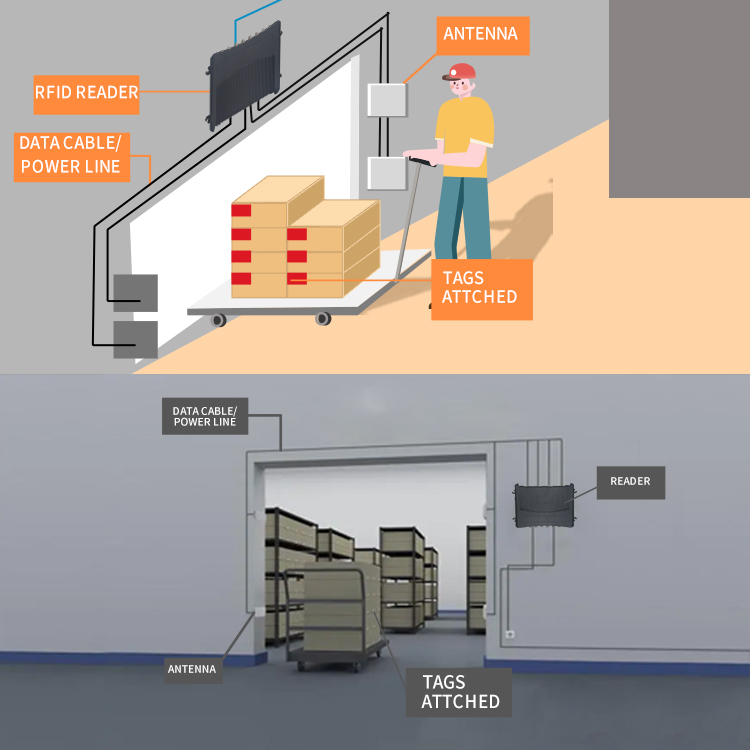
Depending on the warehouse layout, RFID equipment may be installed around:
-
Dock doors
-
Receiving lanes
-
Conveyor systems
-
Staging areas
-
Pallet inspection points
-
Receiving stations
The objective is to create a controlled RFID reading zone.
3. RFID Readers Detect the Tags
RFID readers send radio-frequency signals through their antennas.
When compatible passive RFID tags enter the reading area, they respond with their stored identification information.
A reader may detect multiple tags within the same general area.
The system can then collect information such as:
-
Tag ID
-
Product identifier
-
Shipment reference
-
Location
-
Reading time
-
Reader or antenna location
The exact information depends on the RFID tag, software, and warehouse system.
4. The System Compares Received Items With Expected Shipments
The RFID system can connect detected tag information with inventory or warehouse management records.
For example, the warehouse may expect:
-
50 cartons
-
10 pallets
-
500 individual products
If the RFID reader detects a different quantity, the system can flag the shipment for review.
This can help identify:
-
Missing items
-
Unexpected items
-
Incorrect products
-
Duplicate records
-
Shipment discrepancies
The warehouse employee can then investigate the issue before the goods move further into the facility.
5. Inventory Records Are Updated
Once the receiving process is confirmed, the warehouse management system can update inventory records.
The system may record:
-
Item received
-
Quantity received
-
Receiving time
-
Receiving location
-
Shipment status
-
Inventory status
This helps create a clearer connection between the physical movement of goods and the digital inventory record.
6. Goods Move to Storage
After receiving is complete, products can be moved to their assigned warehouse locations.
RFID can continue to provide identification as items move through the facility.
For example:
Receiving → Staging → Put-away → Storage → Picking → Shipping
If RFID infrastructure is installed throughout these processes, the warehouse can build greater visibility into inventory movement.
What Types of RFID Tags Are Used in Warehouse Receiving?
Different receiving applications require different tag formats.
RFID Tags for Pallets
Pallet-level RFID tags can provide a digital identity for an entire pallet.
They are useful when the warehouse primarily needs to track pallet movement rather than every individual product.
Pallet tags may be attached to:
-
Wooden pallets
-
Plastic pallets
-
Shipping containers
-
Pallet loads
The tag should be positioned where it can be reliably read by the receiving equipment.
RFID Tags for Cartons
Carton-level RFID tags identify individual boxes or cases.
This can provide more detailed visibility than pallet-level tagging.
For example, a pallet could contain multiple cartons with different product types. Carton-level RFID allows the warehouse to identify each carton separately.
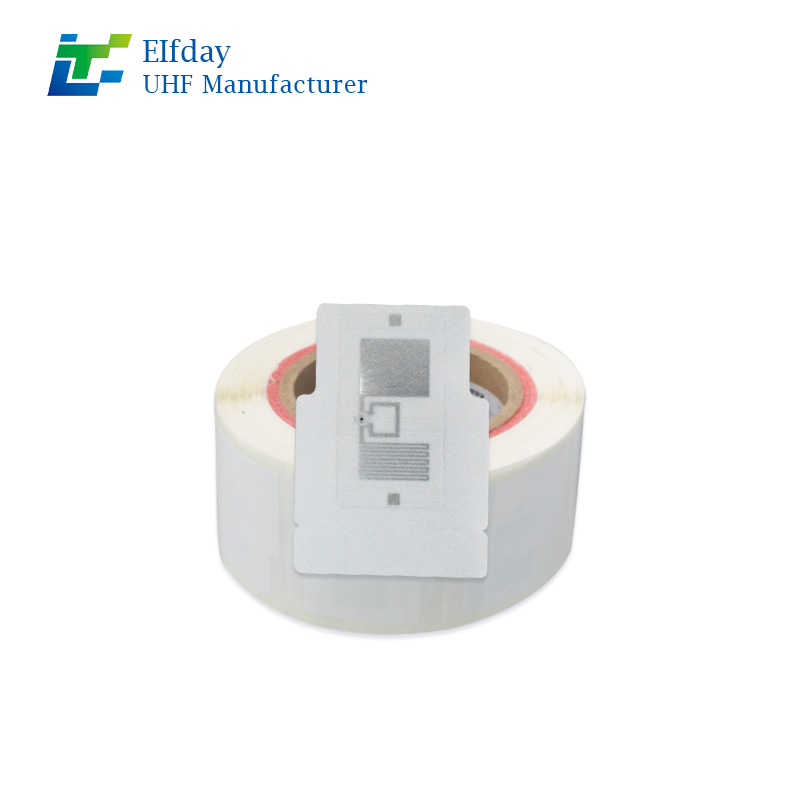
RFID Tags for Individual Products
Item-level RFID tagging provides the highest level of inventory detail.
Each product receives its own unique RFID identity.
This can be useful for:
-
Retail products
-
High-value items
-
Electronics
-
Pharmaceuticals
-
Apparel
-
Specialized equipment
However, item-level tagging also increases the number of tags that need to be managed.
How Does RFID Help Verify Incoming Shipments?
One of the most useful applications of RFID in warehouse receiving is shipment verification.
Suppose a warehouse expects a shipment containing 200 tagged cartons.
The receiving system can compare the RFID tags detected at the dock with the expected shipment information.
The system may identify:
Expected: 200 cartons
Detected: 198 cartons
This discrepancy can prompt employees to investigate before confirming receipt.
Alternatively:
Expected: 200 cartons
Detected: 205 cartons
The warehouse can investigate the additional items and determine whether they belong to another shipment.
This creates an additional layer of inventory control.
Can RFID Detect Damaged Products?
RFID itself does not automatically determine whether a physical product is damaged.
An RFID tag can identify the item, but damage inspection generally requires a separate visual or automated inspection process.
However, RFID can help associate inspection results with the correct product, carton, or pallet.
For example:
RFID identifies item → employee inspects item → condition is recorded → inventory status is updated
This can create a more connected receiving workflow.
RFID Receiving vs. Barcode Scanning
RFID and barcodes can both be used in warehouse receiving, but they work differently.
| Feature | RFID | Barcode |
| Line of sight | Usually not required | Usually required |
| Multiple-item reading | Yes, depending on system | Usually one at a time |
| Manual scanning | Can be reduced | Usually required |
| Read distance | Can be longer | Usually short |
| Identification speed | High for bulk reading | Depends on operator |
| Tag visibility | Can be hidden | Code generally needs to be visible |
| Tag cost | Usually higher | Usually lower |
| Data capacity | Can support electronic memory | Usually stores an encoded identifier |
| Automation potential | High | Moderate to high with additional automation |
This does not mean RFID completely replaces barcodes.
Many warehouses continue to use both technologies because barcodes are inexpensive and widely supported, while RFID can provide additional automation and visibility.
What Are the Benefits of RFID in Warehouse Receiving?
1. Faster Shipment Identification
RFID can identify multiple tagged items without requiring each item to be individually scanned.
This can reduce the time required to process large shipments.
2. Less Manual Scanning
Employees may spend less time locating and scanning individual barcodes.
This can be particularly useful during high-volume receiving periods.
3. Better Receiving Visibility
RFID can provide a digital record of which tagged items entered the receiving area and when they were detected.
This can help warehouse teams understand inventory movement.
4. Improved Receiving Accuracy
Automated identification can reduce some manual entry and scanning errors.
However, RFID does not automatically guarantee perfect inventory accuracy. Tag placement, reader configuration, interference, and system integration still matter.
5. Faster Inventory Updates
When RFID receiving is integrated with warehouse software, inventory records can be updated more quickly after goods arrive.
This can help downstream teams access more current inventory information.
6. Easier Exception Detection
The system can compare expected and detected items and flag potential discrepancies.
This can help employees focus their attention on exceptions rather than manually checking every item.
Where Should RFID Readers Be Installed?
The location of RFID readers has a major effect on receiving performance.
Common locations include:
Dock Doors
Fixed readers can be positioned around receiving dock doors to identify tagged shipments as they enter the facility.
Receiving Lanes
A dedicated RFID reading zone can provide a controlled environment for shipment verification.
Conveyor Systems
If cartons move through a conveyor, RFID readers can identify tagged items automatically as they pass the reading point.
Receiving Stations
A handheld or fixed reader can be used at a specific inspection or receiving workstation.
Staging Areas
RFID can help monitor goods temporarily placed in staging areas before put-away.
The ideal configuration depends on warehouse layout, product flow, tag orientation, reader antenna placement, and required read accuracy.
What Factors Affect RFID Receiving Performance?
RFID receiving does not depend only on the reader.
Several factors can influence performance.
Tag Placement
A poorly positioned tag may be difficult to read.
Tags should be positioned consistently when possible.
Tag Orientation
RFID antennas have directional characteristics, and tag orientation can influence read performance.
Metal
Metal surfaces can interfere with RFID performance.
For metal pallets, containers, machinery, or equipment, specialized on-metal RFID tags may be necessary.
Liquids
Products containing significant amounts of liquid can affect UHF RFID performance.
Tag placement and antenna design should be tested with the actual products.
Tag Density
When many tagged items are packed closely together, the RFID system needs to be designed to reliably identify all relevant tags.
Reader Configuration
Reader power, antenna placement, antenna polarization, and reading zones can all influence system performance.
How to Set Up RFID for Warehouse Receiving
A practical RFID receiving project can follow several steps.
Step 1: Define the Receiving Workflow
Document how products currently move through the warehouse.
Identify:
-
Where shipments arrive
-
Where they are unloaded
-
Where they are inspected
-
Where they are staged
-
Where they enter storage
Step 2: Decide the Tagging Level
Determine whether RFID tags should be applied to:
-
Products
-
Cartons
-
Pallets
-
Containers
Step 3: Select Suitable Tags
Consider:
-
Product material
-
Tag size
-
Required read range
-
Environmental conditions
-
Metal exposure
-
Liquid exposure
-
Adhesive requirements
Step 4: Design the Reading Area
Determine where RFID antennas and readers should be installed.
The reading area should be designed to minimize unwanted reads from nearby inventory.
Step 5: Integrate With Warehouse Software
RFID data becomes much more useful when it is connected to the warehouse management system.
The software can associate tag IDs with:
-
Purchase orders
-
Shipment records
-
Product records
-
Inventory locations
-
Receiving status
Step 6: Test With Real Shipments
Testing should use the actual products, packaging, pallets, and receiving conditions.
A laboratory test with an isolated RFID tag may not accurately represent warehouse conditions.
Step 7: Monitor Exceptions
After deployment, monitor:
-
Missed reads
-
Duplicate reads
-
Unexpected reads
-
False reads
-
Tag failures
-
Reader coverage
Use these results to refine the system.
Best Practices for RFID Warehouse Receiving
Use Consistent Tag Placement
When possible, establish a standard position for RFID tags.
This makes reading behavior more predictable.
Separate Receiving and Storage Reading Zones
If receiving and storage areas are too close, readers may detect tags that are not part of the current shipment.
Clear reading zones can help reduce unwanted reads.
Test Different Product Types
Do not assume one tag design will work equally well across all products.
Test products containing:
-
Liquids
-
Metal
-
Dense materials
-
Glass
-
Electronics
Keep RFID Data Connected to Inventory Records
An RFID reader only provides identification data.
The warehouse system needs to interpret that data and connect it to useful inventory information.
Maintain a Barcode Backup
For some warehouses, keeping barcode identification available as a backup can be useful when an RFID tag is damaged, missing, or unreadable.
Common Challenges With RFID Receiving
Missed Reads
A tag may not be detected because of orientation, shielding, distance, material interference, or poor reader placement.
Unwanted Reads
A reader may detect tags from nearby inventory that should not be included in the current receiving transaction.
Tag Damage
Tags can be damaged during transportation or handling.
Product Interference
Metal and liquids can change RFID performance.
Integration Problems
RFID data needs to be properly connected to warehouse management and inventory systems.
A technically successful RFID reader installation is not enough if the data cannot be used effectively.
Frequently Asked Questions
Can RFID tags speed up warehouse receiving?
Yes. RFID can reduce manual scanning by allowing readers to identify multiple tagged items within a suitable reading area.
Can RFID read multiple products at the same time?
Yes. Many RFID systems are designed to identify multiple tags during a single reading operation, although the actual number and reliability depend on the system and environment.
Do RFID tags need to be visible during receiving?
No. RFID tags generally do not require direct visual access in the same way as barcodes. However, materials around the tag can affect RF performance.
Can RFID be used for pallet receiving?
Yes. Pallet-level RFID is a common use case for warehouse receiving and shipment tracking.
Can RFID replace barcodes in a warehouse?
RFID can replace barcode scanning in some workflows, but many warehouses use RFID and barcodes together. The appropriate approach depends on cost, infrastructure, product characteristics, and operational requirements.
Can RFID identify missing items during receiving?
RFID can help identify discrepancies between expected and detected items. It does not physically locate every missing item by itself, but it can provide useful information for investigating receiving differences.
Do RFID tags work on metal pallets?
Standard RFID labels may not perform well directly on metal. Specialized on-metal RFID tags may be needed.
Do liquids affect RFID receiving?
Yes. Liquids, especially water-rich products, can affect UHF RFID performance. Tag selection and placement should be tested using the actual product.
RFID tags can make warehouse receiving more automated by identifying incoming products, cartons, pallets, and containers without requiring every item to be individually scanned.
A typical RFID receiving workflow can connect physical goods with digital inventory records:
Shipment arrival → RFID identification → Shipment verification → Inventory update → Put-away
The main benefits can include faster receiving, reduced manual scanning, better shipment visibility, and easier detection of discrepancies.
However, successful RFID receiving depends on more than installing readers. Tag placement, product materials, tag density, reader configuration, antenna positioning, warehouse layout, and software integration all affect performance.
For the best results, test RFID tags with the actual products and receiving workflow before full deployment. This helps determine whether the selected tags and reader configuration can deliver the reliability and reading performance required by the warehouse.