




Can RFID Tags Be Used in Cold Storage and Freezers?
Yes, RFID tags can be used in cold storage and freezers, including refrigerated warehouses, frozen-food facilities, pharmaceutical cold chains, and temperature-controlled logistics. However, not every RFID tag is suitable for low-temperature environments.
Cold temperatures can affect the adhesive, substrate, protective materials, and overall durability of an RFID tag. Moving products between warm and cold environments can also create condensation, frost, and repeated temperature changes that may affect long-term performance.
For reliable operation, the RFID tag should be selected according to the actual temperature range, moisture conditions, mounting surface, packaging material, and required read performance.
How Do Cold Temperatures Affect RFID Tags?
Low temperatures can affect different parts of an RFID tag in different ways.
Potential issues include:
-
Adhesive becoming less flexible
-
Reduced bonding strength
-
Material becoming brittle
-
Cracking during temperature changes
-
Condensation forming on the tag
-
Frost or ice accumulating around the tag
-
Changes in packaging materials
-
Reduced durability during repeated freezing and thawing
The RFID chip and antenna may continue to function at low temperatures, while the materials holding the tag in place may become the main limitation.
This is why cold resistance is a property of the complete RFID tag, not just the RFID chip.
Are RFID Tags Suitable for Freezers?
Many RFID tags can be used in freezer environments when their materials and construction are appropriate for the temperature range.
Freezer applications may involve temperatures below the normal operating range of standard indoor RFID labels. A tag designed for general warehouse use may not have the same adhesive or material performance under prolonged freezing conditions.
For freezer applications, consider:
-
Minimum operating temperature
-
Minimum storage temperature
-
Exposure duration
-
Condensation
-
Frost and ice
-
Freezing and thawing cyclesa
-
Packaging material
-
Required read distance
A tag that works well in a refrigerated warehouse is not automatically suitable for a deep-freezing application.
What Are Cold-Resistant RFID Tags?
Cold-resistant RFID tags are designed to maintain their physical integrity and required RFID performance under low-temperature conditions.
Depending on the application, they may use:
-
Cold-resistant adhesives
-
Durable synthetic substrates
-
Protective films
-
Encapsulated construction
-
Rugged housings
-
Materials designed for repeated temperature changes
The exact design depends on whether the tag is intended for short-term freezer exposure, long-term frozen storage, refrigerated transport, or repeated freeze-thaw cycles.
Does Cold Affect RFID Read Range?
Cold temperatures do not necessarily prevent RFID communication, but environmental conditions associated with cold storage can affect reading performance.
Potential factors include:
-
Frost or ice
-
Condensation
-
Product packaging
-
Metal storage racks
-
Liquid-containing products
-
Tag orientation
-
Distance from the reader
-
Changes in the tag's physical structure
For example, frozen products may be densely packed in cartons or pallets. This can make it harder for a reader to identify individual tags, particularly when products contain liquids or are surrounded by metal structures.
The RFID system should therefore be tested in the actual cold-storage configuration rather than evaluated only at room temperature.
Condensation Can Be a Bigger Problem Than Cold
Temperature changes can create condensation.
For example:
Warm warehouse → Cold storage → Frozen environment → Warm staging area
When products move between these environments, moisture may condense on packaging and RFID tags.
Repeated condensation can contribute to:
-
Adhesive degradation
-
Label peeling
-
Moisture penetration
-
Surface contamination
-
Material changes
-
Reduced durability
This means a tag designed only for a stable low-temperature environment may not perform the same way when products repeatedly move between warm and cold areas.
Can RFID Tags Be Attached to Frozen Products?
Yes. RFID tags can be attached to frozen food packages, cartons, containers, pallets, and reusable transport equipment.
However, the attachment method is important.
Cold surfaces can make adhesives behave differently from their performance at room temperature. If a tag is applied directly to a cold or frosted surface, the initial bond may be weaker.
When tagging frozen products, consider:
-
Surface temperature during application
-
Whether the surface is dry
-
Presence of frost or ice
-
Packaging material
-
Adhesive type
-
Expected storage duration
-
Temperature cycling
For long-term tracking, the tag should be tested after application under actual freezing conditions.
RFID Tags for Refrigerated Warehouses
Refrigerated storage generally presents a different environment from deep-freezing.
Typical refrigerated applications can include:
-
Fresh food
-
Dairy products
-
Meat
-
Seafood
-
Fruits and vegetables
-
Beverages
-
Pharmaceuticals
-
Temperature-sensitive ingredients
The temperature may be above the freezing point, but high humidity and condensation can still be important concerns.
In these environments, moisture resistance and adhesive durability may be just as important as low-temperature resistance.
RFID Tags for Frozen Food
Frozen-food operations can use RFID to identify and track products throughout storage and distribution.
Potential applications include:
-
Frozen food cartons
-
Individual packages
-
Cases
-
Pallets
-
Reusable containers
-
Cold-room inventory
-
Distribution center inventory
RFID can provide an electronic identity for products and containers, allowing readers to identify tagged items without requiring direct visual scanning.
However, tag placement should be considered carefully when frozen products contain water-rich food or liquids, because these materials can affect UHF RFID performance.
How Does Packaging Affect RFID in Freezers?
Packaging can have a significant effect on RFID performance.
Common packaging materials include:
-
Cardboard
-
Plastic
-
Glass
-
Metalized films
-
Foil
-
Plastic trays
-
Insulated containers
Cardboard and many plastics are generally easier RFID surfaces, while metal and metalized materials can create additional challenges.
Frozen food packaging may also contain moisture or ice, which can change the RF environment around the tag.
This is why the final packaged product should be tested rather than testing the RFID tag by itself.
Can RFID Tags Work on Metal in Cold Storage?
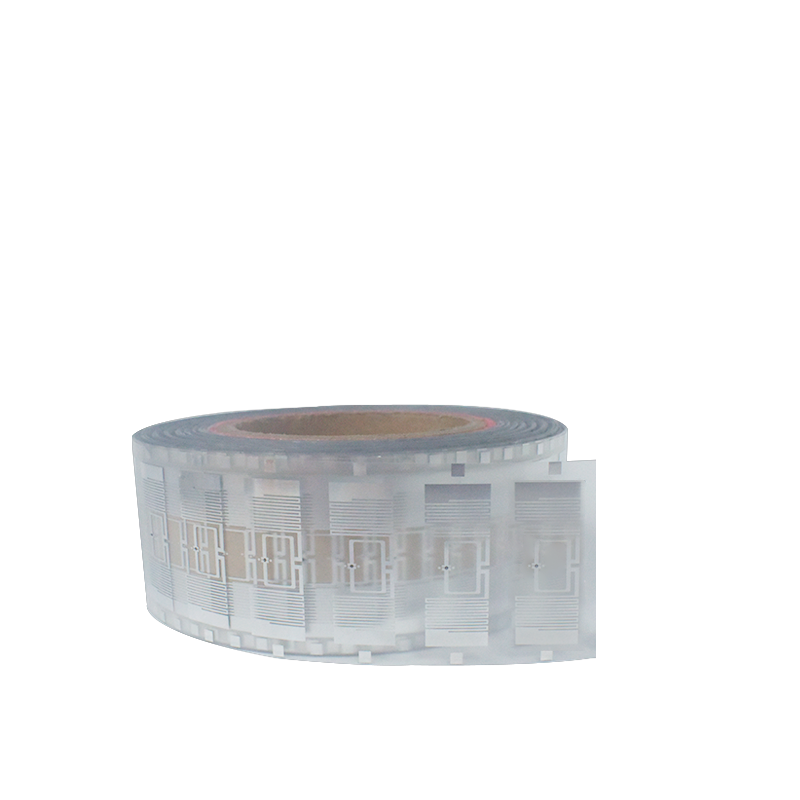
Yes, but conventional RFID labels may not perform well when attached directly to metal.
Cold-storage facilities can contain:
-
Metal racks
-
Steel containers
-
Refrigeration equipment
-
Metal pallets
-
Industrial carts
-
Freezer doors
If the tag is attached directly to a metal surface, an on-metal RFID tag may be required.
An on-metal design creates a suitable RF structure between the RFID antenna and the conductive surface, helping the tag maintain more predictable performance.
Temperature and metal are therefore two separate design considerations:
Cold-resistant construction + suitable RFID design for the mounting surface
Do RFID Adhesives Work in Freezers?
Some adhesives are specifically formulated for low-temperature applications, while standard label adhesives may lose performance when exposed to freezing conditions.
Potential adhesive problems include:
-
Reduced initial tack
-
Peeling
-
Cracking
-
Loss of bonding strength
-
Edge lifting
-
Failure after repeated freeze-thaw cycles
Application conditions matter as well.
An adhesive applied to a dry surface at room temperature may perform differently from the same adhesive applied to a cold, wet, or frosted surface.
For this reason, the adhesive should be evaluated under the actual application and storage conditions.
What About Repeated Freezing and Thawing?
Repeated temperature cycling can be more demanding than constant cold exposure.
A product may move through a process such as:
Room temperature → Refrigeration → Freezing → Frozen storage → Thawing → Processing
Each temperature transition can create mechanical stress in the tag materials and adhesive.
Repeated cycles may eventually cause:
-
Delamination
-
Cracking
-
Adhesive failure
-
Material deformation
-
Housing damage
If products repeatedly freeze and thaw, the RFID tag should be tested through the expected number of cycles rather than tested only at the minimum temperature.
Can RFID Tags Be Used in Pharmaceutical Cold Chains?
Yes. RFID tags can be used to identify pharmaceutical products, containers, cases, pallets, and reusable transport assets in temperature-controlled supply chains.
Cold-chain environments may involve:
-
Refrigerated storage
-
Frozen storage
-
Temperature-controlled transport
-
Loading and unloading
-
Temporary staging
-
Repeated temperature transitions
For these applications, the RFID tag needs to remain attached and readable throughout the required logistics process.
If temperature monitoring is also required, it is important to distinguish between a conventional RFID identification tag and a sensor-enabled RFID device. A standard passive RFID tag identifies an item but does not automatically measure its temperature.
Passive RFID vs Active RFID in Cold Environments
Most basic inventory applications use passive RFID tags because they do not require an internal battery.
Passive RFID tags receive energy from the reader and respond with their stored identification information.
Active RFID systems use batteries and may include additional sensing or communication capabilities.
For cold environments, battery performance can become an additional consideration for active systems because low temperatures can affect battery behavior.
Therefore, the choice between passive and active RFID depends on the application requirements rather than temperature alone.
How to Choose RFID Tags for Cold Storage
Before selecting a tag, answer several practical questions.
1. What Is the Minimum Temperature?
Identify the lowest temperature the tag will experience.
Do not rely only on the general term "cold storage." Refrigerated and frozen environments can have very different temperature requirements.
2. How Long Will the Tag Stay Cold?
A short exposure is different from continuous storage.
Determine whether the tag will experience:
-
Minutes
-
Hours
-
Days
-
Weeks
-
Months
3. Will the Tag Freeze and Thaw?
If the product repeatedly moves between different temperature zones, include these cycles in the testing process.
4. Will Condensation Occur?
Consider whether the tag will move from a warm environment into a cold room or freezer.
5. What Is the Mounting Surface?
Determine whether the tag will be attached to:
-
Cardboard
-
Plastic
-
Glass
-
Metal
-
Film
-
Containers
-
Pallets
6. How Far Away Will the Reader Be?
Required read distance can influence tag selection and antenna design.
7. Will the Product Contain Liquids?
Water-rich products can affect UHF RFID performance. Tag placement may need to be adjusted to maintain reliable reads.
How to Test RFID Tags in Cold Storage
A practical cold-environment test can follow this process:
Select candidate tag → Attach to actual product → Record baseline reads → Expose to actual cold conditions → Perform temperature cycling → Inspect the tag → Test RFID performance again
During testing, check:
-
Tag adhesion
-
Surface condition
-
Cracking
-
Delamination
-
Frost accumulation
-
Housing integrity
-
Read distance
-
Read consistency
-
Performance after thawing
Testing should ideally use the actual packaging, mounting surface, reader, and storage configuration.
Common Mistakes When Using RFID Tags in Freezers
Using Standard Paper Labels
A conventional paper RFID label may not be designed for prolonged freezing, moisture, or condensation.
Ignoring the Adhesive
The RFID electronics may continue to work while the label falls off the product.
Testing Only at Room Temperature
A tag that performs well at 20°C may behave differently under freezing conditions.
Ignoring Freeze-Thaw Cycles
Repeated temperature changes can create mechanical stress that does not appear during a single freezing test.
Overlooking Product Contents
Water-rich frozen products can affect UHF RFID communication.
Ignoring Metal
Metal racks, containers, and equipment can affect tag performance even when the tag itself is cold resistant.
Cold Storage RFID Tag Selection Checklist
Before deployment, consider the following:
| Requirement | Question |
| Temperature | What is the minimum temperature? |
| Exposure | How long will the tag remain cold? |
| Cycling | Will it repeatedly freeze and thaw? |
| Moisture | Will condensation or frost occur? |
| Adhesive | Can the adhesive maintain bonding strength? |
| Surface | Is the tag mounted on plastic, cardboard, glass, or metal? |
| Product | Does the product contain liquids? |
| Read range | How far away is the reader? |
| Durability | Will the tag be handled or damaged? |
| Testing | Has the finished product been tested under actual conditions? |
Frequently Asked Questions
Can RFID tags work below freezing?
Yes. RFID tags designed for low-temperature applications can operate or remain functional below freezing, depending on their materials, construction, and specified temperature range.
Can RFID tags be used in frozen food warehouses?
Yes. RFID can be used to identify frozen products, cases, pallets, containers, and other assets. The tag should be selected for the warehouse's temperature, humidity, packaging, and handling conditions.
Do RFID tags stop working in freezers?
Not necessarily. Low temperature alone does not mean that an RFID tag will stop communicating. However, unsuitable adhesives, materials, condensation, frost, packaging, or mounting conditions can reduce reliability.
Can RFID labels stick to frozen products?
Some RFID labels use adhesives designed for cold applications. Standard label adhesives may have difficulty bonding to cold, wet, or frosted surfaces, so application conditions should be tested.
Does ice affect RFID tags?
Ice and moisture can change the RF environment around a tag and may affect reading performance depending on the RFID frequency, tag design, product, and placement.
Can RFID tags survive freeze-thaw cycles?
Some rugged RFID tags can be designed for repeated freeze-thaw exposure. The complete tag, including the adhesive and protective materials, should be tested through the expected temperature cycles.
Are RFID tags suitable for cold-chain logistics?
Yes. RFID tags can support identification and tracking throughout refrigerated and frozen supply chains, provided that the tag construction and read performance are suitable for the operating environment.
RFID tags can be used in cold storage and freezers, but the tag needs to be selected for the actual low-temperature and moisture conditions. Cold-resistant materials, suitable adhesives, protective construction, and appropriate RFID antenna designs can help maintain reliable identification in refrigerated and frozen environments.
The most important factors are the minimum temperature, exposure duration, condensation, freeze-thaw cycles, mounting surface, product contents, adhesive performance, and required read range.
For demanding cold-chain applications, testing the RFID tag on the actual product or container under real freezer conditions is the best way to verify long-term reliability.