



Does RFID Tag Size Affect Read Range? What You Need to Know
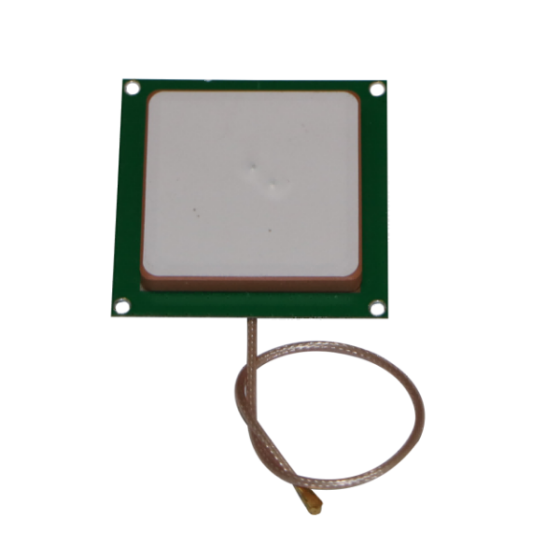
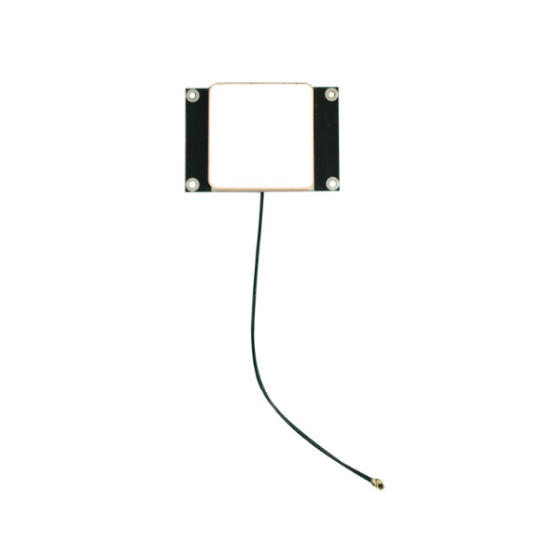
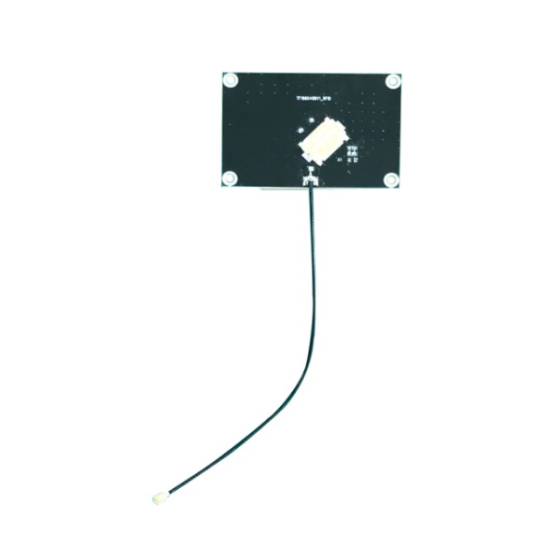
Yes, RFID tag size can affect read range, but size alone does not determine how far an RFID tag can be read.
The physical dimensions of an RFID tag influence the amount of space available for its antenna. Antenna size, shape, tuning, RFID frequency, reader power, tag orientation, and surrounding materials can all affect how effectively the tag communicates with the reader.
In general, a larger RFID tag may have more room for an antenna designed for longer-range communication. A smaller tag may have a shorter practical read range, particularly when its antenna must be significantly reduced to fit a compact product.
However, a small RFID tag can still perform well when it is properly designed and used in a suitable application.
Why Does RFID Tag Size Affect Read Range?
An RFID tag typically consists of several basic elements:
-
RFID chip
-
Antenna
-
Substrate
-
Protective material or adhesive layer
The RFID chip processes and stores information, while the antenna is responsible for interacting with the reader's RF signal.
The physical size of the tag places practical limits on the antenna's dimensions and design.
A simplified relationship is:
Tag size → antenna design → RF interaction → read performance
This does not mean that making an RFID tag larger automatically increases its read range.
Instead, a larger physical area can give the antenna designer more flexibility to create an antenna that performs effectively at the intended RFID frequency.
Does a Larger RFID Tag Always Have a Longer Read Range?
No.
Tag size is only one variable in RFID performance.
Two RFID tags with similar dimensions can have very different read ranges because their antenna designs, chips, materials, and operating conditions may differ.
For example:
| Factor | Potential Effect on Read Range |
|---|---|
| Tag size | Determines available space for antenna design |
| Antenna design | Strong influence on RF performance |
| RFID frequency | Determines operating characteristics |
| Reader power | Affects available RF energy |
| Reader antenna | Influences the RF field |
| Tag orientation | Can affect signal coupling |
| Mounting surface | Metal and liquids can affect performance |
| Environment | Can introduce interference or signal loss |
Therefore, RFID tag size should be considered together with the rest of the system.
How RFID Antenna Size Relates to Tag Size
The antenna is usually one of the largest components of an RFID inlay.
A larger tag can provide more physical space for the antenna.
This can make it easier to design an antenna that achieves the desired electrical characteristics at a particular frequency.
For example:
Larger tag
→ more antenna design space
→ potentially more effective RF performance
→ potentially greater practical read range
By comparison:
Smaller tag
→ less antenna space
→ greater design constraints
→ potentially reduced read range
But these are general relationships rather than absolute rules.
A well-designed compact RFID tag can outperform a poorly designed larger tag under certain conditions.
Why Small RFID Tags May Have Shorter Read Ranges
Miniaturizing an RFID tag creates several design challenges.
The antenna has less physical space, and reducing its dimensions can make it more difficult to achieve the desired electrical characteristics.
This becomes especially important for UHF RFID applications where antenna performance is closely connected to the operating wavelength.
A small tag may therefore be optimized for:
-
Compact size
-
Product-level identification
-
Shorter reading distances
-
Small packaging
-
Limited mounting space
Rather than maximum read range.
This is often an intentional design trade-off.
Small RFID Tags vs. Large RFID Tags
The right tag size depends on the application.
| Characteristic | Smaller RFID Tag | Larger RFID Tag |
|---|---|---|
| Physical footprint | Compact | Larger |
| Installation flexibility | High | Moderate |
| Antenna design space | More limited | Greater |
| Potential read range | Often shorter | Can be longer |
| Small product compatibility | Excellent | May be difficult |
| Asset tracking | Depends on application | Often suitable |
| Large packaging | Suitable | Suitable |
| Metal applications | Requires appropriate design | More design space |
The table describes general tendencies, not guaranteed performance.
What Is the Relationship Between RFID Tag Size and Frequency?
RFID tags operate at different frequency ranges, and the relationship between physical size and antenna design depends heavily on the frequency.
Common RFID categories include:
-
LF RFID
-
HF RFID
-
UHF RFID
The wavelength at the operating frequency influences antenna design.
For UHF RFID, tags are often designed around electromagnetic far-field communication. Their antenna dimensions are therefore closely related to the operating frequency and desired electrical characteristics.
At lower frequencies, different antenna and coupling principles apply.
As a result, the statement that "larger RFID tags always read farther" cannot be applied universally across all RFID technologies.
Does RFID Tag Thickness Affect Read Range?
Tag thickness and tag size are different factors.
Increasing thickness does not automatically produce a longer read range.
In many RFID applications, the antenna's physical dimensions and electrical design are more important than simply making the tag thicker.
However, thickness can become relevant when additional materials are used to separate the antenna from a mounting surface.
For example, an RFID tag mounted on metal may require a particular construction that creates spacing or uses a specialized antenna structure.
Therefore:
Physical thickness ≠ automatically greater read range
The tag's overall construction and application environment matter more.
Does Tag Size Matter When RFID Tags Are Mounted on Metal?
Yes, but the issue is more complicated than simple tag dimensions.
Metal can interfere with the operation of standard RFID tags.
When an RFID tag is intended to be attached directly to metal, an on-metal RFID tag is typically designed specifically for that environment.
Its antenna structure may be engineered to work with the metal surface rather than simply being a conventional tag made larger.
In this situation, important considerations include:
-
Tag dimensions
-
Antenna structure
-
Metal surface size
-
Spacing
-
Mounting position
-
Operating frequency
-
Required read distance
A larger on-metal tag may provide more room for antenna optimization, but the actual performance must still be tested on the intended metal asset.
Does Tag Size Affect RFID Read Range on Liquids?
Liquids can also influence RFID performance, particularly for UHF RFID.
A tag attached directly to or positioned very close to certain liquids may experience reduced performance because the surrounding material can affect the RF field.
Increasing tag size does not automatically eliminate this problem.
Depending on the application, the solution may involve:
-
Choosing a different tag design
-
Changing the mounting position
-
Increasing separation from the liquid
-
Selecting a tag designed for the application
-
Testing different antenna configurations
This is why tag selection should always consider the actual product and mounting surface.
How Much Does RFID Tag Size Affect Read Distance?
There is no single percentage or fixed distance that applies to all RFID tags.
For example, doubling the physical dimensions of a tag does not mean that the read range will automatically double.
RFID read range depends on multiple interacting variables.
A useful way to think about it is:
Read range = tag performance + reader performance + antenna configuration + environment
Tag size contributes to tag performance, but it is not the only variable.
Other Factors That Affect RFID Read Range
1. Reader Power
The reader generates the RF signal used to communicate with the tag.
Higher permitted reader power can increase the usable reading distance in some systems, but regulatory limits and application requirements still apply.
2. Reader Antenna
Reader antenna design and placement have a major influence on the RF field.
Even a high-performance tag may perform poorly if the reader antenna is incorrectly positioned.
3. Tag Orientation
As discussed in RFID system design, the orientation of the tag relative to the reader antenna can affect performance.
A tag that performs well when properly aligned may have reduced performance when rotated significantly.
4. Mounting Surface
The material behind the tag can have a major impact.
Cardboard and many plastics are generally easier environments for standard UHF RFID tags than metal or certain liquid-filled products.
5. Operating Frequency
RFID frequency affects antenna design, propagation characteristics, and typical reading distances.
6. Environmental Interference
Nearby RF sources, metal structures, dense products, and other environmental factors can influence performance.
How to Choose the Right RFID Tag Size
Instead of starting with the question:
How large should the RFID tag be?
start with:
What reading performance does the application require?
Then consider the physical constraints.
Step 1: Define the Required Read Distance
Determine whether the tag needs to be read from:
-
A few centimetres
-
Around one metre
-
Several metres
-
A warehouse portal
-
A conveyor system
-
A fixed reader installation
Step 2: Measure the Available Mounting Area
Determine the maximum tag dimensions that can fit on the product.
Step 3: Identify the Product Material
Ask whether the tag will be attached to:
-
Cardboard
-
Plastic
-
Glass
-
Wood
-
Metal
-
Liquid-containing packaging
-
Fabric
Step 4: Consider Tag Orientation
Determine whether the tag will remain fixed or rotate during handling.
Step 5: Test the Complete System
Test the actual tag on the actual product using the intended reader and antenna configuration.
This final step is particularly important because theoretical specifications cannot fully reproduce every real-world installation.
Example: Small RFID Tags on Retail Products
Consider a small retail item where there is only a limited area for an RFID label.
A large tag may provide more antenna design space, but it could cover too much of the product or interfere with packaging.
A smaller RFID tag may therefore be a better practical choice.
The system could compensate through:
-
Appropriate reader placement
-
Suitable antenna selection
-
Optimized tag positioning
-
Correct reader settings
-
Testing at the required distance
The goal is not necessarily to use the largest possible RFID tag.
The goal is to find the smallest practical tag that provides reliable performance for the application.
Example: RFID Tags for Large Industrial Assets
Now consider a large metal equipment enclosure.
There may be plenty of physical space for an RFID tag, but the metal surface becomes a critical consideration.
In this case, an appropriately designed on-metal tag may be more important than simply selecting a larger standard tag.
The selection process might look like:
Large metal asset
↓
Identify required read distance
↓
Select suitable on-metal RFID tag
↓
Choose mounting position
↓
Test different orientations
↓
Validate read reliability
This illustrates why tag size and application environment must be considered together.
Is a Small RFID Tag Better for Small Products?
Not necessarily, but it is often more practical.
For small products, a compact tag can provide advantages such as:
-
Easier installation
-
Less visual impact
-
More flexible placement
-
Compatibility with smaller packaging
-
Lower physical footprint
The trade-off is that reducing tag size can place greater constraints on antenna design.
Therefore, the smallest available RFID tag is not automatically the best choice.
Is a Larger RFID Tag Better for Long-Range Reading?
A larger tag can provide more room for an antenna designed for longer-range performance, particularly in applications where physical space is available.
However, long-range performance still depends on:
-
Tag antenna efficiency
-
Reader power
-
Reader antenna gain and configuration
-
Tag orientation
-
Operating frequency
-
Mounting material
-
Environmental conditions
A large tag is therefore not a guarantee of long read range.
Common Misconceptions About RFID Tag Size
Misconception 1: Bigger Always Means Better
A larger tag may offer more antenna design space, but bigger does not automatically mean better.
The appropriate size depends on the application.
Misconception 2: A Small Tag Cannot Be Read From Far Away
Small RFID tags can still be read successfully at useful distances when they are properly designed and deployed.
Their practical range may be more limited than larger tags in some applications, but size alone does not determine performance.
Misconception 3: Read Range Depends Only on the Tag
RFID is a complete system.
The reader, antenna, tag, mounting surface, environment, and configuration all contribute to the final result.
Misconception 4: Increasing Reader Power Solves Everything
Increasing reader power is not a universal solution.
The tag still needs to receive and respond to the RF signal effectively, and excessive power can introduce unwanted reads or other system issues.
FAQs
Does RFID tag size affect read range?
Yes. Tag size can influence the available antenna design and therefore affect read performance. However, RFID tag size is only one of several factors that determine read range.
Do larger RFID tags have a longer read range?
They can, but not necessarily. A larger tag may provide more space for antenna optimization, but antenna design, frequency, reader configuration, orientation, and materials also affect range.
Can small RFID tags have a long read range?
Yes. Properly designed small RFID tags can provide useful reading distances, although miniaturization can create greater antenna-design constraints.
What part of an RFID tag affects read range?
The antenna is particularly important because it interacts with the reader's RF signal. The chip, tag construction, operating frequency, and mounting environment also influence overall performance.
Does RFID tag shape affect read range?
Yes, potentially. Tag shape affects the available antenna geometry, which can influence electrical performance. Rectangular, circular, narrow, and specialty-shaped tags may use different antenna designs.
Does tag placement affect read range more than tag size?
It can. A well-sized tag can still perform poorly if it is mounted on an unsuitable material or in an unfavorable position. Placement, orientation, and surrounding materials should be considered alongside tag size.
Should I choose the largest RFID tag available?
No. Choose a tag size based on the required read distance, available mounting space, product material, orientation, environmental conditions, and overall system requirements.
RFID tag size can affect read range, but it is not the only factor that matters.
The size of an RFID tag influences the space available for its antenna, and antenna design plays an important role in how effectively the tag communicates with an RFID reader.
Larger tags can provide more design flexibility, while smaller tags are often useful when space is limited. However, the final reading distance also depends on RFID frequency, antenna design, reader configuration, tag orientation, mounting material, and the surrounding environment.
For this reason, RFID tag selection should not focus on size alone.
The most reliable approach is to choose a tag that fits the product and then test it with the actual reader, antenna, mounting surface, and operating conditions.
The right RFID tag is not necessarily the biggest or smallest one—it is the one that provides the required read performance while fitting the application's physical and environmental constraints.