



How Is Data Stored on an RFID Tag? A Simple Guide
How is data stored on an RFID tag? Data is stored digitally inside the memory of the RFID chip embedded in the tag. The chip uses electronic memory to hold information such as a unique identification number, product code, serial number, or other application-specific data. When an RFID reader sends a radio signal to the tag, the chip accesses its stored data and sends the information back to the reader.
This process allows RFID systems to identify objects without requiring direct line-of-sight scanning.
What Stores Data on an RFID Tag?
An RFID tag typically contains three main components:
-
RFID chip – Processes signals and stores digital information.
-
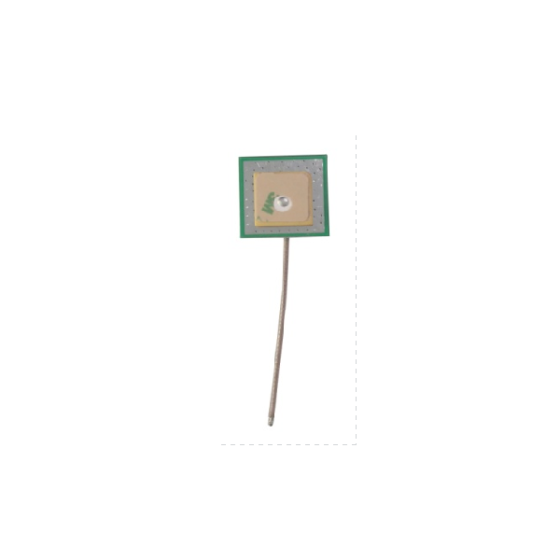
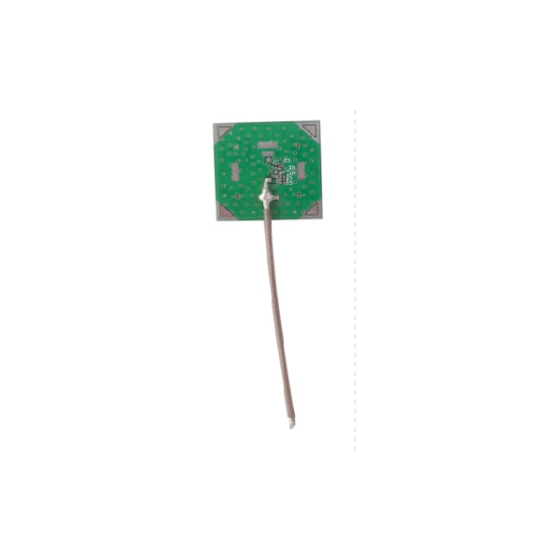
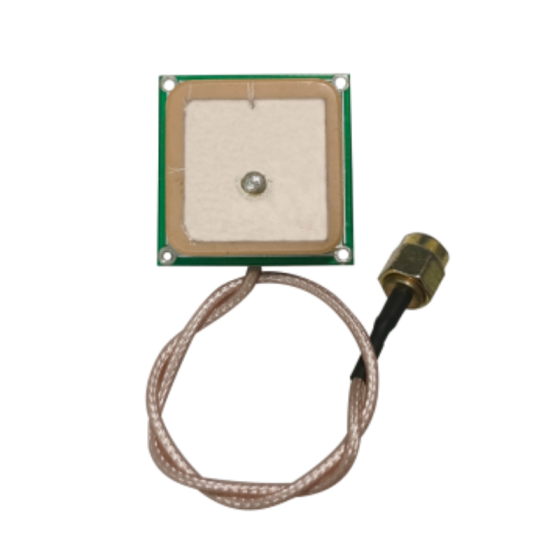
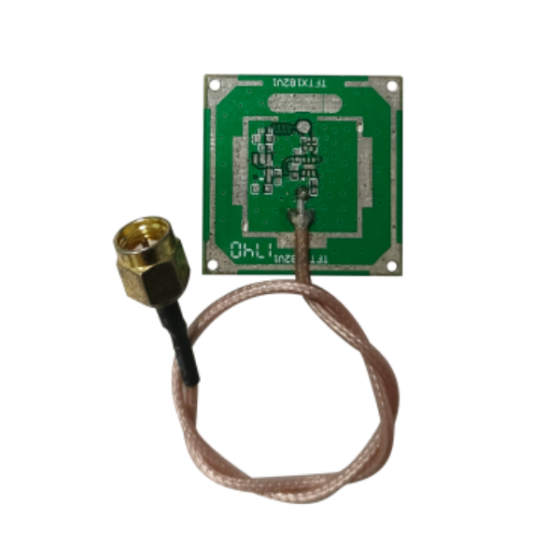
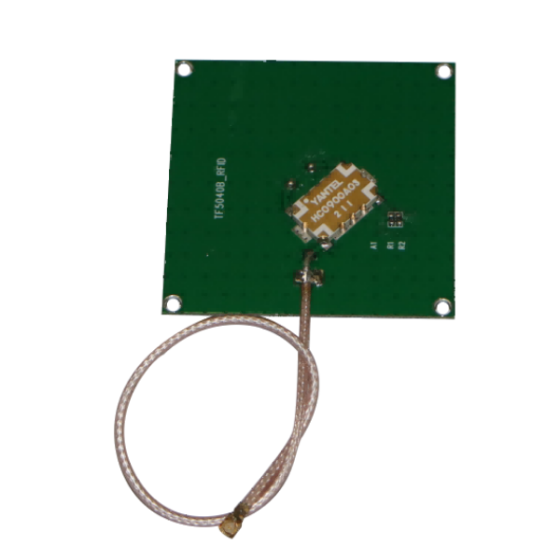
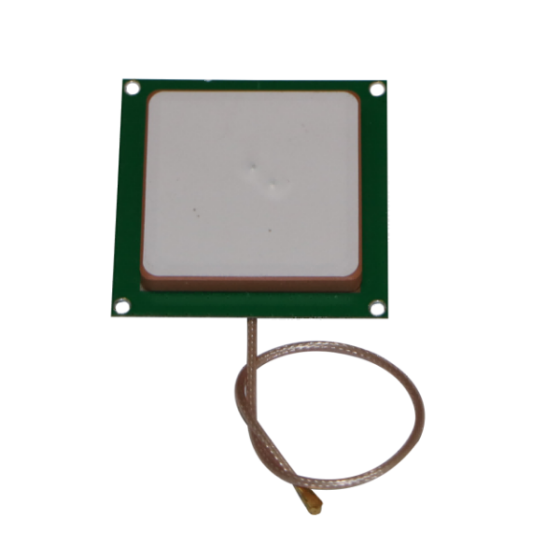
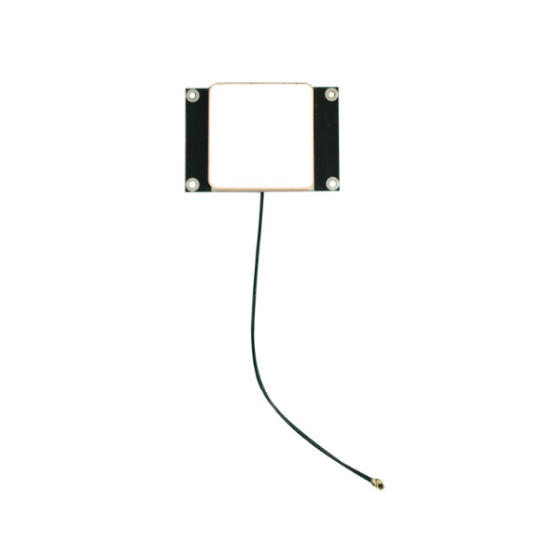
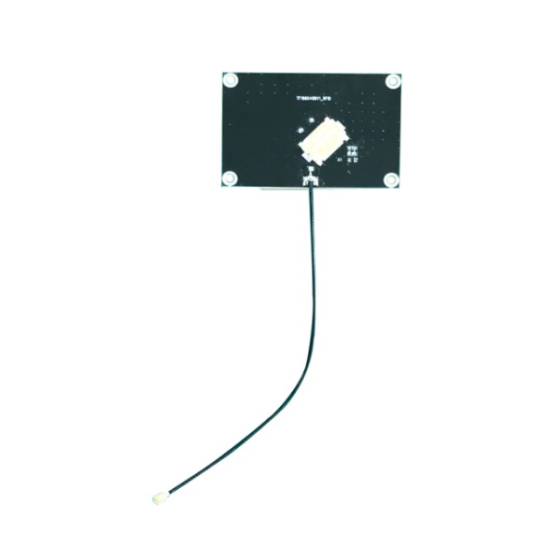
Antenna – Receives radio-frequency signals and communicates with the reader.
-
Substrate or tag material – Holds and protects the chip and antenna.
The RFID chip is the part responsible for storing data.
A simplified data flow looks like this:
RFID reader → radio signal → RFID antenna → RFID chip → stored data → reader
The antenna itself does not normally store the information. Instead, it acts as the communication interface between the chip and the RFID reader.
How Does an RFID Chip Store Data?
RFID chips use electronic memory to represent information as digital data. Depending on the chip design, this memory can contain different types of information.
For example, an RFID tag might store:
-
A unique tag identification number
-
Electronic Product Code (EPC)
-
Product number
-
Serial number
-
Asset identification
-
Batch or lot information
-
Manufacturing-related data
-
Other application-specific information
The amount of information that can be stored depends on the RFID chip and its available memory capacity.
A Simple Example
Imagine a warehouse uses RFID tags to identify individual equipment items.
One tag could contain information such as:
Asset ID: EQ-20485
Equipment Type: Forklift
Serial Number: FL-90872
When the RFID reader detects the tag, the chip sends this information back to the system.
The software can then associate the RFID data with the corresponding equipment record.
What Are RFID Memory Banks?
Many RFID chips divide their memory into different sections, often called memory banks.
For common UHF RFID systems, these can include:
| Memory Area | Typical Purpose |
|---|---|
| Reserved | Stores security-related information such as access or kill passwords |
| EPC | Stores an electronic product or item identifier |
| TID | Contains information associated with the RFID chip itself |
| User | Stores additional application-specific information |
Not every RFID tag has the same memory structure. Some tags have little or no user memory, while others provide additional writable memory for specific applications.
What Is Stored in the EPC Memory?
The EPC memory is commonly used to store an electronic identifier associated with the tagged item.
For example:
Product A → EPC: 3034A1B25C890001
The EPC does not necessarily contain every detail about the product.
Instead, it can function as a unique reference that allows the RFID system to identify the item and retrieve additional information from a database.
This approach is important because RFID tags generally have much less storage capacity than computers, servers, or databases.

Does an RFID Tag Store All Product Information?
Usually, no.
An RFID tag does not need to store an entire product record.
For example, a retail RFID tag might store only an identifier such as:
EPC: 300833B2DDD9014000000001
The RFID software can use that identifier to find additional information in a database, such as:
-
Product name
-
Size
-
Colour
-
Price
-
Supplier
-
Stock status
-
Location
-
Sales information
This creates a simple relationship:
RFID tag → unique identifier → database record
As a result, RFID systems can keep tags relatively small while still providing access to large amounts of product information.
Can RFID Tags Be Rewritten?
Some RFID tags can be rewritten, while others are designed primarily for fixed identification.
Writable RFID memory can allow authorized systems to update information stored on the tag.
For example, a reusable industrial RFID tag could have information updated as an asset moves through different stages of a process.
A simplified workflow might look like this:
Tag created → item receives tag → data is written → item moves through process → authorized system updates data
However, whether data can be changed depends on the RFID chip, tag configuration, and system permissions.
Read-Only vs. Writable RFID Memory
RFID tags can differ significantly in how their memory is used.
Read-Only RFID Tags
Read-only tags contain information that is not intended to be changed after production or encoding.
They can be useful when a permanent identification number is sufficient.
Writable RFID Tags
Writable tags contain memory that can be updated by an authorized RFID reader and system.
They are useful when information needs to change during an item's lifecycle.
Reusable RFID Tags
Some RFID tags are designed for repeated use. Their memory can be updated as the tagged object moves between processes, locations, or users.
This can be particularly useful for reusable containers, industrial assets, returnable transport items, and equipment.
How Does an RFID Reader Access Stored Data?
RFID data storage only becomes useful when the information can be retrieved.
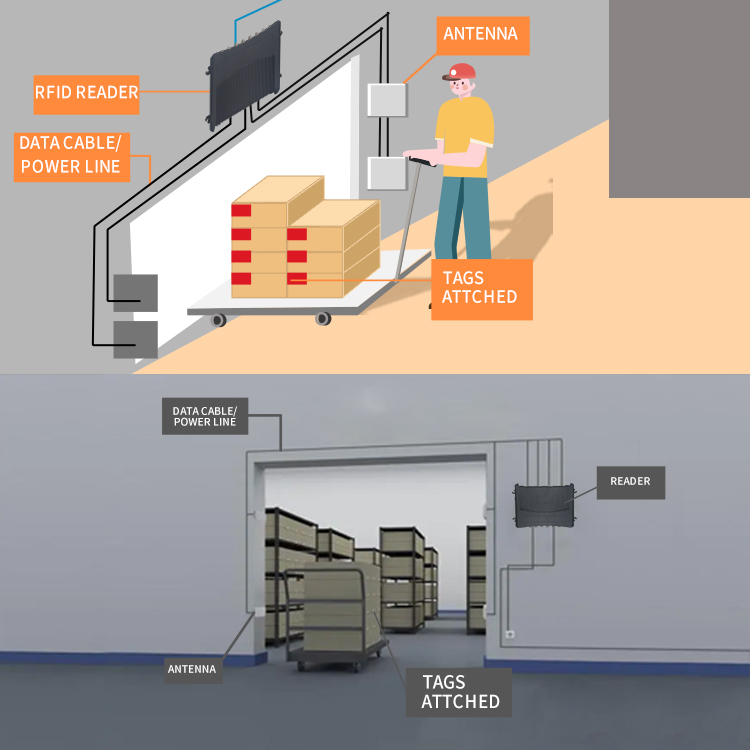
A typical RFID reading process works like this:
Step 1: The Reader Sends a Radio Signal
The RFID reader sends a radio-frequency signal through its antenna.
Step 2: The Tag Receives the Signal
The RFID tag's antenna receives the signal.
For passive RFID tags, this signal can also provide the energy needed for the chip to operate.
Step 3: The RFID Chip Processes the Request
The chip detects the reader's command and accesses the relevant memory.
Step 4: The Tag Sends Back Its Data
The tag communicates the requested information back to the reader using the RFID communication protocol.
Step 5: The System Processes the Information
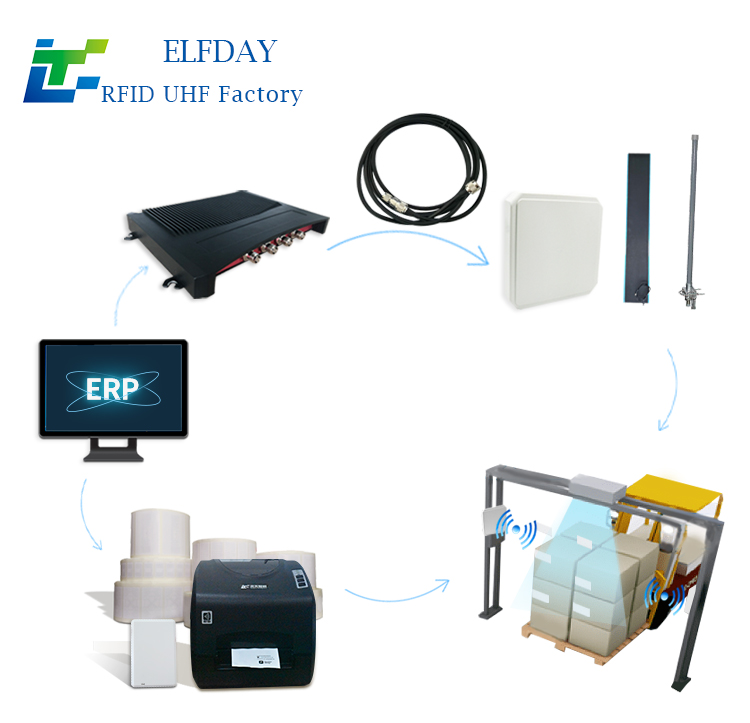
The reader passes the data to connected software, which can use the identifier to update inventory, track an asset, or retrieve additional information.
The overall process can be simplified as:
Reader → Tag → Chip memory → Tag response → Reader → Software
How Much Data Can an RFID Tag Store?
There is no single storage capacity for all RFID tags.
Memory capacity depends on factors such as:
-
RFID chip model
-
RFID frequency
-
Tag design
-
Memory architecture
-
Application requirements
-
Available user memory
Some RFID applications only require a unique identifier, while others need additional user memory.
For many tracking applications, storing a short identifier is more practical than trying to store a complete database record directly on the tag.
Is RFID Tag Data Stored Permanently?
It depends on the memory type and how the tag is configured.
Some information may be fixed during manufacturing or initial encoding. Other memory areas can be writable and updated later.
In addition, RFID systems can use access controls to restrict who can read or modify certain information.
Therefore, RFID data storage is not simply a matter of putting information onto a chip. The system can also determine which information is writable, who can access it, and how it is used.
How Is RFID Data Different From Barcode Data?
Both RFID tags and barcodes can identify products and assets, but they store and communicate information differently.
| Feature | RFID Tag | Barcode |
|---|---|---|
| Data storage | Electronic chip memory | Printed pattern |
| Reading method | Radio waves | Optical scanning |
| Line of sight | Usually not required | Usually required |
| Multiple-item reading | Often possible | Typically one at a time |
| Data modification | Possible with writable tags | Printed data cannot be rewritten |
| Durability | Depends on tag construction | Depends on label material |
The key difference is that an RFID tag stores information electronically, while a barcode represents information visually.
Can RFID Tags Store Location Information?
An RFID tag can contain location-related information if the application is designed to write that information to the tag.
However, an RFID tag does not normally determine its own location.
Instead, RFID readers positioned at known locations can detect a tag and allow the software system to determine where the tagged item was last detected.
For example:
RFID tag detected at Door 3 → system records Door 3 as the detection point
The location information may therefore exist primarily in the connected software or database rather than permanently on the tag itself.
Can RFID Tags Store Sensor Data?
Some RFID solutions can work with sensors or sensor-enabled chips to support applications involving environmental conditions.
Depending on the technology, a system may capture information related to:
-
Temperature
-
Humidity
-
Shock
-
Movement
-
Other environmental conditions
However, this capability is not available on every RFID tag.
A standard RFID identification tag and a sensor-enabled RFID device can have very different capabilities.
Is RFID Tag Data Secure?
RFID data security depends on the tag, RFID protocol, reader configuration, software, and overall system design.
Possible security measures can include:
-
Password protection
-
Memory access controls
-
Data encryption in suitable systems
-
Restricted write permissions
-
Backend authentication
-
Controlled reader access
For sensitive applications, organizations should consider both the security of the RFID tag and the security of the connected software infrastructure.
Why Store Data on an RFID Tag?
Storing selected information directly on the tag can provide several advantages.
Faster Identification
The reader can retrieve information directly from the tag without requiring manual data entry.
Better Item-Level Tracking
Each tagged item can have its own digital identity.
Flexible Data Management
Writable memory can allow information to be updated when appropriate.
Offline Identification
In some applications, storing essential information on the tag can provide useful identification even when immediate access to a central database is limited.
Automation
RFID data can be integrated with inventory, warehouse, manufacturing, logistics, and asset-management systems.
Common Applications of RFID Data Storage
Retail
RFID tags can identify individual products and support inventory counting, stock visibility, and item-level tracking.
Warehousing
Tags can be used to identify cartons, pallets, containers, and individual assets.
Manufacturing
RFID data can connect components and products with production processes.
Logistics
Tags can help identify shipments, returnable containers, and transport assets.
Asset Management
Equipment can receive unique RFID identities, making it easier to maintain digital records and track movements.
Healthcare
RFID tags can be used for identifying equipment, supplies, containers, and other items where electronic identification is useful.
RFID Tag vs. Database: Where Should Data Be Stored?
One of the most important design decisions in an RFID system is determining what information should be stored on the tag and what information should remain in the database.
A practical approach is often:
RFID tag: Store a unique identifier and essential data.
Database: Store detailed records and frequently changing information.
For example:
RFID Tag
-
Asset ID
-
Product code
-
Serial number
Database
-
Product description
-
Current location
-
Maintenance history
-
Ownership information
-
Transaction history
This approach keeps the RFID tag efficient while allowing the software system to manage much larger amounts of information.
Frequently Asked Questions
How is data physically stored on an RFID tag?
Data is stored electronically in memory within the RFID chip. The chip represents information as digital data that can be accessed when the tag communicates with an RFID reader.
Where is RFID data stored?
The data is stored in memory areas within the RFID chip. Depending on the chip design, different memory areas may contain identifiers, chip information, user data, or security-related information.
Can RFID tags store text?
Some RFID tags can store text when there is sufficient writable memory. However, many systems store compact identifiers rather than long text because RFID memory capacity is limited.
Can RFID data be changed?
Yes, if the RFID tag has writable memory and the system permits changes. Some tags or memory areas may be permanently locked or configured as read-only.
Do RFID tags need a database?
Not necessarily. An RFID tag can store information directly on its chip. However, many practical RFID systems use a database to store detailed information associated with the tag's identifier.
Does an RFID tag store the product name?
It can, but it does not have to. Many systems store a unique product or item identifier on the RFID tag and keep the full product information in a connected database.
Data on an RFID tag is stored electronically inside the memory of its RFID chip. Depending on the tag design, this memory can contain identifiers, product information, asset data, serial numbers, or other application-specific information.
When an RFID reader sends a signal, the tag's antenna communicates with the chip, allowing the stored data to be retrieved and passed to the connected system.
For many applications, the most efficient approach is to store a unique identifier and essential information on the RFID tag, while keeping detailed and frequently changing records in a database. This combination allows RFID systems to provide fast identification, automated tracking, and better visibility across retail, warehousing, manufacturing, logistics, and asset management.