



What Are the Different Types of RFID Tags?
RFID tags come in many different types, sizes, materials, frequencies, and designs. The right RFID tag depends on how it will be used, what surface it will be attached to, how far it needs to be read, and what environmental conditions it must withstand.
The main types of RFID tags can be classified by power source, operating frequency, physical construction, and application.
The most common categories include passive RFID tags, active RFID tags, semi-passive RFID tags, LF RFID tags, HF RFID tags, UHF RFID tags, and specialized tags such as on-metal RFID tags.
Understanding these differences makes it easier to select an RFID tag that matches a specific tracking or identification requirement.
What Are the Main Types of RFID Tags?
RFID tags are commonly divided into the following categories:
| RFID Tag Type | Main Characteristic | Common Applications |
|---|---|---|
| Passive RFID Tag | Powered by the reader | Inventory, retail, logistics |
| Active RFID Tag | Uses an internal battery | Asset tracking, monitoring |
| Semi-Passive RFID Tag | Battery-assisted | Sensing, specialized tracking |
| LF RFID Tag | Low-frequency operation | Animal identification, access control |
| HF RFID Tag | 13.56 MHz operation | Libraries, access control, NFC |
| UHF RFID Tag | Longer-range identification | Warehouses, retail, supply chain |
| On-Metal RFID Tag | Designed for metal surfaces | Equipment, tools, machinery |
| Rugged RFID Tag | Built for harsh environments | Industrial assets, outdoor equipment |
| RFID Label | Thin label-style construction | Products, cartons, inventory |
| Specialty RFID Tag | Designed for specific applications | Laundry, healthcare, automotive, etc. |
These categories can overlap. For example, an on-metal RFID tag can also be a passive UHF RFID tag, while a rugged industrial RFID tag may also use UHF technology.
1. Passive RFID Tags
Passive RFID tags do not have an internal battery.
Instead, they receive energy from the radio frequency signal generated by an RFID reader. Once enough energy is available, the tag activates its RFID chip and communicates with the reader.
Passive RFID tags are widely used because they can be relatively small, lightweight, and cost-effective for high-volume applications.
Common applications include:
-
Inventory management
-
Retail products
-
Warehouse tracking
-
Logistics
-
Pallet identification
-
Asset tracking
-
Manufacturing
-
Library management
For many supply chain and inventory applications, passive UHF RFID tags are a practical choice because they can support relatively long read ranges and rapid identification.
Advantages of Passive RFID Tags
-
No battery replacement
-
Small form factors available
-
Suitable for high-volume deployment
-
Generally lower cost than active tags
-
Long potential service life
-
Available in many materials and designs
Limitations
Passive tags depend on the RFID reader for energy. Their performance can also be affected by distance, tag orientation, surrounding materials, reader configuration, and environmental conditions.
2. Active RFID Tags
Active RFID tags contain their own battery.
The internal power source allows the tag to operate independently of energy supplied by the reader.
Depending on the technology and application, active RFID tags can support longer communication distances and additional functions such as sensor-based monitoring.
They may be considered for applications such as:
-
High-value asset tracking
-
Equipment monitoring
-
Vehicle tracking
-
Real-time location applications
-
Environmental monitoring
Advantages of Active RFID Tags
-
Longer potential read ranges
-
Independent power source
-
Can support additional electronic functions
-
Suitable for certain continuous-monitoring applications
Limitations
Active RFID tags are generally more expensive and larger than passive tags. Their batteries also have a limited service life and may require replacement or charging.
3. Semi-Passive RFID Tags
Semi-passive RFID tags, sometimes called battery-assisted RFID tags, use an internal battery but communicate with RFID readers in a way that differs from fully active systems.
The battery can power the tag's internal electronics or sensors while the RFID reader still plays an important role in communication.
These tags can be useful for specialized applications where standard passive RFID tags may not provide enough functionality.
Potential applications include:
-
Temperature monitoring
-
Environmental sensing
-
Cold-chain tracking
-
Specialized asset monitoring
-
Condition monitoring
The exact capabilities depend on the tag design and RFID technology being used.
4. LF RFID Tags
LF RFID tags operate in the low-frequency range, generally around 125–134 kHz.
LF RFID technology is known for relatively short-range identification and can be useful in applications where close-range reading is sufficient.
Common applications include:
-
Animal identification
-
Livestock tracking
-
Access control
-
Vehicle identification
-
Specialized industrial identification
LF RFID tags can be available in different form factors, including animal ear tags and other application-specific designs.
Because LF RFID systems have different operating characteristics from UHF RFID systems, they should not be selected simply based on read distance.
5. HF RFID Tags
HF RFID tags typically operate at 13.56 MHz.
HF RFID technology is widely used for short- to medium-range identification and data exchange.
Common applications include:
-
Library management
-
Access control
-
Ticketing
-
Healthcare
-
Product authentication
-
NFC-related applications
-
Document identification
HF RFID tags are available as labels, cards, stickers, key fobs, and other form factors.
For applications requiring close-range interaction or compatibility with established HF infrastructure, HF RFID can be a suitable option.
6. UHF RFID Tags
UHF RFID tags are widely used for applications requiring fast identification and relatively long read ranges.
UHF RFID is particularly common in:
-
Warehouses
-
Distribution centers
-
Retail stores
-
Manufacturing facilities
-
Logistics
-
Supply chain management
-
Pallet tracking
-
Asset management
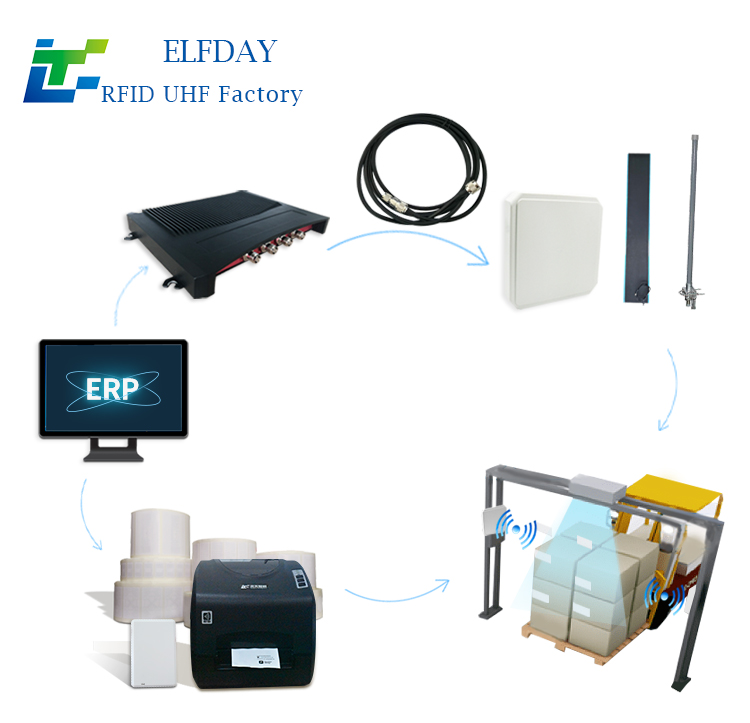
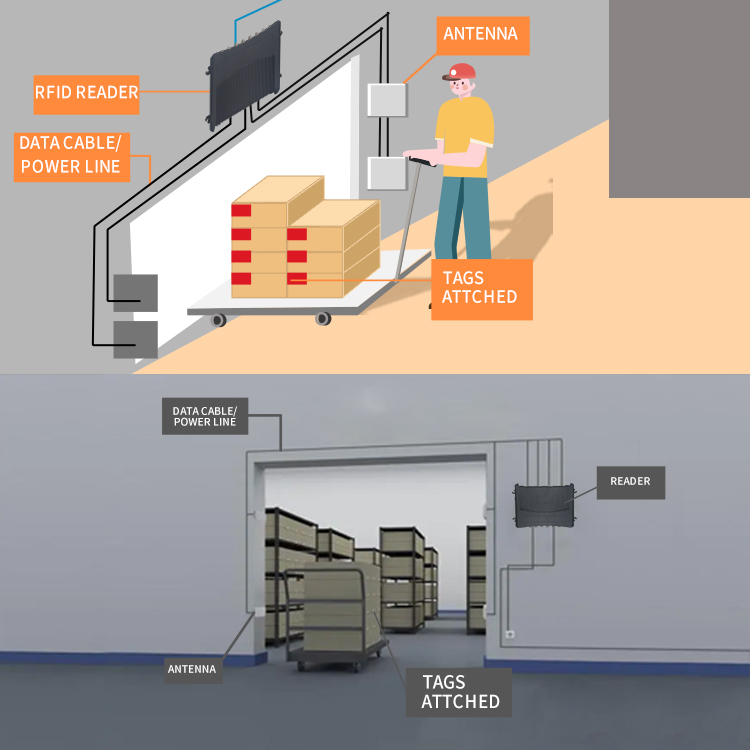
A UHF RFID system can potentially identify multiple tags within a reader's operating area, making the technology useful for automated inventory and tracking processes.
Why Are UHF RFID Tags Popular?
UHF RFID tags offer several characteristics that are useful for large-scale identification:
-
Relatively long read ranges
-
Fast data communication
-
Potential for multi-tag reading
-
Wide variety of tag designs
-
Compatibility with fixed and handheld RFID readers
-
Suitability for inventory and logistics applications
However, UHF RFID performance can be affected by metal, liquids, tag orientation, reader configuration, and other environmental factors.
7. On-Metal RFID Tags
Standard RFID tags may not perform well when attached directly to metal.
On-metal RFID tags are specifically designed to operate on or near metal surfaces.
Their construction can help isolate the antenna from the metal and maintain more reliable RFID communication.
Common applications include:
-
Metal equipment
-
Industrial machinery
-
Tools
-
Steel containers
-
Automotive components
-
IT equipment
-
Metal pallets
-
Industrial assets
On-metal RFID tags can be available in different sizes and mounting methods, including adhesive, screw-mounted, riveted, or other application-specific designs.
When choosing an on-metal RFID tag, testing it on the actual target surface is important because different metal objects can produce different RFID performance.
8. Rugged RFID Tags
Rugged RFID tags are designed for applications where standard RFID labels may not be durable enough.
They may use stronger housings and materials to withstand demanding conditions such as:
-
Mechanical impact
-
Moisture
-
Dust
-
Temperature changes
-
Chemicals
-
Outdoor exposure
-
Frequent handling
Rugged RFID tags are commonly used for:
-
Industrial equipment
-
Machinery
-
Reusable containers
-
Tools
-
Pallets
-
Automotive assets
-
Outdoor equipment
The exact durability of a rugged RFID tag depends on its construction and should be matched to the actual operating environment.
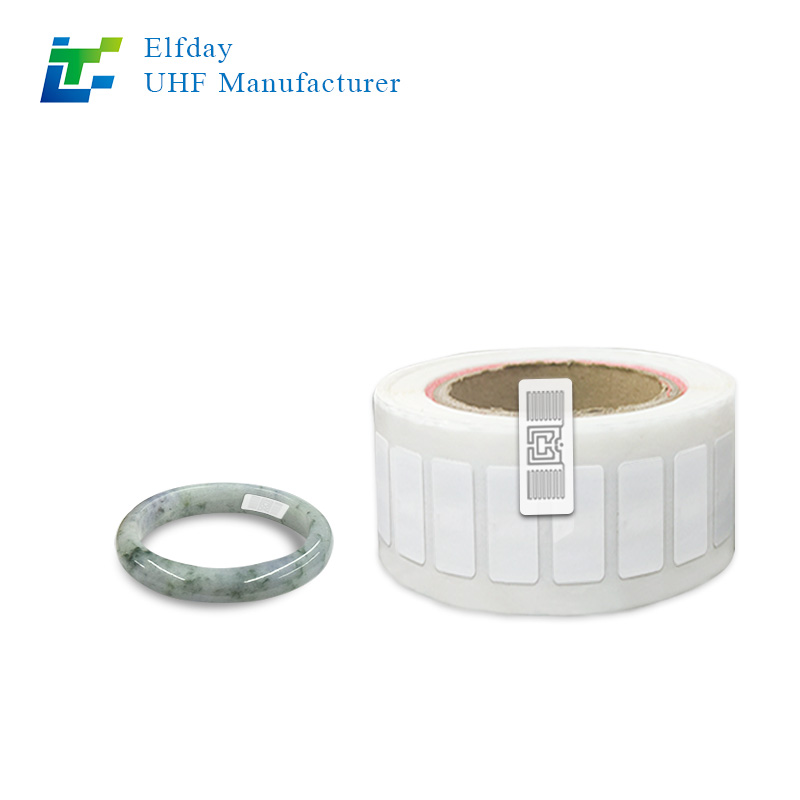
9. RFID Labels
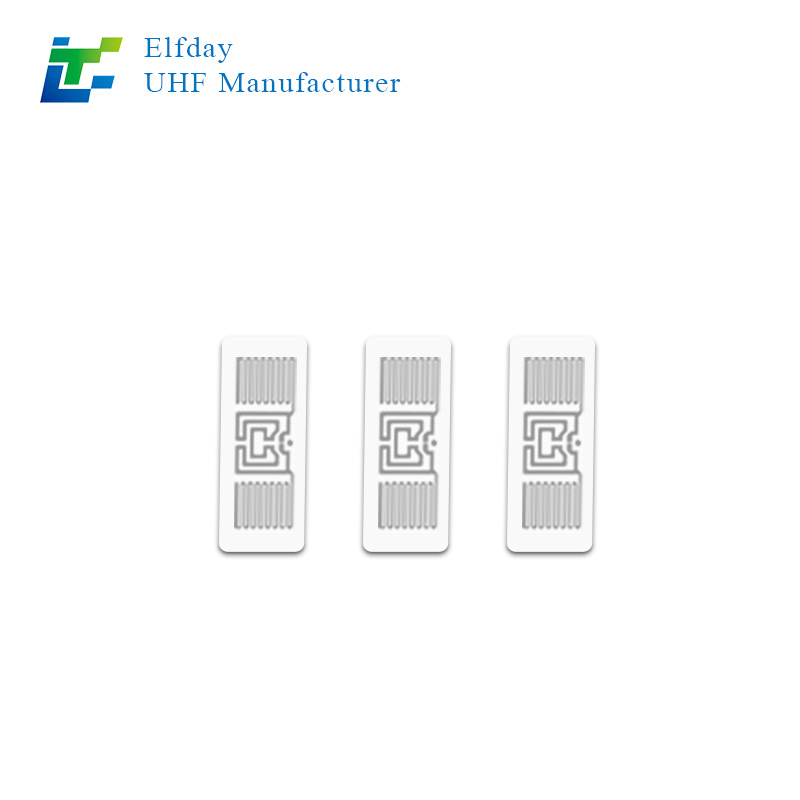
RFID labels combine an RFID inlay with a label-style structure.
They are often designed for products, cartons, packages, and other items where a thin and lightweight tag is preferred.
RFID labels can include:
-
RFID chip
-
Antenna
-
Paper or synthetic face material
-
Adhesive
-
Printed information
They are commonly used in:
-
Retail
-
Warehousing
-
Inventory management
-
Logistics
-
Product identification
-
Supply chain applications
RFID labels are particularly suitable when tags need to be applied quickly to large numbers of products.
10. Laundry and Textile RFID Tags
Textile applications require a different type of RFID tag because tags may be exposed to repeated washing, drying, pressing, and handling.
Laundry RFID tags can be integrated into:
-
Hotel linens
-
Towels
-
Uniforms
-
Workwear
-
Hospital textiles
-
Reusable garments
These tags are designed to remain attached to textiles during repeated processing cycles.
The appropriate construction depends on washing temperature, chemical exposure, mechanical stress, installation method, and required service life.
11. Animal RFID Tags
Specialized RFID tags can be used to identify animals.
One common example is an RFID animal ear tag, which can provide a unique electronic identity for livestock.
Animal RFID applications may include:
-
Livestock identification
-
Animal tracking
-
Breeding management
-
Farm management
-
Animal health records
-
Traceability
The appropriate RFID frequency and tag construction depend on the specific animal identification system and application requirements.

12. Asset RFID Tags
Asset RFID tags are designed to identify and track physical assets.
They can be attached to:
-
Tools
-
Equipment
-
Computers
-
Machinery
-
Containers
-
Carts
-
Industrial assets
-
Reusable transport items
The tag type depends heavily on the asset material.
For example, a plastic asset may work well with a standard RFID tag, while a metal tool may require an on-metal RFID tag.
How Are RFID Tags Classified by Form Factor?
RFID tags are also available in many physical shapes and constructions.
Common formats include:
RFID Sticker Tags
Thin adhesive tags that can be attached directly to products or assets.
RFID Cards
Rigid card-shaped RFID tags commonly used for identification and access applications.
RFID Key Fobs
Compact RFID devices designed for convenient personal identification or access control.
Embedded RFID Tags
RFID components integrated into products or materials.
Hard RFID Tags
Rigid tags designed for greater durability.
Flexible RFID Tags
Thin and flexible tags suitable for curved or flexible surfaces.
Encapsulated RFID Tags
RFID components protected inside a sealed housing for demanding environments.
The best form factor depends on available mounting space, required durability, installation method, and the material being tagged.
How Do You Choose the Right Type of RFID Tag?
Choosing an RFID tag should begin with the application.
Step 1: Identify the Tagged Object
Determine exactly what needs to be identified.
Is it:
-
A retail product?
-
A carton?
-
A pallet?
-
A metal tool?
-
A machine?
-
A textile?
-
An animal?
-
A reusable container?
The object determines many of the tag design requirements.
Step 2: Check the Surface Material
Surface material is one of the most important considerations.
Common materials include:
-
Cardboard
-
Paper
-
Plastic
-
Glass
-
Wood
-
Fabric
-
Metal
Metal and liquids can create particular challenges for some RFID systems.
Step 3: Determine the Required Read Range
Consider where the RFID reader will be located.
For example:
-
Close-range identification may suit HF RFID.
-
Longer-range inventory applications may benefit from UHF RFID.
-
Specialized applications may use LF RFID.
The actual read range depends on the complete RFID system.
Step 4: Consider the Environment
Determine whether the tag will encounter:
-
Water
-
Heat
-
Cold
-
Chemicals
-
Dust
-
Impact
-
Outdoor conditions
-
Repeated washing
If the environment is demanding, a rugged or specialized RFID tag may be necessary.
Step 5: Determine Whether the Tag Is Reusable
For disposable product identification, an RFID label may be sufficient.
For reusable assets such as pallets, containers, tools, or equipment, a durable RFID tag may offer better long-term value.
Step 6: Select the RFID Chip
The RFID chip affects memory, communication characteristics, compatibility, and other tag capabilities.
Chip selection should be based on the RFID reader and system requirements rather than choosing a chip solely because it has a particular specification.
Which RFID Tag Is Best?
There is no single RFID tag that is best for every application.
A practical selection guide is:
| Application | RFID Tag Type to Consider |
|---|---|
| Retail inventory | Passive UHF RFID tag |
| Warehouse inventory | Passive UHF RFID tag |
| Pallet tracking | UHF RFID tag |
| Metal equipment | On-metal RFID tag |
| Industrial tools | Rugged or on-metal RFID tag |
| Laundry | Washable textile RFID tag |
| Library management | HF RFID tag |
| Animal identification | LF or application-specific RFID tag |
| High-value asset monitoring | Active or specialized RFID tag |
| Product labeling | RFID label |
These are starting points rather than universal rules. The final tag should be selected after considering the actual application and testing requirements.
What Factors Affect RFID Tag Performance?
Even the correct RFID tag can perform differently depending on the installation environment.
Important factors include:
-
Reader power
-
Reader antenna
-
Tag antenna design
-
Tag orientation
-
Read distance
-
Tagged material
-
Nearby metal
-
Nearby liquids
-
Environmental interference
-
Tag placement
For this reason, RFID tag specifications should not be evaluated independently from the RFID reader and operating environment.
Can One RFID Tag Be Used for Different Applications?
Sometimes, but not always.
A general-purpose RFID label may work across several similar applications.
However, specialized environments may require specialized tags.
For example:
-
Metal assets may need on-metal tags.
-
Industrial machinery may need rugged tags.
-
Laundry operations may need washable tags.
-
Outdoor assets may require weather-resistant construction.
-
Products containing liquids may require application-specific tag testing.
Using the same RFID tag for every application can result in inconsistent performance.
Why Is RFID Tag Testing Important?
RFID performance depends on the complete combination of:
Tag + Reader + Antenna + Material + Environment + Installation
A tag that performs well on a test bench may behave differently when attached to an actual product or asset.
Testing should therefore consider:
-
Actual tagged material
-
Actual mounting position
-
Required read distance
-
Reader configuration
-
Expected tag orientation
-
Environmental conditions
-
Number of tags being read simultaneously
Application testing helps identify potential problems before large-scale deployment.
Frequently Asked Questions About RFID Tag Types
What are the three main types of RFID tags?
The three main types based on power source are passive RFID tags, active RFID tags, and semi-passive RFID tags.
What is the most common type of RFID tag?
Passive RFID tags are widely used because they are suitable for many high-volume identification applications. Passive UHF RFID tags are particularly common in inventory, logistics, retail, and supply chain applications.
What is the difference between UHF and HF RFID tags?
UHF RFID generally supports longer read ranges and fast multi-tag identification, making it common in inventory and logistics. HF RFID typically operates at 13.56 MHz and is widely used for applications such as libraries, access control, ticketing, and NFC-related systems.
What RFID tag is best for metal?
An on-metal RFID tag is generally designed for mounting on metal surfaces. The exact tag should still be tested on the specific metal object because surface geometry and surrounding materials can affect performance.
Are RFID tags waterproof?
Some RFID tags are designed to be waterproof or highly water-resistant. Waterproof performance depends on the tag's materials, housing, sealing, and intended operating conditions.
Can RFID tags be used outdoors?
Yes. RFID tags can be designed for outdoor use. Outdoor applications may require resistance to water, UV exposure, temperature changes, impact, and other environmental conditions.
Are RFID tags reusable?
Some RFID tags are designed for long-term or reusable applications, while others are intended for one-time product identification. The appropriate choice depends on the asset and expected service life.
Can RFID tags be customized?
Yes. RFID tags can often be customized by size, shape, material, chip, antenna, adhesive, housing, printing, and encoding requirements.
There are many types of RFID tags, and each type is designed for different identification and tracking requirements.
Passive RFID tags are widely used for inventory and supply chain applications, while active RFID tags can support applications requiring battery-powered functionality. LF, HF, and UHF RFID tags operate at different frequency ranges, and specialized designs such as on-metal, rugged, washable, and embedded RFID tags address specific environmental and mounting requirements.
The best RFID tag depends on several factors, including tagged material, read range, operating frequency, environment, durability, size, installation method, and system requirements.
Rather than selecting an RFID tag based only on price or advertised read range, businesses should evaluate the tag as part of the complete RFID system and test it under actual operating conditions.
Choosing the right RFID tag from the beginning can help improve identification reliability, reduce deployment problems, and support more efficient tracking and inventory processes.