

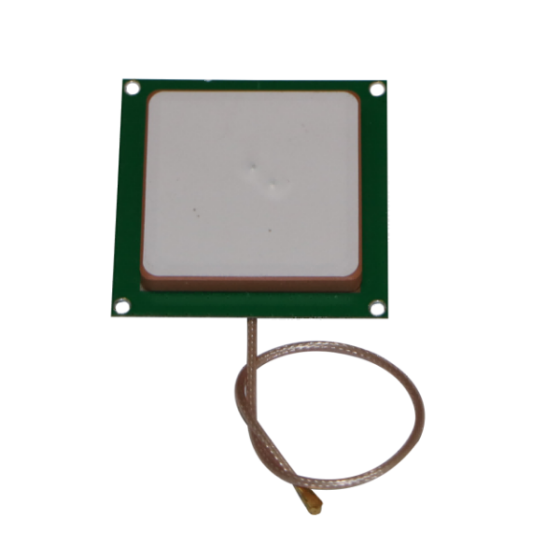
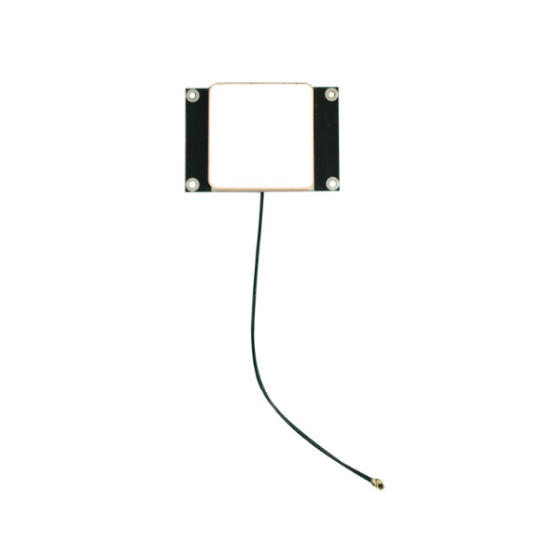
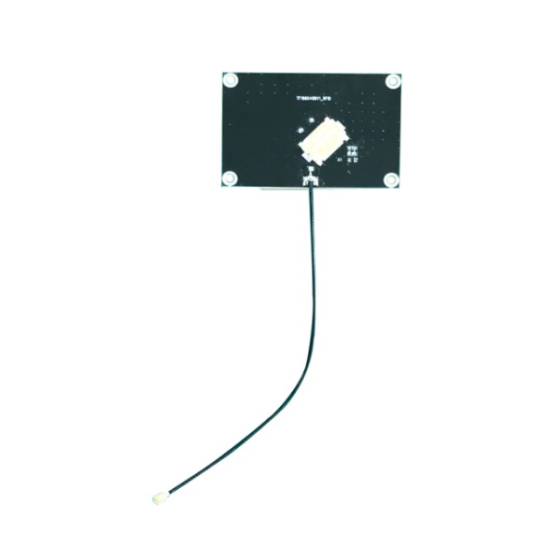


RFID Tags for Inventory Tracking for Cartons, Pallets, Bins and Products
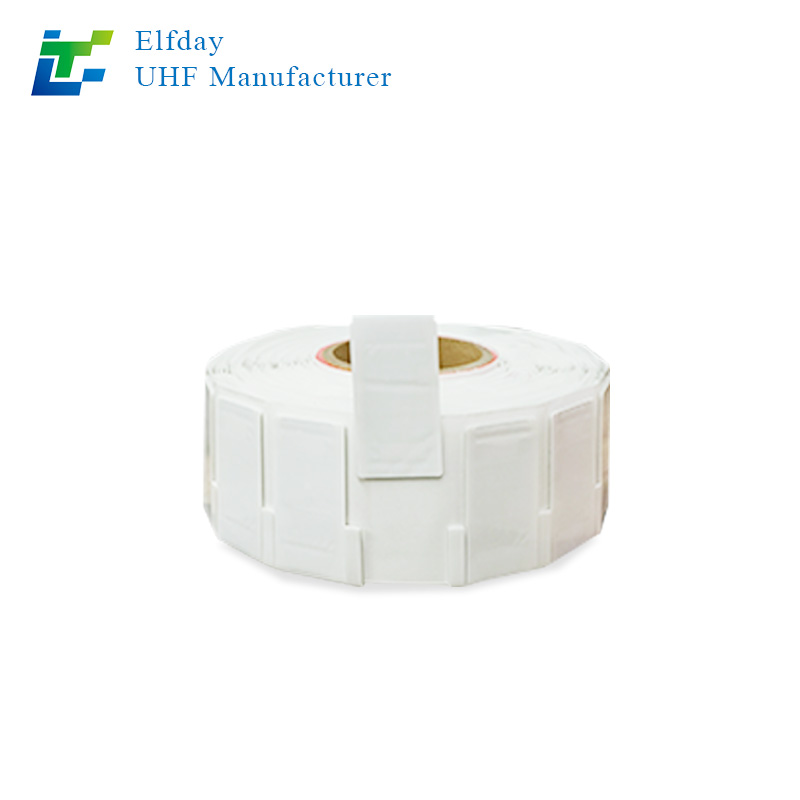
RFID tags for inventory tracking help warehouses quickly identify cartons, pallets, bins, and individual products. They support faster receiving, storage, picking, inventory counting, and shipping while reducing manual data entry and inventory errors.
As warehouse operations become more complex, businesses need faster and more reliable ways to know what inventory they have, where it is located, and how it moves through the facility. Traditional manual counting and barcode scanning can become difficult to manage when thousands of products move through a warehouse every day.
RFID technology provides a more automated approach. By attaching RFID tags to products, cartons, pallets, bins, or other inventory units, warehouse teams can capture item information using RFID readers and connect that data with inventory management systems.
What Are RFID Tags for Inventory Tracking?
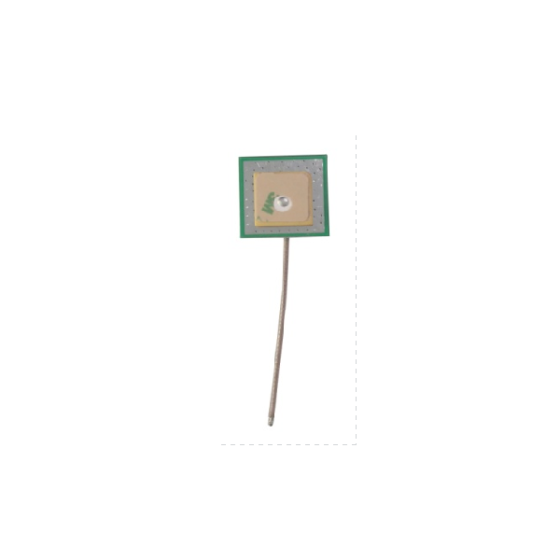
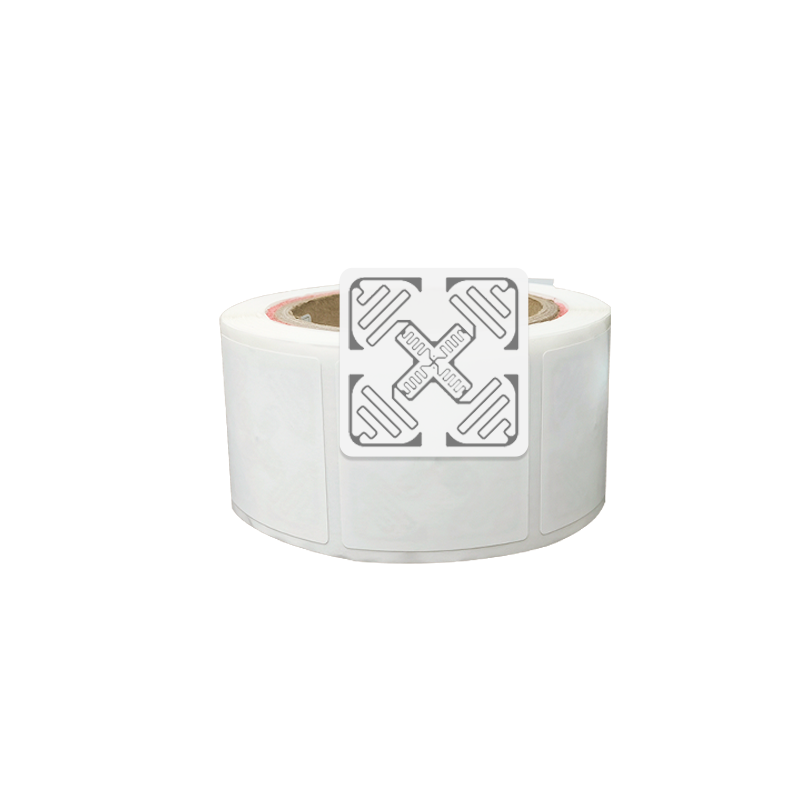
RFID tags for inventory tracking are electronic identification tags designed to store information and communicate with RFID readers using radio frequency technology.
Each tag can have a unique identification number associated with a specific product, carton, pallet, bin, or inventory item. When a tagged item passes within the appropriate reading area, the RFID reader can capture the tag information without requiring the employee to manually scan a barcode.
This makes RFID useful for warehouses that need to process large volumes of inventory quickly.
Depending on the application, RFID tags can be attached to individual products, packaging, cartons, pallets, storage bins, reusable containers, tools, and other warehouse assets.
How RFID Tags Improve Warehouse Inventory Tracking
Warehouse inventory can move through many different stages before reaching the customer. A typical process may include receiving, inspection, storage, picking, packing, and shipping.
Without automated identification, employees may need to scan or record inventory manually at several points during this process. This takes time and creates opportunities for human error.
RFID tags for inventory tracking can help automate item identification throughout these stages.
When goods arrive at a warehouse, RFID readers can identify tagged cartons or pallets during receiving. When inventory is moved to storage, RFID information can be associated with a particular warehouse location. During picking, RFID can help verify products selected for an order. Before shipping, tagged inventory can be identified again to help confirm that the correct items are being dispatched.
The result is a more connected inventory tracking process with less reliance on repetitive manual data entry.
RFID Tracking for Cartons
Cartons are commonly used to transport and store products within warehouses. When cartons contain multiple products, manually identifying their contents can take additional time.
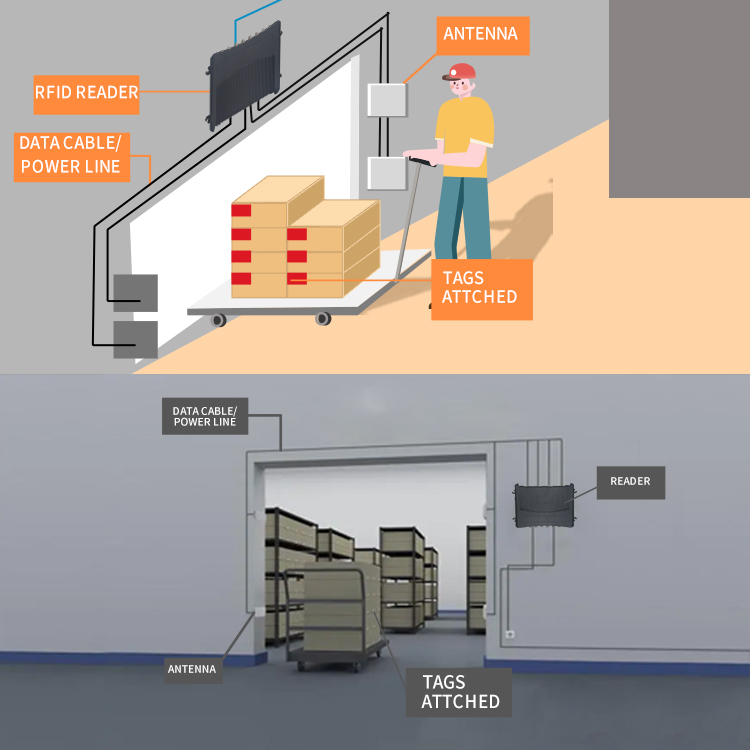
RFID tags can be attached to cartons and linked to relevant inventory information. When the carton enters or leaves a reading area, its RFID tag can be detected automatically.
This can help warehouse teams improve receiving and shipping workflows while maintaining better visibility into carton-level inventory.
For operations handling large volumes of cartons, automated identification can make a significant difference in processing speed and inventory accuracy.
RFID Tracking for Pallets
Pallets often contain multiple cartons or products and can move between receiving areas, storage locations, production areas, and shipping docks.
An RFID tag attached to a pallet can provide a unique digital identity for that logistics unit. As the pallet moves through the warehouse, RFID readers can capture its information at different checkpoints.
This can help businesses monitor pallet movement and reduce the time employees spend searching for specific inventory.
For supply chains that regularly move pallets between multiple facilities, RFID can also provide greater visibility into the movement of goods.
RFID Tracking for Bins and Reusable Containers
Many warehouses use bins, totes, trays, and reusable containers to organise smaller products and components. These items can be difficult to manage when they are frequently moved between workstations or storage areas.
RFID tags can be attached to these containers so that each unit can be individually identified.
When combined with warehouse management software, RFID data can help businesses determine which containers are in use, where they are located, and when they move between different areas.
This can be particularly useful for manufacturing, distribution, and other operations where reusable containers circulate continuously.
RFID Tracking for Individual Products
RFID can also support item-level inventory tracking. An RFID tag can be attached to an individual product and associated with its unique identification information.
This approach provides more detailed inventory visibility than tracking only cartons or pallets.
Retailers, manufacturers, distributors, and e-commerce businesses can use item-level RFID tracking to identify products during receiving, storage, picking, stock counting, and shipping.
For high-volume operations, the ability to identify individual items efficiently can help improve inventory accuracy and reduce discrepancies between physical stock and digital inventory records.
Faster Warehouse Receiving
Receiving is one of the most important stages of warehouse inventory management. Employees need to identify incoming goods, verify quantities, and update inventory records before products can be stored.
With RFID tags for inventory tracking, tagged cartons, pallets, and products can be identified as they enter the receiving area.
Instead of manually scanning each barcode, warehouse teams can use suitable RFID readers to capture multiple tags within a reading zone.
This can help reduce processing time and allow inventory information to be updated more efficiently.
More Efficient Inventory Counting
Periodic inventory counts can require significant labour, particularly in large warehouses with thousands of products.
Employees using traditional methods may need to visit storage locations, handle products, locate barcodes, and scan items individually.
RFID can simplify this process by allowing suitable readers to identify multiple tagged items within range.
Warehouse teams can use handheld RFID readers for inventory checks or fixed readers in specific areas, depending on the application.
Faster inventory counting can help reduce operational disruption while providing a clearer picture of available stock.
Improving Picking Accuracy
Picking errors can lead to incorrect shipments, customer complaints, returns, and additional operating costs.
RFID tags can help warehouse systems verify product identification during the picking process.
When an employee selects an item, the RFID system can identify the tagged product and compare it with the expected order information.
This additional verification step can help reduce picking errors and support more accurate order fulfilment.
Streamlining Shipping Operations
Before products leave a warehouse, shipments need to be checked to ensure that the correct items are being dispatched.
RFID tags for inventory tracking can help automate this verification process. Tagged cartons and pallets can be identified as they pass through shipping areas, allowing warehouse systems to capture their identification information.
This can provide a faster way to verify shipments while reducing dependence on manual scanning and data entry.
RFID Tags vs. Barcode Labels
Barcodes remain a practical choice for many inventory applications, but RFID provides several capabilities that can be useful for larger and more automated warehouse operations.
Barcode scanning generally requires the barcode to be visible to the scanner and usually involves scanning items individually.
RFID does not generally require direct line of sight and can potentially identify multiple suitable tags within a reading area.
This means RFID can be particularly useful when warehouses need to process large quantities of inventory quickly.
However, RFID is not necessarily the right solution for every business. The best technology depends on inventory volume, product materials, operating environment, required read range, system integration, and budget.
How to Choose RFID Tags for Inventory Tracking
Choosing the right RFID tag is important for achieving reliable performance.
The first consideration is the material of the item being tagged. RFID tags designed for cardboard or plastic may perform differently when attached to metal products or equipment.
The operating environment is another important factor. Warehouses may have exposure to moisture, temperature changes, chemicals, friction, or repeated handling. The RFID tag should be selected according to these conditions.
The required reading distance should also be considered. A handheld inventory application may require different tag characteristics from a warehouse portal or fixed RFID reading point.
Tag size, attachment method, durability, memory requirements, and compatibility with the RFID system should also be evaluated before implementation.
Common Warehouse Applications
RFID tags for inventory tracking can support many different warehouse activities.
They can be used for incoming goods identification, pallet tracking, carton tracking, storage management, bin management, inventory counting, order picking, packing verification, shipping confirmation, and reusable container management.
The same RFID infrastructure can potentially support multiple processes, allowing businesses to build a more connected approach to warehouse inventory management.
Benefits of RFID Tags for Inventory Tracking
The main advantage of RFID is the ability to automate inventory identification and reduce repetitive manual processes.
For warehouse operations, this can mean faster inventory counting, more efficient receiving, improved picking accuracy, better shipment verification, reduced manual data entry, and improved inventory visibility.
RFID can also provide businesses with more detailed information about inventory movement. Instead of relying only on periodic manual checks, companies can use RFID data to understand how inventory moves through different operational stages.
This can support better warehouse planning and more informed inventory decisions.
Building a Smarter Warehouse Inventory Process
RFID works best when it is integrated into a broader inventory management process.
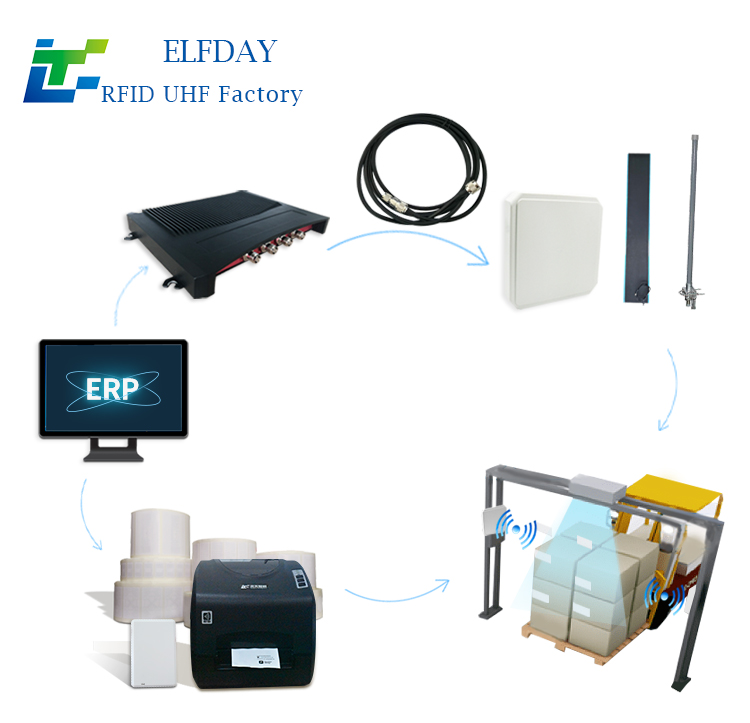
A typical RFID inventory tracking system may include RFID tags, fixed or handheld RFID readers, antennas, RFID middleware, and inventory or warehouse management software.
The RFID tag identifies the physical item. The reader captures the tag information. The software then processes the data and connects it with product, inventory, location, or shipment information.
This creates a link between physical inventory and digital inventory records.
When properly implemented, this approach can help businesses move from manual inventory checks toward a more automated and data-driven warehouse operation.
Frequently Asked Questions
What are RFID tags for inventory tracking?
RFID tags for inventory tracking are electronic tags used to identify and monitor products, cartons, pallets, bins, containers, and other inventory items. They communicate with RFID readers using radio frequency technology.
Can RFID tags track cartons and pallets?
Yes. RFID tags can be attached to cartons and pallets to provide unique identification and support automated tracking as inventory moves through a warehouse.
Can RFID tags track individual products?
Yes. RFID can be used for item-level tracking when each product is assigned its own RFID tag and identification record.
Do RFID tags need to be scanned individually?
No. Unlike traditional barcode scanning, RFID readers can potentially identify multiple suitable RFID tags within their reading range, depending on the system and operating environment.
Can RFID improve warehouse inventory accuracy?
RFID can help improve inventory accuracy by automating item identification and reducing manual counting and data entry. Actual results depend on tag selection, reader configuration, system integration, and warehouse conditions.
Are RFID tags suitable for pallets and bins?
Yes. RFID tags can be designed for pallets, bins, totes, reusable containers, and other warehouse logistics units. The appropriate tag should be selected based on the material and operating environment.
RFID tags for inventory tracking provide warehouses with a practical way to improve how products, cartons, pallets, bins, and other inventory units are identified and managed.
From receiving and storage to picking, inventory counting, and shipping, RFID can reduce repetitive manual work while providing faster access to inventory information.
For warehouses looking to improve inventory visibility and build more efficient operations, the right combination of RFID tags, readers, and inventory management software can create a scalable foundation for smarter inventory tracking and more accurate warehouse management.